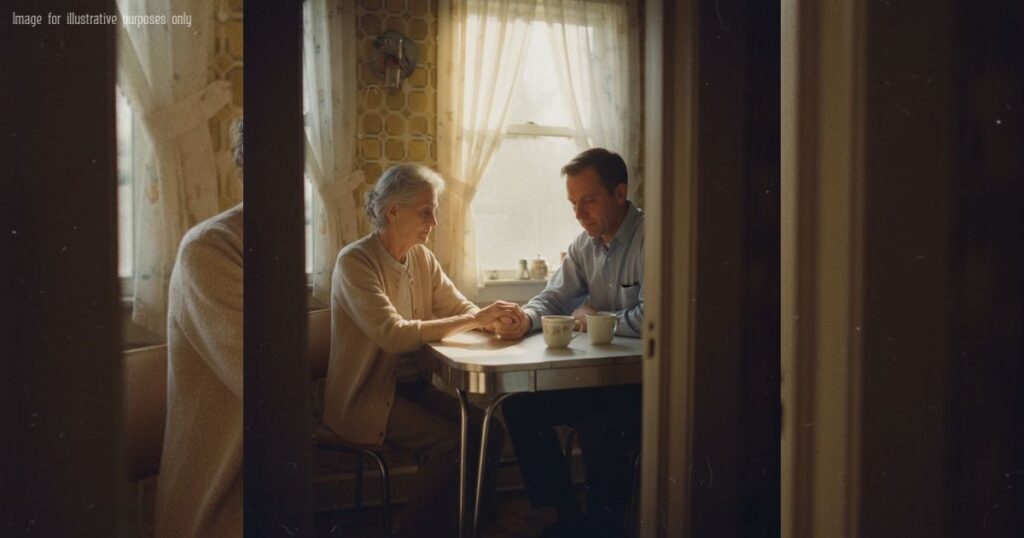
My siblings pulled up to the funeral in shiny rental cars, ready to claim an inheritance they felt entitled to. They had no idea our parents had sold me the house for exactly one dollar ten years ago.
“They called me the ‘freeloader’ for a decade while they traveled the world. Today, with Mom’s body hardly cold in the ground, they were already putting sticky notes on the furniture. The look on their faces when I pulled the red folder out of the safe was worth every single sleepless night.”
I am the youngest of three. In the lottery of American family dynamics, that often means you become the “unofficial retirement plan.”
While my brother, Steven, and my sister, Patty, flew the coop at 21 to chase six-figure salaries in the big city, I stayed. Not because I lacked ambition, but because life happens fast. My father’s Alzheimer’s arrived early and aggressive. Two years later, Mom’s cancer diagnosis hit us like a freight train.
Steven is a partner at a corporate architecture firm. Patty owns a “lifestyle brand” and influences people on social media.
And me? According to them, I am “the one who never launched.”
For the last twelve years, my daily routine wasn’t power lunches or board meetings. It was an endless cycle of changing adult diapers, blending vegetables into puree, managing a pharmacy’s worth of pills, and soothing my father’s terrified screams at 3:00 AM when he forgot where he was. It was holding my mother’s hand through chemotherapy sickness until my own knuckles turned white.
My 20s evaporated in a cloud of rubbing alcohol and bleach. My friends stopped inviting me out because the answer was always “I can’t, I have to watch them.” My boyfriends left because, as one put it, “This baggage is too heavy for me.”
I was left alone. Just me and two fading souls in a house that felt smaller every day.
And my siblings?
They were the “Guest Stars.” They visited once a year—usually Thanksgiving or Christmas—for exactly four hours. They’d sweep in with expensive gadgets Dad didn’t understand and scarves Mom was too frail to wear.
They’d snap a selfie with our parents, post it with the caption “Cherishing every moment with my angels #Blessed#FamilyFirst,” and then check their watches. They’d leave before dessert because “the smell of the house is just a bit depressing, you know?”
Whenever I begged for financial help—to hire a night nurse so I could sleep for more than two hours, or for uncovered medical supplies—the answer was always a rehearsed script:
“Oh, sweetie, you know we’re cash poor right now. The new mortgage, private school for the kids, the summer house renovations… Besides, you live there rent-free. That’s your payment. Caring for them is the least you can do.”
“Rent-free.”
That phrase drilled into my skull. I was living “rent-free” in a house with a leaking roof because there was no money for repairs. I was eating ramen noodles and eggs so I could afford the high-quality nutritional shakes they needed.
Last week, Mom finally let go. Dad had passed six months prior.
When I called them, Steven and Patty arrived in record time. Not to help me with the funeral arrangements—I did that alone—but to “secure the assets.”
The funeral was a performance worthy of an Academy Award. Patty threw herself on the casket, sobbing loudly for an audience of neighbors who hadn’t seen her in three years. Steven shook hands with a somber, martyr-like expression, telling made-up stories about how he and Dad were “best friends.”
The townspeople, the ones who saw me pushing the wheelchair through rain and snow for a decade, just looked at me. I didn’t cry. I was too dehydrated and exhausted to produce tears. I just wanted to sleep.
The Showdown
We returned to the house after the burial. They didn’t even loosen their ties or take off their heels.
We sat in the living room. I brewed a pot of cheap tea. They cracked open a bottle of Dad’s vintage whiskey—the one he was saving for a special occasion that never came.
“Okay, Emily,” Steven said, clapping his hands together. “Beautiful service. Really. But now we have to talk business.”
“Business?” I asked, my voice raspy.
“The house,” Patty jumped in, her eyes scanning the room like a shark. “It’s dated, and honestly, it smells like a nursing home. But the market is hot right now. A developer texted me; he’s interested in the lot.”
“You’re texting developers?” I felt a cold knot in my stomach. “Mom was buried two hours ago.”
“Be realistic, Em,” she sighed, rolling her eyes. “We knew this was coming. We need to liquidate. We split it three ways. With your third, you can… I don’t know, rent a studio apartment? Maybe take some online classes. It’s time you finally started your life.”
Steven nodded, swirling his glass. “Exactly. And the antiques… the grandfather clock goes to me. Patty wants the jewelry. You can keep the kitchen stuff and the linens.”
I looked at them. Really looked at them.
They were vultures. Beautifully dressed, cologne-wearing, successful vultures picking at the bones of the people who gave them life, completely ignoring the sister who had cleaned up the mess for ten years.
“The house is not for sale,” I said softly.
They laughed. It was a condescending sound, like adults laughing at a toddler.
“Oh, honey,” Steven said, leaning forward. “It’s not your choice. Majority rules. Two against one. And legally, without a will, the state divides it equally. I’ve already consulted my lawyer.”
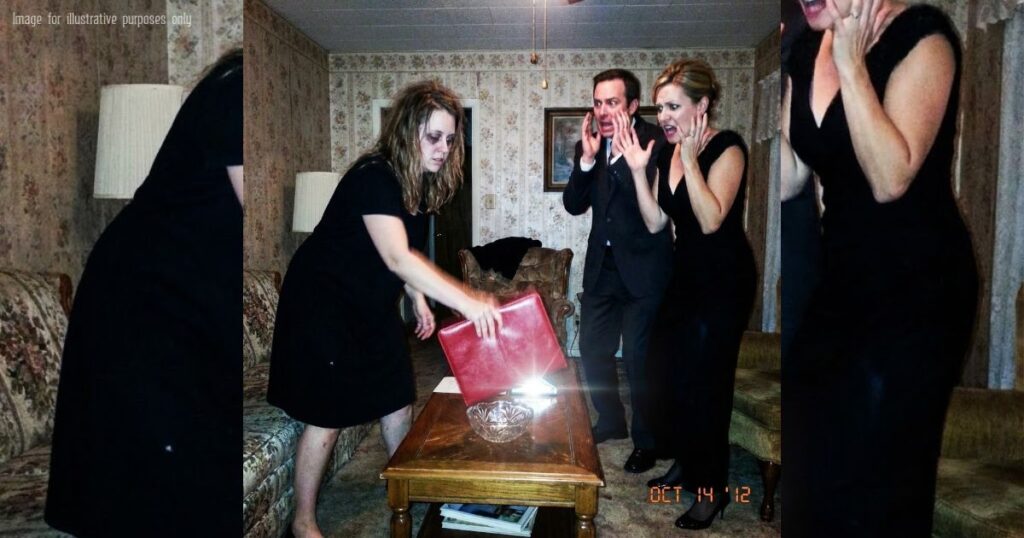
I stood up slowly. My knees popped. I walked to the hallway closet, opened the safe, and took out a red leather binder.
I walked back and dropped it onto the coffee table. The heavy thud silenced the room.
“You’re right. There is no will,” I said. “Because there is nothing to inherit.”
“What are you talking about?” Patty frowned, reaching for the folder.
“Read it.”
She flipped it open. Steven leaned over her shoulder.
The silence that filled the room was heavier than the dirt on Mom’s grave.
It was a Deed of Sale and a Caregiver Contract. Dated exactly ten years ago.
“What… what is this?” Steven stammered. “Sale of property… Life Estate… transferred to Emily…”
“Ten years ago, when Dad got the diagnosis, he had a moment of clarity,” I explained. My voice was steady, fueled by a decade of suppressed rage. “He knew you two wouldn’t help. He knew nursing home care costs $10,000 a month and would wipe out their savings in two years. He didn’t want to die in a facility.”
I looked them in the eye.
“So he offered me a job. He sold me the house. In exchange, I signed a binding legal contract to provide 24/7 care until the day they both died. I bought this house. Not with money, but with my life. with my back that spasms from lifting them, with my anxiety, with my youth. I gave them dignity. You gave them nothing.”
Steven threw the papers onto the table. “This is fraud! You manipulated them! They were vulnerable!”
“Look at the notary stamp,” I pointed. “Look at the attached doctor’s letters certifying their mental competence at the time of signing. Dad’s lawyer—who you know well—drafted this. It’s ironclad. I have receipts, logs, and journals for every single day of the last 3,650 days. I have the text messages where you both refused to send $50 for prescriptions.”
I took a sip of my tea.
“If you want to sue me, go ahead. But know this: If we go to court, everything becomes public record. I will make sure every client, every follower, and every neighbor knows exactly what kind of children you were.”
Patty started to cry. Real tears this time. Tears of panic.
“Emily, you don’t understand. I need this money. My business is underwater. I have loans.”
“That’s a shame,” I said coldly. “Maybe you should have come home to change a diaper once in a while. Or maybe you should sell one of your two luxury SUVs.”
I walked to the front door and opened it wide. The evening air rushed in.
“Get out of my house.”
“Emily, come on, we’re family…” Steven tried to use his ‘charming negotiator’ voice.
“I am the owner of this property. If you aren’t off my porch in two minutes, I’m calling the Sheriff for trespassing. And leave the whiskey. That belongs to me, too.”
They left.
Hurling insults and threats, they got into their rentals and sped away.
I closed the door. I turned the deadbolt. Click.
For the first time in twelve years, the silence didn’t feel lonely. It felt like sanctuary.
I sat in Dad’s old armchair, the one that still smelled like his tobacco and peppermint. I am not rich in cash. I don’t have a corporate title. But tonight, I will sleep in my house, with a conscience as clean as the sheets I washed for my parents every single day.
Life is a long game, and character always reveals itself in the end.
—
PART 2 — The Day the Truth Went Viral
If you read Part 1, you already know how it ended: my siblings stormed off my porch in shiny rental cars, calling me a thief—while I stood inside my house, holding a red folder that proved I’d paid for this place with twelve years of my life.
I thought the worst part was over.
I was wrong.
Because when people like Steven and Patty lose money, they don’t grieve.
They don’t reflect.
They don’t apologize.
Click the button below to read the next part of the story.⏬⏬