PART 2 — The Day the Truth Went Viral
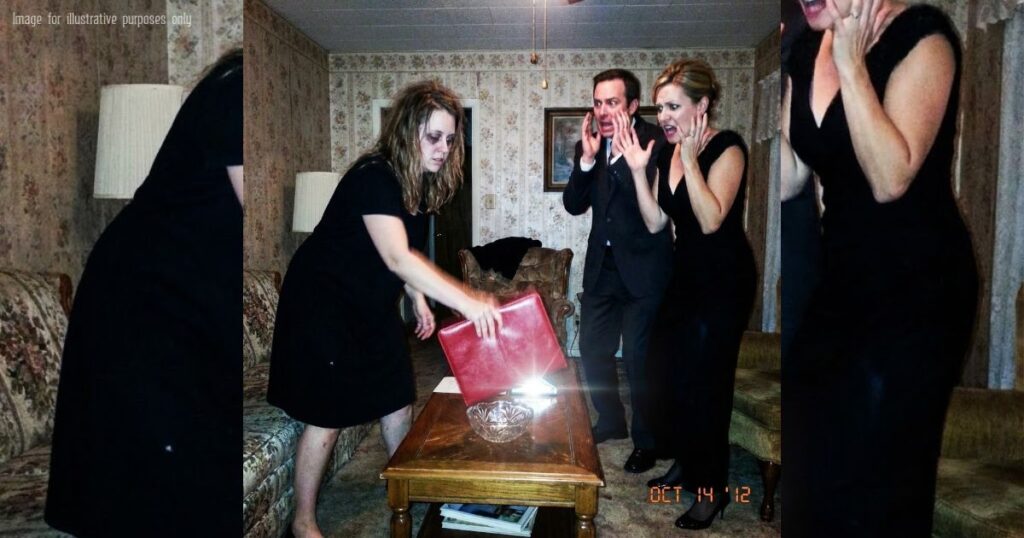
If you read Part 1, you already know how it ended: my siblings stormed off my porch in shiny rental cars, calling me a thief—while I stood inside my house, holding a red folder that proved I’d paid for this place with twelve years of my life.
I thought the worst part was over.
I was wrong.
Because when people like Steven and Patty lose money, they don’t grieve.
They don’t reflect.
They don’t apologize.
They rebrand.
The morning after the funeral, I woke up at 9:17 a.m.
Nine.
Seventeen.
That number sounds normal to most people.
To me, it felt like waking up in someone else’s body.
For twelve years, my life was scheduled by pill bottles and pain. By chemo appointments. By alarms that went off at 2:00 a.m., 3:00 a.m., 4:00 a.m.—the hours when fear crawls out of the walls and sits on your chest.
Now there was nothing.
No scream from the hallway.
No weak voice calling my name.
No “Emily, where am I?” from a man who used to build birdhouses and fix faucets with two turns of a wrench.
Just silence.
And for a moment, I didn’t feel free.
I felt… useless.
Like a tool that had been used until it broke, then tossed in a drawer.
I made coffee out of habit. Stood at the sink. Stared out at the yard where Dad used to sit with his morning cup, tapping ash into an old tin can even after we begged him to quit.
Then my phone started buzzing.
Not ringing.
Buzzing.
Like something alive trapped under glass.
One text.
Then three.
Then nine.
Then a call from a number I didn’t recognize.
I didn’t answer.
I opened social media without thinking—because when your life has been that isolated, you don’t even realize you still have the reflex to check what the outside world is doing.
And there it was.
Patty had posted a video.
A beautifully edited, tearful, soft-filtered montage of our mother.
Music swelling.
Slow-motion hugs.
Black-and-white clips of Mom smiling weakly from her recliner.
And then Patty’s face—close-up, mascara perfect, eyes wet—whispering into the camera:
“I’ve been quiet for a long time because I didn’t want to shame my own sister.
But grief changes you. And truth matters.
My mother is gone… and my little sister stole everything.”
My stomach dropped so fast I tasted metal.
The caption read:
“Some people use caregiving as a cover for control. I’m begging anyone who’s been through inheritance theft… tell me what to do.”
The comments were already exploding.
She manipulated them.
Call a lawyer immediately.
Caregivers can be abusers too.
Family isn’t supposed to charge family.
Put her on blast.
Then the line that made my hands shake:
“Tag the local news.”
I scrolled further.
Patty had posted my full name.
My town.
A photo of the house.
My house.
The one I had spent twelve years keeping quiet inside, like a church.
Now strangers were debating whether I was a hero or a monster—before I’d even brushed my teeth.
I kept scrolling.
Steven had commented too.
Not with rage.
Not with insults.
With calm, corporate language.
“We are exploring legal options. Vulnerable adults were exploited here.”
Vulnerable adults.
As if my parents were helpless dolls I’d posed and pocketed.
As if I hadn’t been the one holding their bodies upright when they couldn’t stand.
As if I hadn’t been the one wiping the corners of my mother’s mouth when she couldn’t swallow without choking.
My heart started pounding like I was back in those nights with Dad screaming at shadows.
My hands went numb.
And then a new message came in.
From Steven.
Just two words:
“Check email.”
I opened my inbox.
There was a formal letter attached—written by a legal office with a generic name that screamed billable hours.
It claimed my parents were “under duress.”
It claimed I had “isolated them from family.”
It claimed the contract was “unconscionable.”
It demanded I “vacate the property” pending review.
And it ended with a threat:
“Any public statements may be considered defamation.”
I laughed.
It wasn’t funny laughter.
It was the kind of laugh you make when your body doesn’t know whether to cry or vomit.
Defamation.
The siblings who posted my name, my town, and my home address were warning me about defamation.
I sat down on the kitchen floor.
Not because I was weak.
Because my legs stopped working.
For twelve years, I had been invisible unless someone needed something.
Now I was a headline in my own life.
I looked at the living room—still neat, still careful, like my mother might come back and see dust on the mantle.
And suddenly I understood something I’d never admitted:
They weren’t just trying to take the house.
They were trying to take my story.
They were trying to rewrite the last twelve years as something ugly, because if I stayed the hero, then they were the villains.
And nobody wants to live in a story where they’re the villain.
So they were going to burn the whole book down.
I stood up.
Slowly.
I walked to the safe.
Pulled out the red binder again.
Then I opened the drawer where I kept everything I never showed anyone—because in caregiving, you learn fast that if you can’t prove it, it didn’t happen.
A spiral notebook full of daily logs.
Dates.
Times.
Symptoms.
Medication changes.
Weight loss.
Falls.
Doctor’s instructions.
A stack of receipts.
Medical supply invoices.
Pharmacy printouts.
And the texts.
So many texts.
Me: “Can you send $50 for Dad’s prescription? Insurance won’t cover it.”
Steven: “Can’t. We’re stretched thin right now.”
Me: “Mom needs a night nurse once a week. I haven’t slept.”
Patty: “We all make sacrifices, Em. You chose to stay.”
Me: “Dad wandered outside at 2am. I’m scared.”
Patty: “Have you tried calming music?”
Calming music.
Like dementia is a mood you can fix with a playlist.
My hands stopped shaking.
Not because I wasn’t scared.
Because anger has its own kind of steadiness.
I could feel the argument forming in my chest—the one that was going to split people into two camps instantly.
The argument that always goes viral because there is no comfortable answer:
Do you owe your family your life… for free?
Or are caregivers allowed to be compensated?
Do we praise caregivers as “angels” and then punish them the moment money enters the conversation?
Do we clap for the sacrifice—until it comes with a receipt?
I knew exactly what Steven and Patty were counting on.
They wanted this to be simple.
Good sister. Bad sister.
Poor rich siblings. Evil freeloader.
They wanted the public to see a sad influencer crying and assume that meant she was truthful.
Because on the internet, tears are treated like evidence.
And quiet people are treated like suspects.
My phone buzzed again.
A voicemail.
Patty.
Her voice was trembling in the fake way I remembered from the funeral.
“Emily… please don’t do anything crazy. We can talk. Just… don’t post. Don’t embarrass the family.”
Embarrass the family.
Not hurt you.
Not I’m sorry.
Not you carried them.
Just: don’t embarrass us.
I stared at the wall for a long time.
Then I whispered to the empty kitchen:
“You embarrassed the family the day you turned love into content.”
I didn’t mean it as an insult.
I meant it as a fact.
Because that’s what this was.
Content.
They weren’t grieving. They were managing optics.
And what they feared wasn’t losing in court.
Click the button below to read the next part of the story.⏬⏬