It was losing in public.
Losing followers.
Losing clients.
Losing that polished identity they’d built where everyone thinks they’re the kind of person who shows up.
They didn’t show up.
They posed.
I opened my laptop.
My fingers hovered over the keyboard.
I could destroy them with one post.
Screenshots.
Receipts.
Dates.
Times.
I could make them infamous in our tiny community.
I could make every person who ever clapped for Patty’s “family values” posts feel sick.
But then I pictured my mother.
Not the frail version.
The real version.
The woman who used to cut crusts off sandwiches and hum while folding laundry.
And I heard her voice like a memory you can’t shake:
“Don’t let bitterness make you someone you don’t recognize.”
I didn’t want revenge.
I wanted the truth.
So I made a choice that felt like walking into a storm without a coat.
I filmed a video.
No filter.
No music.
No tears on command.
Just me, sitting at our kitchen table.
The same table where I had crushed pills into applesauce at midnight.
I looked awful.
Hair unwashed.
Eyes hollow.
Skin blotchy.
Not “viral pretty.”
Real.
I pressed record.
“Hi. My name is Emily.”
I swallowed.
“If you watched my sister’s video, you probably think I stole from my parents. You probably think I’m the kind of person who waits for death to cash in.”
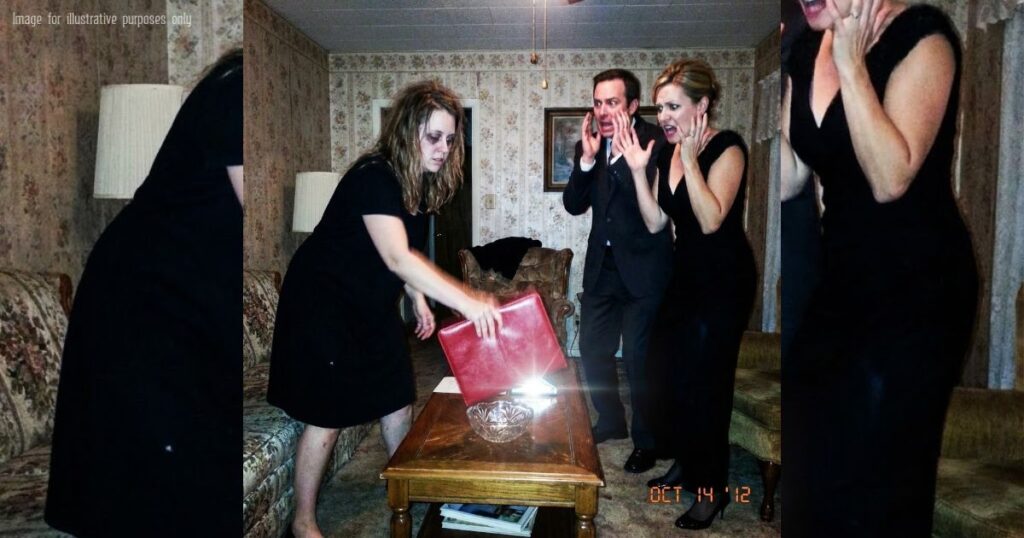
I held up the red binder.
“This is a notarized deed and caregiver contract signed ten years ago. It was drafted by a professional and signed when my parents were evaluated as mentally competent.”
I paused.
“And here’s the part everyone keeps skipping.”
I leaned toward the camera.
“My siblings didn’t lose their parents ten years ago.”
“I did.”
“Ten years ago, when Dad forgot my name for the first time, I lost him.”
“When Mom threw up for the third day straight after chemo, I lost her.”
“When I stopped being a daughter and became a nurse, a guard, a cleaner, a translator between doctors and fear—my life ended and I started living someone else’s.”
I inhaled.
“This house wasn’t bought with cash. It was bought with nights I didn’t sleep and years I didn’t get to live.”
I looked down, then back up.
“If you think caregivers should do that for free because ‘family is family,’ then say it with your whole chest.”
“Say: The person who stays should be punished for staying.”
“Say: The person who leaves should still get paid.”
I let that sit.
“Because that’s what this argument really is.”
I didn’t show private medical photos.
I didn’t call them names.
I didn’t mention any brands, companies, or real workplaces.
I just laid out the truth, like a clean sheet on a bed.
Then I said the line I knew would split the internet in half:
“I don’t want to destroy my siblings. But I will not be destroyed to protect their image.”
I ended it with something quieter.
“To anyone caring for a parent right now: keep records. Not because you’re greedy. But because the world forgets what you gave the moment the giving stops.”
I posted it.
Then I turned my phone face-down and waited.
Within an hour, my video had more comments than Patty’s.
Not because I was smarter.
Because I said what millions of people are terrified to admit:
That love can be real—and still cost you everything.
The comments were war.
One side:
You earned that house.
Caregiving is unpaid labor.
The siblings are parasites.
The one who shows up should inherit more.
The other side:
Family shouldn’t charge family.
She exploited them.
Contracts inside families are disgusting.
She’s bitter and wants control.
People were screaming at each other in paragraphs.
Strangers were using my life as a courtroom.
And then something happened that I didn’t expect.
A woman I barely knew—someone from town—commented:
“I saw Emily pushing her father in the snow. For years. I never once saw the other two.”
Then another:
“Emily sat with her mom at the clinic almost every week. I remember because I was there too.”
Then another:
“I delivered meals to that house. Emily was always the one answering the door.”
The story stopped being a he-said-she-said.
It became a community memory.
And community memory is the one thing money can’t buy.
My phone rang again.
Steven.
I answered.
His voice was tight.
“Take it down.”
“I’m not lying,” I said.
“It doesn’t matter,” he snapped. “This is hurting us.”
Us.
Not Mom.
Not Dad.
Not me.
Us.
“The legal letter,” I said calmly, “was that supposed to scare me?”
Silence.
Then: “You’re making us look like monsters.”
I stared at the kitchen wall.
“No,” I said softly. “I’m letting people see what you’ve been hiding.”
He hissed, “You’re ruining our lives.”
And I realized the most controversial truth of all:
They weren’t angry because the contract existed.
They were angry because the contract proved something permanent.
That while they were building careers, I was holding a dying world together with my bare hands.
And they wanted the reward without the sacrifice.
I said, very clearly:
“If you want peace, stop posting my name and my address. Stop threatening me. Stop trying to take the only thing I have left.”
“And if you want forgiveness…”
I paused.
“You can start by telling the truth. Publicly.”
Steven’s voice dropped, cold and controlled.
“You’ll regret this.”
Then he hung up.
That night, I sat in Dad’s chair again.
The house was still quiet.
But now it wasn’t just sanctuary.
It was a battlefield line.
Because I knew what was coming next.
They’d escalate.
They’d file something.
They’d call someone.
They’d try another angle.
But the internet had already done what the courtroom might never do:
It had asked the question nobody wants to answer at Thanksgiving:
Who deserves the reward—
the ones who leave and succeed…
or the one who stays and disappears?
And the most viral part wasn’t my pain.
It was the uncomfortable mirror.
Because everyone watching had a version of this story in their own family.
An aunt who did everything.
A son who vanished.
A daughter who became a nurse.
A brother who showed up only for the will.
And the reason people were fighting so hard in the comments was simple:
They weren’t arguing about me.
They were arguing about themselves.
I turned off the lights.
Went upstairs.
And for the first time in twelve years, I didn’t set an alarm.
But before I fell asleep, one thought burned through me—sharp, steady, undeniable:
If loving your parents makes you invisible…
then the world needs to change what it calls “family.”