Last week I sat on a metal bleacher and listened to strangers call my daughter “dead weight.” Today, I am still that same mom in the same small town—but I am not the same woman who stayed quiet.
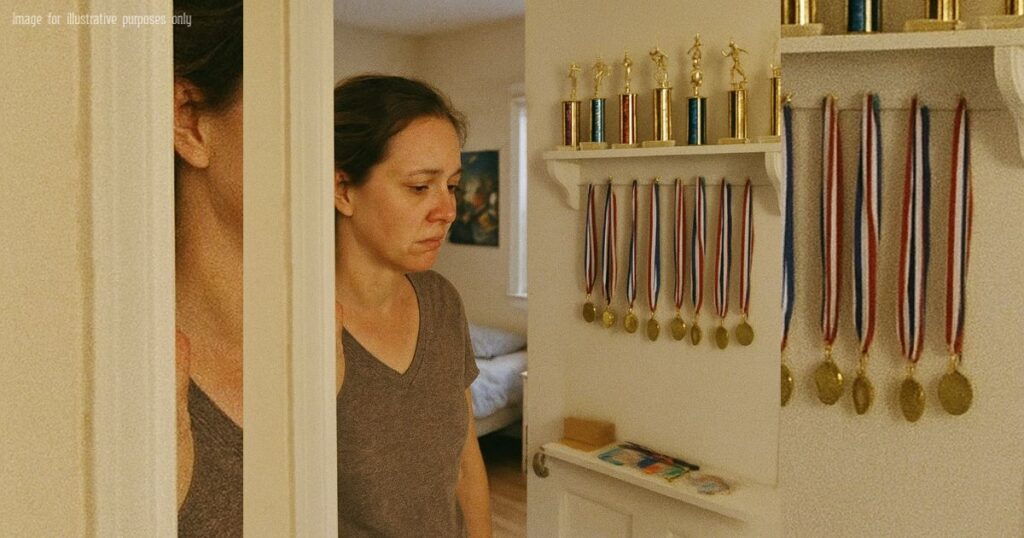
The night after that game, after Maya finally fell asleep, I stood alone in her doorway.
Her room was dark except for the sliver of hallway light and the soft glow of her twinkle lights. She was wrapped around her stuffed sloth, hair fanned out on the pillow, mouth slightly open the way it had been when she was a toddler.
My chest ached.
I could still hear those voices in my head, like a bad song on repeat.
Dead weight.
Pathetic.
Charity.
I walked over to her shelf and picked up one of the plastic participation trophies. This one had a little golden figure holding a soccer ball, even though it was from a summer art camp five years ago. The engraved plate said:
“Thank you for being part of our team.”
I ran my thumb over those words.
Being part of our team.
Somewhere along the way, we started acting like team means “best player only.” Like the rest of the kids are background noise.
Mark came to stand beside me, his hand resting gently on my back.
“You okay?” he whispered.
“No,” I said. My voice cracked. “I heard what they said about her.”
He closed his eyes, jaw tightening. “I figured. I saw your face.”
We stood there in silence for a few seconds. The kind of silence where a lot is being said without words.
“I should have said something,” I finally whispered. “I just sat there.”
Mark shook his head. “You protected her in the moment. She didn’t hear it. That matters.”
“But I heard it,” I said. “And if I heard it, other kids probably have, too. Maybe even their own kids. What are we doing?”
Mark looked at the trophies.
“Sarah,” he said quietly, “you know what I see when I walk into this room?”
“What?”
“I see a kid who keeps stepping into things she’s not good at yet,” he said. “Do you know how rare that is? My students would rather not try at all than risk looking foolish.”
I swallowed hard.
“I used to hate these,” I admitted, holding the little plastic figure up. “I thought they meant we were lowering the bar.”
“Maybe,” he said. “Or maybe we just changed what we reward. We used to only reward winning. Now we’re trying, clumsily, to reward courage.”
I hate it when my husband is right.
“Then maybe the trophies aren’t the problem,” I said slowly. “Maybe… we are.”
He let out a soft breath. “Welcome to the other side.”
We both laughed quietly, the kind of tired laugh you only have when you’ve cried first.
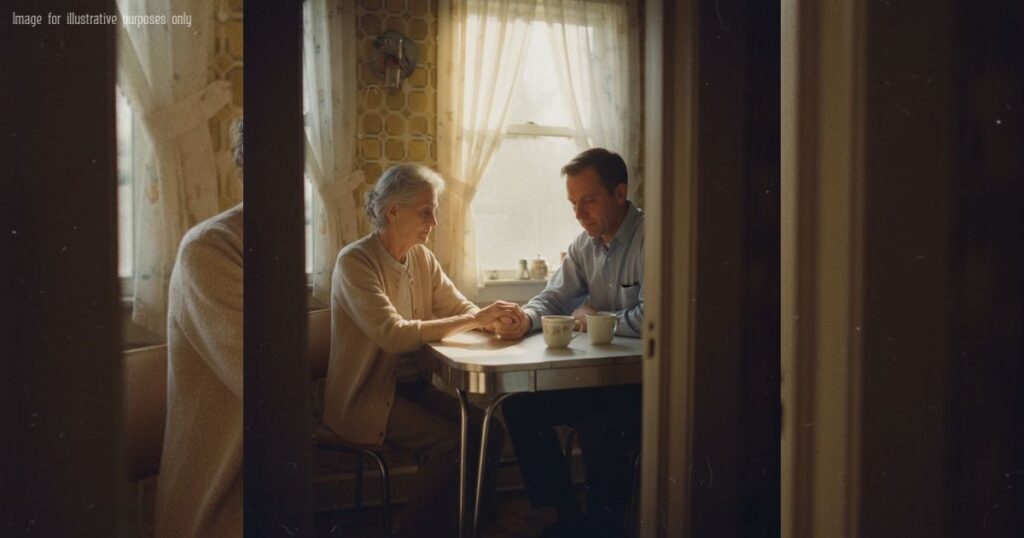
Later that night, downstairs at the kitchen table, I opened my laptop. Mark kissed the top of my head.
“Don’t stay up too late,” he said. “And don’t read the comment section on anything. Ever.”
“Famous last words,” I muttered.
I didn’t plan to do anything big. I just started typing.
I wrote about the game. About Maya. About the “Mean Girl” video and the year we lost her to fear. I described the dads in the bleachers without naming them. I wrote about those trophies and how I’d judged them.
Mostly, I wrote to get the poison out of my bloodstream.
I posted it to my personal page. No names. No school. No league. Just my heart on a screen, pushed out into the void.
Then I closed my laptop and went to bed.
By Sunday morning, my phone was buzzing on the nightstand.
I ignored it at first.
Then I didn’t.
When I finally picked it up, there were dozens of notifications. Friends. Old classmates. Parents from town. A cousin states away.
“THIS.”
“I’m crying at 7 a.m.”
“My son is that kid.”
“I used to be that dad in the bleachers. I’m so sorry.”
My post had been shared, then reshared, like someone had quietly set it on a river and the current took it. A local community group picked it up. Someone screenshotted it and posted it to a parenting forum.
I felt… exposed.
But I also felt something else.
Less alone.
Sunday afternoon, I got a message from Coach Dan.
Hey Sarah, can we talk before practice Tuesday? No worries, nothing bad.
My stomach flipped anyway, because I am a millennial mom and that is how my nervous system works.
On Tuesday evening, I drove Maya to practice. The sky was the gray of dishwater, and a damp chill hung over the field. Parents clustered with their hands in their pockets, breath visible in small clouds.
Maya ran off to join her teammates, ponytail bouncing.
I watched her jog awkwardly toward the group, then I saw it—another girl ran over and high-fived her.
“Did you see that?” I asked Mark, who had walked up beside me from the parking lot.
“I did,” he said softly. “That’s a trophy right there.”
Coach Dan waved me over. He’s in his early thirties, the kind of guy who still looks like he could play if he wanted to. Baseball cap, whistle, permanent sunburn.
“Hey, Sarah,” he said. “Thanks for coming a few minutes early.”
“Everything okay?” I asked.
He nodded. “Yeah. I just wanted to say… I read your post.”
My cheeks went hot. “Oh. I didn’t mention the team by name. I hope it didn’t cause trouble.”
“Not at all,” he said. “If anything, it was a wake-up call. A good one.”
He shifted his weight, looking out at the kids warming up in their mismatched cleats.
“I knew some of the parents were intense,” he said. “I didn’t realize…” He sighed. “I didn’t realize they were saying things like that. I should have been more aware.”
“You’re coaching twelve-year-olds,” I said kindly. “Not grown adults who should know better.”
He smiled, but his eyes were serious.
“I’m making a few changes,” he said. “Before the game this weekend, I’m gathering the parents. I’m laying out expectations. Cheering is allowed. Criticism of any kid is not. If they don’t like it, they can sit in the car or stay home.”
I stared at him, surprised.
“That’s… huge,” I said. “You don’t have to do that.”
“Yeah,” he replied. “I do.”
He hesitated.
“And for what it’s worth,” he added, “Maya’s one of the bravest kids I’ve met. She’s the first one to help pick up cones. She asks good questions. She cheers loudest for her teammates even from the bench. That matters to me.”
My throat tightened. “Thank you,” I managed.
As I walked back to the sideline, I felt something loosen in me.
It wasn’t that the problem was solved. It was that someone else had decided to step into the arena with us.
Saturday came again. Another home game.
The air was colder, the trees along the road a little barer than the week before.
Parents milled around with folding chairs and thermoses.
I spotted the “pro-dads” from last time.
They stood in a familiar clump, arms crossed, branded hats pulled low. One of them caught my eye and looked away quickly, like a kid who’d been caught with his hand in the cookie jar.
Coach Dan blew his whistle, called everyone in. Kids huddled around him in a semi-circle on the field. Then, unexpectedly, he turned toward the bleachers.
“Parents!” he shouted. “Can I get you for a minute before we start?”
The chatter died down. People shifted, confused.
We walked closer, forming a loose, awkward ring.
“This will be quick,” he said. “I just want to remind everyone what we’re doing here. These kids are here to learn, to grow, to be part of a team. They’re going to make mistakes. They’re supposed to. That’s literally the assignment.”
A few parents chuckled.
“I love that you cheer,” he continued. “Cheer your kid. Cheer the team. Cheer the other team.
But if I hear anyone putting down a child—any child—calling them names, criticizing them, making them feel smaller, I will ask you to leave. No discussion. No debate. This field is for players, not critics.”
You could feel the discomfort ripple through the crowd. The “pro-dads” shifted. One of them stared hard at his shoes.
No one said a word.
Then a mom near the end of the row called out, “Thank you, Coach.”
Others murmured in agreement. You could almost hear the balance of the bleachers tilt.
I looked at Maya out on the field, tugging her jersey over her long-sleeve shirt, laughing at something a teammate said. She had no idea this conversation was happening on her behalf, and on behalf of a dozen other kids like her.
Click the button below to read the next part of the story.⏬⏬