PART 2 — The Will, the Hashtag, and the Hallway
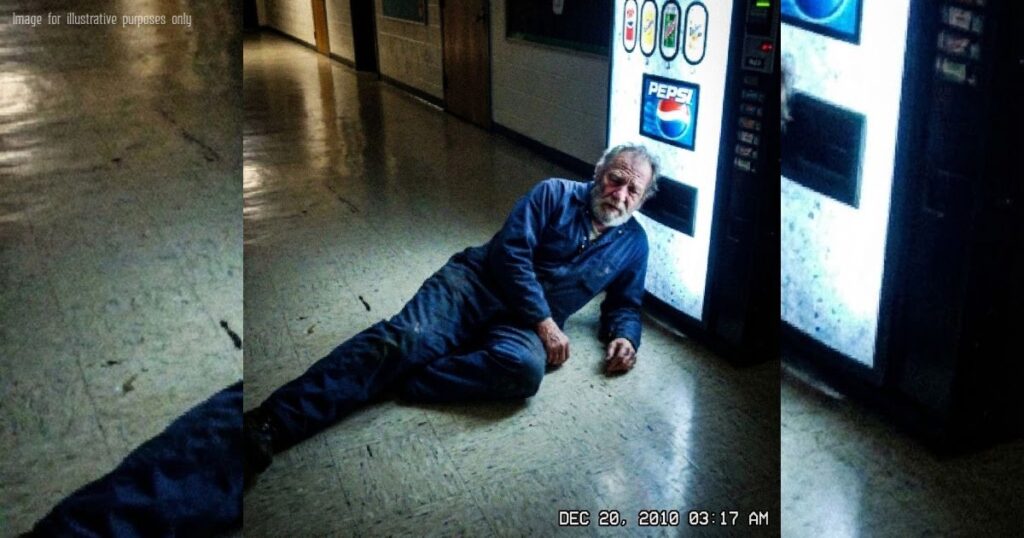
By Monday morning, Hallway B wasn’t just the place where Elias Thorne died.
It was the place where the town started arguing about what it meant.
The school tried to open like normal—bells, announcements, lockers slamming, teenagers pretending nothing touches them. But you could feel the air change the second you stepped inside.
Because the vending machine was still humming.
And right beside it, where the waxed linoleum still held a faint scuff from the buffer’s wild circles, someone had built a shrine.
Not the tidy kind the administration prefers.
This was messy grief.
Paper cranes taped to lockers. Handwritten letters stuffed between vents. A line of granola bars and cheap bottled water like offerings. A winter coat draped over a folding chair, like someone was saving a seat for him.
And in the center, leaning against a gray locker door, was a sign written in thick black marker:
WE SEE YOU NOW.
I stood there longer than I meant to, staring at it with that helpless, swallowed feeling you get when your brain understands something your heart still can’t fit inside.
Then Principal Miller came around the corner with two assistant principals and a custodian I didn’t recognize.
He stopped.
He looked at the shrine the way a man looks at a problem he didn’t budget for.
“Okay,” he said carefully, voice low like he was approaching a wild animal. “This is… heartfelt. But we can’t block the hallway.”
A sophomore girl stepped forward, eyes red and shining like glass.
“This isn’t blocking anything,” she said. “It’s honoring someone you let die on the floor.”
A few heads snapped toward her.
A few adults flinched like she’d thrown a rock.
Principal Miller’s smile tightened. “No one let him—”
Tyrell appeared from the crowd like a storm front.
He didn’t yell this time.
He just pointed at the floor, right at that invisible spot where the man’s body had been.
“For six hours,” Tyrell said, voice shaking with a calm that scared me more than anger. “You didn’t know. Not one alarm. Not one check-in. Not one human being.”
The assistant principal stepped in. “Tyrell, we understand you’re upset—”
“No,” Tyrell said. “You understand you’re embarrassed.”
The hallway went quiet in that way that makes you hear every little sound—the fluorescent lights, the distant bell, the soft buzz of the vending machine like it was breathing.
Then Principal Miller straightened his tie.
“I’m asking everyone to clear this,” he said. “Fire hazard. Safety codes.”
A murmur rolled through the students like a low wave.
“Safety,” someone whispered, bitter and loud enough to catch.
“Where was the safety at 3:17?”
That’s when I saw her.
Katherine Thorne stood behind the administrators, a step back, like she didn’t belong in their neat line.
Her expensive coat looked wrong under the flickering hallway lights. Her hair was pulled back tight, the way people do when they want to look controlled while their insides are breaking.
She stared at the shrine like it was a language she’d never learned.
Then her gaze fell on the coat draped over the chair.
Her mouth trembled, almost imperceptibly.
And for the first time since the funeral, she looked less like a “corporate daughter” and more like a kid who’d missed something she can’t get back.
She took a step forward.
“Please,” she said softly, and it wasn’t a command. It was a request. “Don’t take it down.”
Principal Miller turned to her. “Ms. Thorne, we have to consider—”
Katherine didn’t look at him.
She looked at the students.
“At Maya, standing with her arms crossed like she was holding herself together. At Tyrell, with his jaw clenched so hard you could see the muscle in his cheek. At the quiet kids pressed against the lockers, clutching folded notes like they were holding oxygen.
“My father…” Katherine swallowed. “He wouldn’t want you punished for loving him.”
A senior in the back said, “We’re not loving him. We’re protecting his memory from getting sanitized.”
That word—sanitized—hung in the air like smoke.
Because everyone knew what was coming.
The school board meeting.
The cameras.
The speeches.
The way tragedy gets turned into a clean poster with a logo and a ribbon-cutting.
And the way the people who actually bled never get asked what they want.
That night, the auditorium filled like it was a championship game.
But instead of foam fingers and school colors, there were handmade signs on poster board.
PAY THE NIGHT STAFF.
STOP BUYING TROPHIES, START BUYING DINNERS.
A NAME ON A BUILDING IS NOT A HEARTBEAT.
The board members sat on stage behind long tables, looking stiff and important under the spotlights.
I’d seen them at events before—smiling at donors, shaking hands, making speeches about “community values.”
Tonight, they looked like they’d walked into a room where the air belonged to someone else.
Principal Miller began with a prepared statement about “loss” and “healing” and “moving forward together.”
It was polite.
It was careful.
It was also the kind of language that makes teenagers feel like adults are trying to wrap their pain in bubble wrap and put it on a shelf.
When he finished, Board Chairwoman Lawson leaned into the microphone.
“We will honor Mr. Thorne,” she said. “We are proud to rename the media center in his memory. And we are launching a small scholarship fund—”
A laugh cut through the room.
Not cruel. Not even loud.
Just one short, sharp burst of disbelief.
It came from Maya.
She stood up slowly, hands shaking.
“A small scholarship fund?” she repeated. “He fed people. Like, literally. He fed people.”
Click the button below to read the next part of the story.⏬⏬