The chairwoman’s smile stayed on like a mask. “Young lady, I’m sure your emotions are high, but—”
“Don’t,” Maya said, voice rising. “Don’t call it emotions like it makes it less true.”
A murmur of agreement swept through the seats.
Tyrell stood too.
“We don’t want a ribbon,” he said. “We want a system that doesn’t need a secret saint in the boiler room.”
That line hit like a punch.
Even the teachers reacted. Heads turned. Eyes widened.
Because it was the uncomfortable truth.
Eli had been filling a gap everyone knew existed, but no one wanted to name out loud.
Board Member Jensen cleared his throat. “We have limited resources. We just approved the new athletic facility because it benefits—”
“Benefits who?” a parent shouted.
“Benefits what?” a student yelled.
A man in the middle rows stood up, wearing a work jacket with grease stains on the cuffs.
“My daughter’s in band,” he said. “She practices after dark. The parking lot lights don’t work half the time. But y’all got money for a bigger scoreboard.”
A woman behind him stood too, holding a toddler on her hip.
“My son’s lunch account went negative last month,” she said. “He cried in the car because he thought he did something wrong. Mr. Thorne gave him snacks so he wouldn’t feel ashamed.”
The chairwoman raised a hand. “We cannot discuss individual student accounts—”
“Of course you can’t,” someone snapped. “You can discuss stadium budgets. You can’t discuss hungry kids.”
The room started to boil.
And that’s when Katherine stood up.
She didn’t walk to the microphone like she owned it.
She walked like she was stepping onto ice.
“Hi,” she said, voice thin. “I’m Katherine. I’m his daughter.”
The room quieted—not out of respect, exactly, but out of curiosity.
The daughter.
The person everyone had already decided was either villain or victim.
“I’ve heard… a lot,” Katherine said, looking out at the crowd. “I didn’t know who my father was to you. I didn’t know he was… this.”
A few students scoffed quietly.
Katherine flinched, but she didn’t stop.
“I thought he chose distance,” she continued. “I thought he chose his job over me. And I’m realizing now that he wasn’t choosing work. He was choosing… people who needed him.”
Tyrell’s eyes narrowed. “So what now?”
Katherine’s throat moved as she swallowed.
“Now,” she said, “I’m trying to catch up to a man who lived an entire second life.”
She reached into her coat and pulled out a folded paper.
“It’s not an apology,” she said. “It’s not a speech.”
Then she looked down, and her voice changed—softer, like she wasn’t performing anymore.
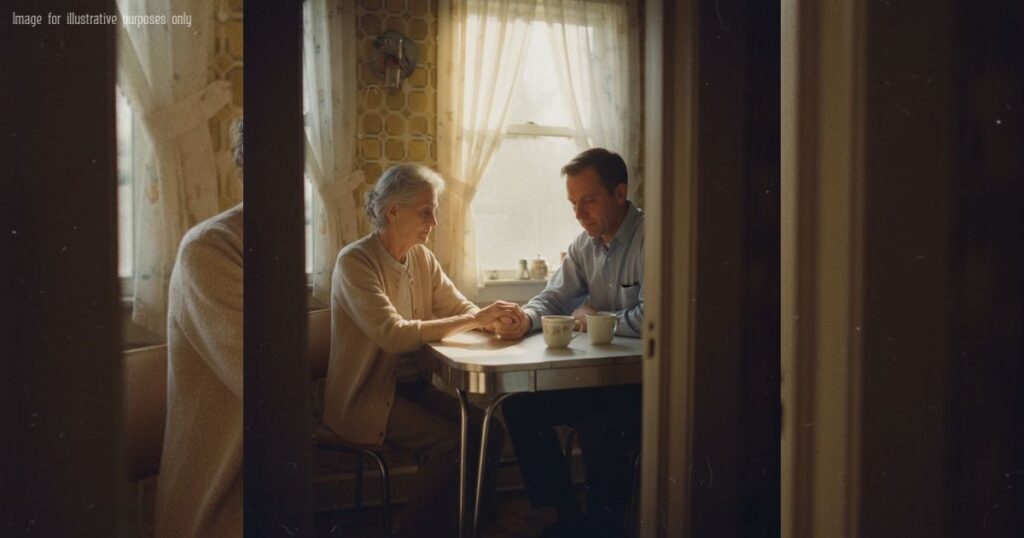
“This was in his apartment,” she said. “On the kitchen table. Unsent.”
She unfolded it with trembling fingers.
And she read.
He wrote in blocky, old-fashioned handwriting, the kind you learn when you’re taught that clarity matters.
He wrote like someone who didn’t waste words.
But every sentence felt like a hand on your shoulder.
Katie, it began.
If you are reading this, it means I didn’t call like I kept telling myself I would. I’m sorry. Not the polite kind. The real kind.
I didn’t stop loving you. I stopped believing you needed me.
A sound came from somewhere in the auditorium—a small, choked sob.
Katherine kept reading, tears running down her face now, uncontrolled.
You built a life. I watched from far away and I felt proud and useless at the same time. And then I found this school.
I found kids who looked like I felt when your mother died. Like someone had switched the world to mute.
They didn’t need speeches. They needed food. They needed someone to sit beside them when they thought they were broken.
I never told you because I was afraid you’d think I was trying to be a hero. I wasn’t. I was trying to stay alive.
A silence settled over the room—heavy, reverent, uncomfortable.
Then she reached the part that made the air crack.
Also, Katie… the money isn’t yours.
Katherine’s breath hitched.
A low ripple moved through the crowd.
Board members shifted in their chairs.
Katherine’s eyes darted up, startled, like she’d just realized she was reading something out loud that people weren’t ready to hear.
But she kept going.
I know that sounds harsh. Hear me out.
I’m not punishing you. I’m trusting you.
You have a salary. You have a network. You have doors that open when you knock.
These kids have none of that. And I’m tired of watching good hearts get crushed because nobody in power notices them until they’re a headline.
So I set up the trust. Quietly. Legally. With people who will do the paperwork right.
It will fund the pantry. The coats. The books. The emergency rides. The things a building full of adults should have handled without needing an old man in a mop bucket.
Katherine’s voice broke on the last line.
She pressed a hand to her mouth like she might fall apart completely.
But the room wasn’t done.
Because that single sentence—the money isn’t yours—lit the fuse of the debate everyone was already carrying inside them.
A man stood up near the aisle.
“Wait,” he said. “He was really rich?”
A woman answered from two rows back, sharp. “Who cares? He did good!”
Another voice, louder, angry. “His daughter should get something. That’s her father!”
A student shouted back, “We got something. We got fed!”
A parent snapped, “That doesn’t mean his own child gets nothing!”
Someone else said, “Maybe the child got plenty while everyone else got crumbs!”
And just like that, the room split into the most American argument of all:
What do we owe our family?
What do we owe our community?
What counts as love—money, time, presence, sacrifice?
And who gets to decide?
The chairwoman banged the gavel, face flushed.
“Order!” she called. “Order!”
But grief doesn’t order itself.
Tyrell turned to Katherine, eyes shining.
“You didn’t know,” he said, and it wasn’t kindness. It was simply truth. “But now you do.”
Katherine nodded once, like a person accepting a sentence.
“I do,” she whispered.
Then she lifted her chin.
“And I’m not here to fight you,” she said to the room. “If you think my father was wrong, you can say it. If you think he was right, you can say it.”
She looked at the board.
“But don’t you dare use his name like a coat of paint,” she said, voice suddenly steel. “If you hang his portrait while cutting the next night custodian’s hours, you didn’t honor him. You just decorated your guilt.”
That line landed hard.
Even the board chairwoman blinked, stunned.
Katherine turned back to the crowd, tears still on her face.
“My father didn’t die because his heart gave out,” she said. “He died because this building ran like a machine with no human backup.”
She pointed, not accusing one person—accusing a pattern.
“So here’s what I’m asking for,” she said. “Not a ribbon. Not a speech.”
“A policy,” Tyrell said quietly.
Katherine nodded.
“A policy,” she repeated. “Two adults on duty at night. A check-in system that requires a response. A pantry that isn’t hidden like contraband. And a budget that treats people like people.”
The auditorium erupted—some cheering, some shouting, some furious, some relieved.
Controversy, live and breathing.
But underneath it, there was something else.
A movement.
Not the clean, comfortable kind that fits in a press release.
The messy kind that forces a town to look in a mirror and argue about what it sees.
After the meeting, Hallway B filled again.
Not with paper cranes this time.
With bodies.
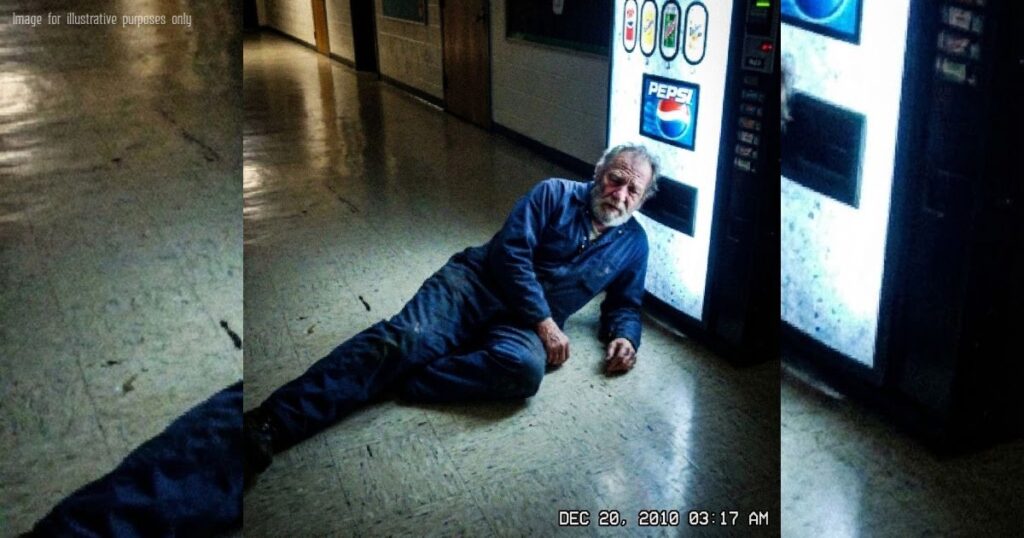
Students taking turns sitting on the floor beside that humming vending machine, like they were keeping watch.
Like they were rewriting the ending.
I walked past them on my way out, and a freshman looked up at me.
“Is this too much?” he asked, voice small. “Are we being dramatic?”
I looked at the kids on the floor—kids who’d been fed in secret, saved in secret, loved in secret—now refusing to be quiet about it.
And I thought about a man who spent his life helping people without asking to be seen.
“No,” I said. “This is what it looks like when people finally stop confusing ‘normal’ with ‘acceptable.’”
The freshman swallowed.
Then he nodded, like he understood something he’d never been taught in a classroom.
As I stepped outside into the cold, my phone buzzed.
A video had already hit the internet—Katherine reading that letter, voice breaking on the words the money isn’t yours.
Comments were pouring in faster than I could scroll.
Some people called Eli a saint.
Some people called him irresponsible.
Some people called Katherine ungrateful.
Some people called her brave.
Some people argued about inheritance like it was a sport.
Some people argued about poverty like it was a choice.
And in the middle of the noise, one comment kept repeating in different forms, over and over, like a bell you can’t un-hear:
Why did it take a death for anyone to care?
That’s the uncomfortable message people will fight about, because it hits too close.
We love to praise “quiet heroes.”
It lets the system off the hook.
It lets us feel inspired without changing our habits.
But Elias Thorne didn’t need to be a legend.
He needed to be a man with a heartbeat who wasn’t alone on a floor at 3:17 AM.
So here’s the question this story leaves you with—one that will make people angry enough to argue in the comments all night:
If someone has to become a memorial before you treat them like a human…
Did you ever really see them at all?
Thank you so much for reading this story!
I’d really love to hear your comments and thoughts about this story — your feedback is truly valuable and helps us a lot.
Please leave a comment and share this Facebook post to support the author. Every reaction and review makes a big difference!
This story is a work of fiction created for entertainment and inspirational purposes. While it may draw on real-world themes, all characters, names, and events are imagined. Any resemblance to actual people or situations is purely coincidenta