If you think the story ended with an old man eating a peanut-butter sandwich in peace, you’re wrong—because that dented metal lunchbox ended up putting my whole job, and our idea of “truth,” on trial.
This is what happened after Frank took that first bite.
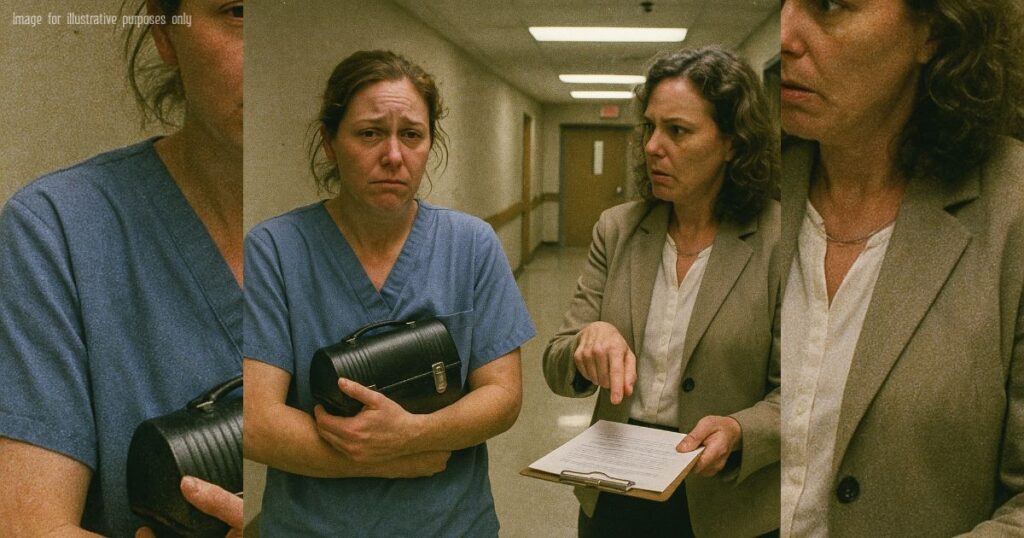
A week later, my supervisor asked me to come to the conference room on my lunch break.
That was my first clue something serious was coming—no one calls a meeting at noon unless it’s important.
When I walked in, it wasn’t just her.
The social worker was there. The unit director. The nurse educator. Even the chaplain, sitting quietly in the corner with his hands folded.
My supervisor folded her hands on the table.
“We’re not here to punish you,” she started, which is exactly what people say when punishment is definitely on the menu. “We’re here to talk about… ethics.”
The nurse educator slid a printed article across the table.
Big bold letters on top: THERAPEUTIC FIBBING IN DEMENTIA CARE. Underneath, words like “person-centered” and “emotional truth” and “clinical boundaries.”
“We heard about the lunchbox,” the social worker said gently. “Frank’s son mentioned it. He’s very grateful.”
She paused. “But he also said you told his father that Martha sent the food.”
I swallowed.
“Yes,” I admitted. “I did.”
“And Martha,” my supervisor said carefully, “has been gone for six years.”
The room got very still.
A clock on the wall ticked loudly, like it was counting down to something.
The chaplain finally spoke.
“Do you feel you lied to him?” he asked.
I thought about Frank’s hands on that napkin. The way his shoulders had squared with pride. The way his heart rate had settled, his breathing even and calm.
I thought about the word “combative” in his chart, and how I hadn’t seen that version of him since the lunchbox arrived.
“I feel like I honored his reality,” I said quietly. “In his mind, it’s 1965. He’s on break. His wife packed his lunch. I met him there instead of dragging him into a world he doesn’t understand.”
The director leaned forward.
“But where is the line?” she asked. “If we let one nurse say ‘your wife sent this lunch,’ do we let another tell a resident, ‘your parents will be here soon,’ even if their parents died fifty years ago? At what point are we comforting them, and at what point are we just making ourselves feel better?”
That was the question, and we all knew it.
It’s the one no policy manual really answers.
I shrugged, even though my chest was tight.
“Frank was dying,” I said. “Not because his organs failed, but because nobody was talking to the version of him who was still alive. The man who hears that clank of metal and thinks, ‘My wife loves me enough to pack my lunch.’ Did I use Martha’s name? Yes. Did it bring him peace? Also yes.”
The nurse educator chewed on her pen cap.
“Some families believe we should always tell ‘the truth,’ no matter how confusing or painful it is,” she said. “Others beg us not to remind their loved ones of losses they relive like they’re happening for the first time. Whatever we do, someone will say we’re wrong.”
There it was—the controversy no one wants to admit out loud.
We all love the idea of dignity. We just don’t agree on what it actually looks like.
The social worker pushed her glasses up her nose.
“David asked for a care conference,” she said. “He wants to be here. He specifically wants to talk about the lunchbox.”
For a second, my stomach dropped.
I pictured him angry, accusing me of manipulating his dad, of “pretending” his mother was still alive.
Then David walked in carrying the lunchbox.
He sat down, set it gently in the middle of the table, and rested his hands on either side of it like it was an old family Bible.
“I heard you’re all worried about this little piece of metal,” he said, half a smile tugging at his mouth.
“We’re not ‘worried,’” my supervisor corrected carefully. “We’re… discussing the implications.”
David nodded.
“Yeah. The implications,” he said. “Like the implication that my dad is finally eating. The implication that he called me ‘buddy’ yesterday and asked if I ‘got the job at the plant,’ which I never had, but for the first time in months, he knew I was his son and not just a stranger in a button-down shirt.”
He tapped the lunchbox with one finger.
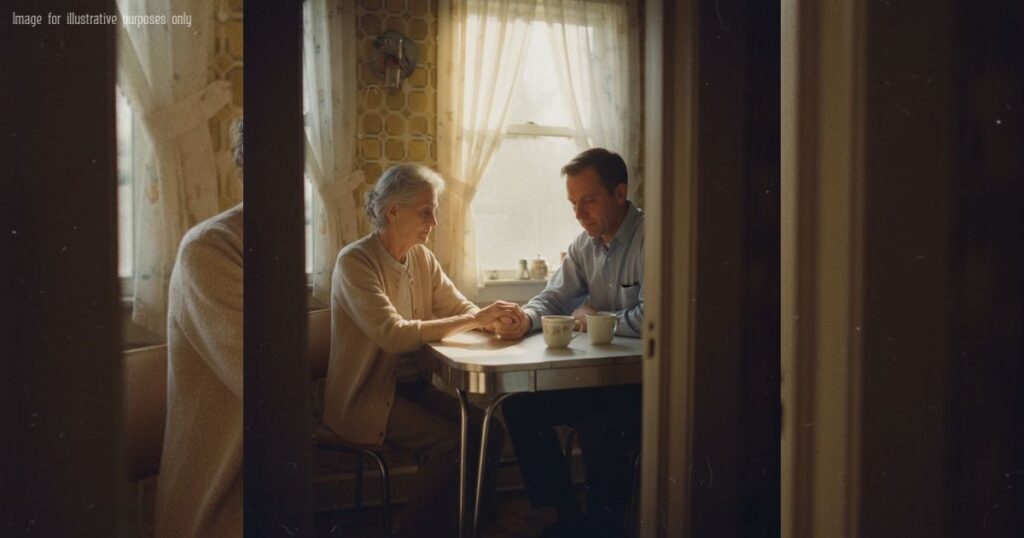
“For years, I tried to force him into my world,” he said. “I’d sit at his kitchen table explaining bank statements and health forms and memory tests, and he’d just stare at the window, lost. I thought if I pushed hard enough, he’d come back.”
He glanced at me.
“She’s the first person who had the guts to go into his world instead.”
The room went silent.
“I know Mom is gone,” he continued, voice catching. “I signed the paperwork. I picked out the urn. I sat in the front row at the service. My dad doesn’t know any of that. In his mind, she’s still making coffee and yelling at him to wear a jacket.”
He swallowed. “If you can give him thirty minutes a day where that world is still real, who exactly is that hurting?”
The director clasped her hands a little tighter.
“There are people who would say we should always orient the patient to reality,” she said. “Remind them what year it is. Tell them who has passed. They argue that ‘lying’ is disrespectful.”
David nodded slowly.
“I respect that opinion,” he said. “Really. But from where I’m standing, ‘reality’ is watching the man who raised me sit in a chair and stop wanting to live because everything familiar has been taken away at once. If you want to debate philosophy, that’s one thing. If you’re talking about my dad getting one more good lunch break before he dies? I’ll choose whatever gives him peace.”
Click the button below to read the next part of the story.⏬⏬