The chaplain looked at me.
“What do you think is more important?” he asked. “The factual truth, or the emotional truth?”
I didn’t answer right away.
In nursing school, they teach you about vital signs, medication interactions, fall risk. They don’t tell you what to do when ‘truth’ becomes a moving target.
“Maybe the bigger question,” I finally said, “is whose truth we’re protecting. Are we protecting ours, so we can feel like we did everything ‘by the book’? Or are we protecting theirs, so the last chapter of their life isn’t just fear and confusion and fluorescent lights?”
Nobody wrote anything down, but I could feel the sentence hanging in the air.
After the meeting, we didn’t get a new policy.
There was no dramatic vote or laminated poster on the wall.
What we did get was a quiet, unofficial rule:
If you’re going to step into a resident’s reality, you do it thoughtfully. You don’t use it to avoid hard things. You use it to give them dignity they can actually feel.
A few days later, another nurse tried something different with one of our residents, a retired teacher who spent her evenings pacing the hallway, clutching an invisible gradebook.
Instead of telling her, “Sit down, Mrs. Harper, school is over,” he handed her a stack of scrap paper and said, “You’re behind on grading. Want some help?”
She burst into tears.
Not because she was upset, but because someone finally remembered who she used to be.
Of course, not everyone loved it.
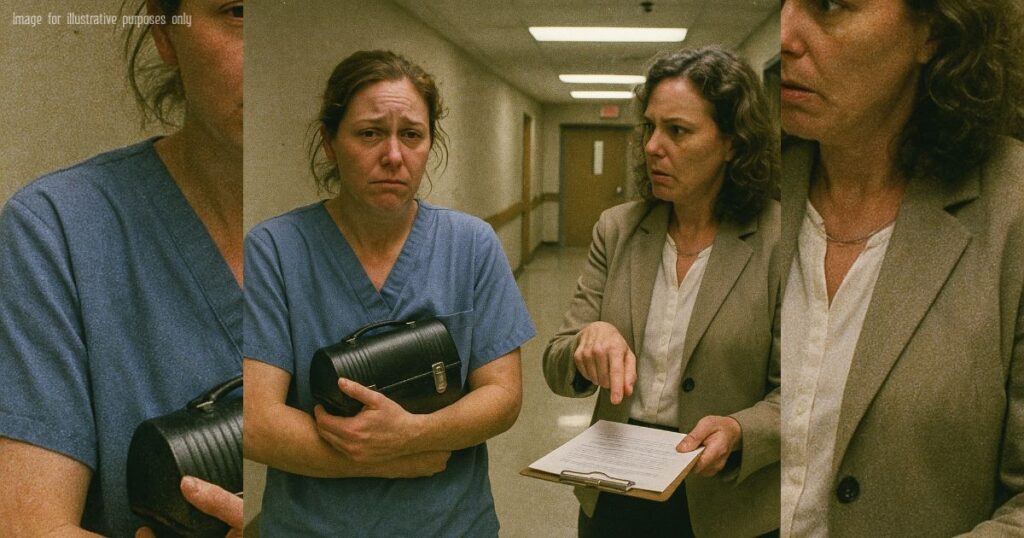
One family member confronted me at the nurses’ station after hearing the story about Frank.
“My mother thinks her baby is still alive,” she said sharply. “He died when he was three days old. Are you telling me you’d let her believe that? Are you saying we should pretend he’s just… at daycare somewhere?”
I looked her straight in the eye.
“No,” I said gently. “I’m saying we’d sit with her in her grief and comfort her. I’m saying we’d talk about the love she has for that baby, not argue about calendar dates. I’m saying we’d ask, ‘What do you need right now?’ instead of, ‘Here’s what really happened thirty years ago.’”
She stared at me, torn between anger and understanding.
“I don’t know if I agree with you,” she whispered.
I nodded.
“That’s okay,” I said. “Honestly, some days I don’t know if I agree with me either.”
Because that’s the part nobody posts on motivational quote pages.
It’s messy. It’s complicated. It doesn’t fit on a poster in the hallway.
We live in a country where we’re told to “speak your truth” and “be honest no matter what,” but we quietly outsource our elders’ hardest days to strangers making just above minimum wage and then argue online about whose version of “truth” is morally superior.
We say we honor our grandparents, but we measure their care in fifteen-minute increments and plastic trays.
Here’s what I know for sure, even on the days I doubt myself:
A man who wouldn’t eat for four days ate when someone remembered who he believed he still was.
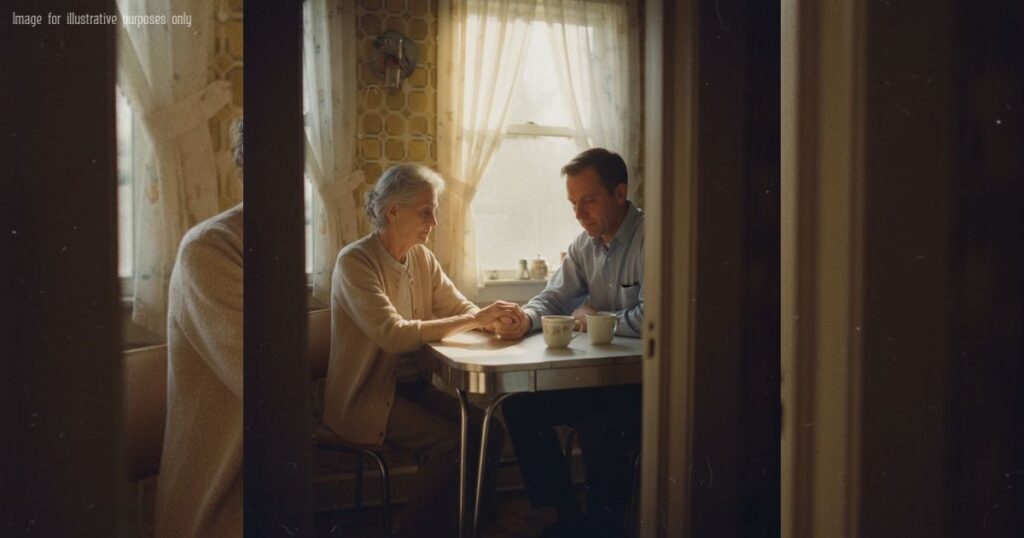
A son who had no idea how to talk to his father found a way to sit with him again—over coffee that had gone lukewarm and a sandwich wrapped in wax paper.
I don’t have a neat answer for the ethics committee.
I can’t give you a flowchart that tells you when to correct a memory and when to just hold a hand and step into a different decade for a while.
All I can tell you is this:
When Frank’s hands tremble around that lunchbox, he’s not “combative” or “noncompliant” or “a difficult case.”
He’s a man on his lunch break, loved by a woman named Martha who packed his food and his future for decades.
If that makes me a liar in someone’s book, I can live with that.
What I can’t live with is letting a man starve to death because I was more afraid of breaking a rule than breaking a cycle of neglect.
You don’t have to agree with me.
You can believe we should always tell the hard facts, even to someone whose brain is crumbling like old paper.
But the next time you talk about “truth” and “honesty” in dementia care, I hope you remember a dented black lunchbox, a napkin that says Love, Martha, and an old man who finally decided to eat.
Then you can decide for yourself:
Is a kind lie really worse than a cruel truth, when the clock is running out on both?
Thank you so much for reading this story!
I’d really love to hear your comments and thoughts about this story — your feedback is truly valuable and helps us a lot.
Please leave a comment and share this Facebook post to support the author. Every reaction and review makes a big difference!
This story is a work of fiction created for entertainment and inspirational purposes. While it may draw on real-world themes, all characters, names, and events are imagined. Any resemblance to actual people or situations is purely coincidenta