I almost put my mother in a state-run facility last Tuesday. I was angry. I was tired. I was five minutes late for a conference call and holding a bill for her assisted living care that cost more than my mortgage.
“She’s impossible,” I told my wife, throwing my keys on the counter. “She complains about the food. She forgets who I am half the time. And when she does remember, she just stares at me with this… judgment.”
I decided that weekend I was going to sell her house. The old Victorian on Elm Street that smelled like lavender and dust. It was time to liquidate. Move on.
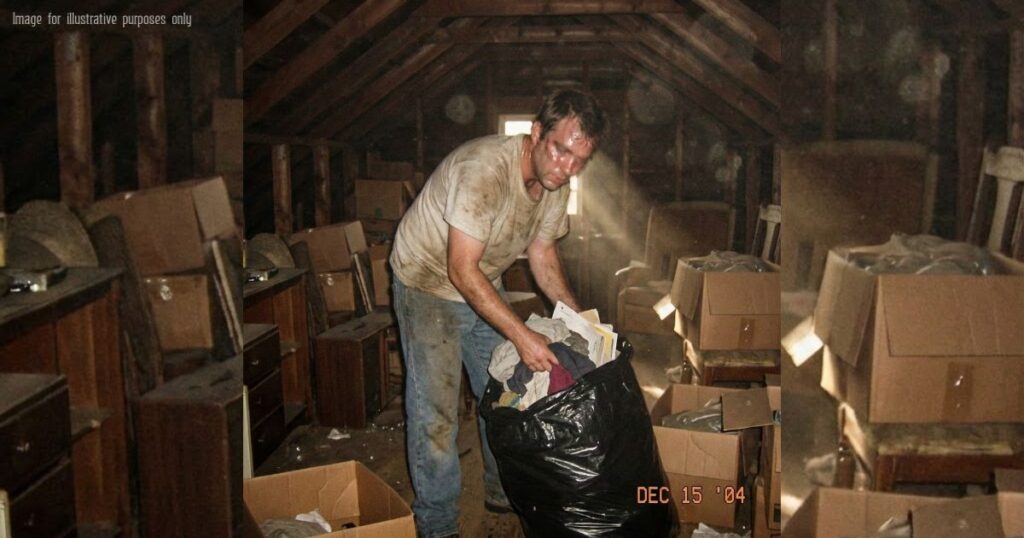
I spent Saturday afternoon in her attic, angrily shoving fifty years of life into black heavy-duty trash bags. Old coats. broken lamps. Stacks of Reader’s Digest. I was tossing things with a rhythm of resentment—trash, trash, trash.
Then, I dropped a shoebox.
It hit the floor hard, the lid popping off. It wasn’t filled with jewelry or cash. It was filled with little spiral-bound notebooks. Diaries. And a stack of papers banded together with a rotting rubber band.
I sat on the dusty floor, checking my watch. I have ten minutes, I thought.
I picked up the bundle of papers first. The top one was a receipt from a Pawn Shop downtown. “Gold Wedding Band. 14k. Payout: $120.” The date was June 12, 1998.
I froze. June 1998. I was a senior in high school. That was the week I needed a deposit for the senior class trip. I remembered begging her. I remembered her saying, “I’ll figure it out, Michael.”
I thought she had pulled extra shifts at the diner. I didn’t know she had sold the only thing my father left her before he walked out.
I opened the first notebook. The handwriting was shaky, hurried. “The bank called again today. I told them the check is in the mail. It isn’t. I skipped lunch all week to buy Michael’s cleats. He looked so happy when he made the team. God, please don’t let him see me cry when I get home. I have to be strong. I have to be the rock.”
I opened another from 2008, the year the economy crashed. I had just lost my first job. I remembered moving back home, feeling like a failure. I remembered snapping at her, telling her she didn’t understand stress. The entry read: “Michael is home. He is so angry at the world. My heart breaks for him. I stopped taking my blood pressure medication to save money for groceries so the fridge looks full for him. He needs to feel safe. He needs to think his mother has it under control. I will carry this worry so he doesn’t have to.”
I sat there for an hour. Then two. The sunlight shifted across the attic floor, illuminating the dust motes dancing in the air.
For forty years, I had judged this woman. I thought she was distant. I thought she was strict. I judged her silence as a lack of affection.
I realized then that her silence wasn’t emptiness. Silence was her shield.
It was her way of protecting me from the darkness she survived. She absorbed the blows of poverty, of loneliness, of heartbreak, and she filtered it all out so that the only thing that reached me was stability.
She hid the weight of her scars—wounds that quietly reopened every time bills came due or memories surfaced—just so I wouldn’t have to carry the burden.
I looked at the trash bags filled with her life. I felt a sob rise in my throat so violent it actually hurt my chest.
I drove to the facility. I didn’t care about the speed limit.
When I walked into her room, she was sitting in her wheelchair by the window, looking out at the parking lot. She looked so small. Her hair, once thick and dark, was a thin halo of white.
She turned to me, her eyes cloudy. “Michael? Is something wrong? You look… tired.”
Even now. Even with her mind fading, her first instinct was to check on me.
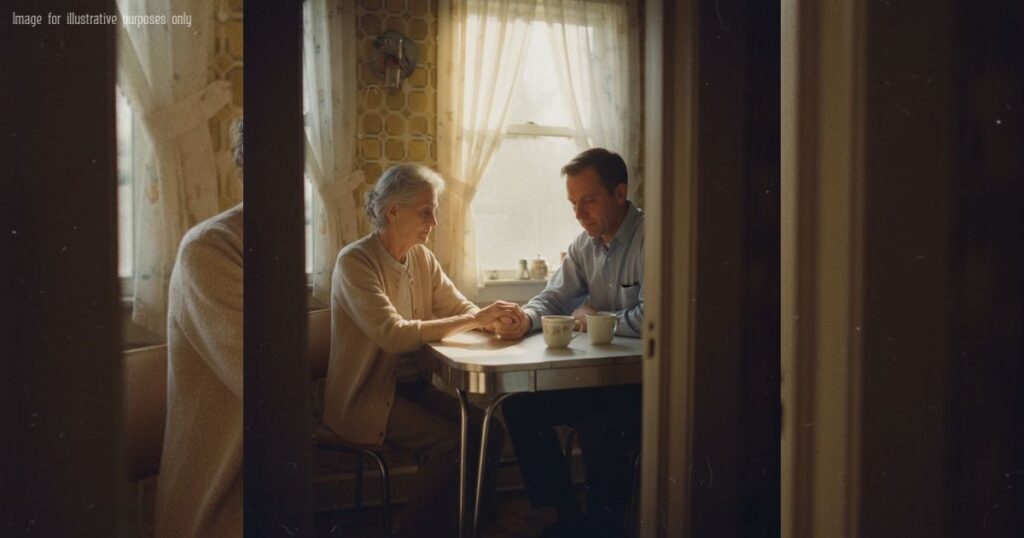
I didn’t say a word. I walked over, dropped to my knees beside her wheelchair, and buried my face in her hands. Those hands were rough, the skin paper-thin. Hands that had scrubbed floors, signed pawn slips, and held back tears for decades.
“I’m sorry,” I whispered. “I’m so sorry I didn’t see you.”
A mother is the heartbeat of love and the foundation of life itself. She carries a depth of unconditional love that no words—and certainly no teenage angst or adult busyness—can truly capture.
We are so quick to judge our aging parents in this country. We warehouse them. We get frustrated when they move slow, when they tell the same story twice, when they become “difficult.”
But we forget to ask: Who was she before I existed?
You may never know the silent battles she fought. You may never understand the woman she had to kill inside herself so that the mother could be born.
Do not judge her. Instead, sit beside her.
Listen to her stories, even the ones that don’t make sense. Hold her hand. Treat her with the gentleness she gave you when you were helpless, because now, the roles are reversing. She is a blessing beyond measure.
There is a powerful truth I learned on that dusty attic floor: The way you treat your mother is the way life will treat you.
It isn’t just a saying; it is the energy you send into the universe. If you sow impatience and neglect, you will harvest a lonely future. But if you honor her, if you cherish her, you welcome peace and grace into your own destiny.
There is only one mother. You don’t get a rewrite. You don’t get a sequel.
If you do not cherish her now, regret will one day fill the space where love once lived. And let me tell you, when those sleepless nights arrive, it will not be the cost of the nursing home that keeps you awake.
It will be the heavy weight of unspoken words, missed moments, and the chances you never took to thank her for the suffering she hid behind a smile.
Call her. Go see her. Forgive her. Love her. Before the silence becomes permanent.
—
PART 2 — “The Bill That Arrived After the Apology”
If you read Part 1, you know I ended up on my knees beside my mother’s wheelchair, my face pressed into the hands I spent forty years misunderstanding.
What you don’t know is what happened the very next morning—the morning the system reminded me that love doesn’t come with a receipt… but care does.
And it was due.
Click the button below to read the next part of the story.⏬⏬