Love is choosing which bill to pay first.
The next day I called my sister.
We hadn’t spoken in months—not because we hated each other, but because grief and responsibility create silence the way winter creates ice.
She answered on the third ring, voice cautious.
“What’s wrong?”
“She’s getting worse,” I said.
A pause.
Then, quieter: “I know.”
I gripped the phone.
“Do you?” I asked, and I hated the edge in my own voice. “Do you know what it costs? Do you know what it takes to be the one who goes there, who signs, who pays, who hears her cry at night when she thinks she’s in a different decade?”
Her breath hitched.
“You think I don’t feel guilty?” she snapped.
And there it was.
The split that destroys families.
The caregiver feels abandoned.
The absent sibling feels accused.
Both feel like they’re drowning, just in different water.
We talked for an hour.
We fought.
We cried.
We said things we should’ve said years ago.
And by the end, nothing was magically fixed—but for the first time, it wasn’t just me holding the entire weight.
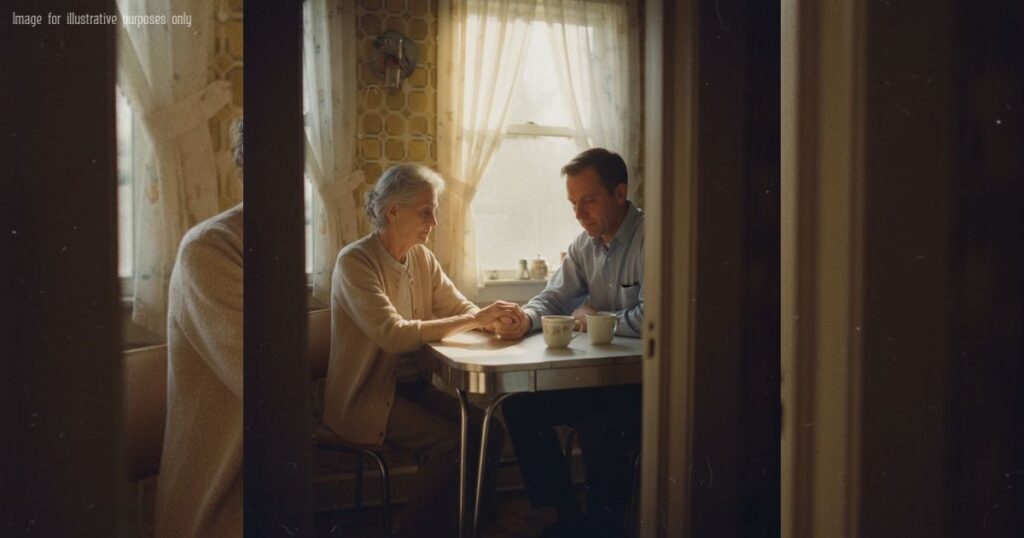
That weekend, we went to see our mother together.
My sister brought a photo album.
I brought one of the diaries.
We sat on either side of the wheelchair like bookends trying to keep a story from falling apart.
My mother looked from her to me and frowned.
“Are you two… mad?” she asked.
“No,” my sister said quickly, taking her hand. “We’re here.”
My mother blinked, confused, then oddly relieved—like some old part of her recognized the sound of that word.
Here.
And then my mother did something that startled both of us.
She reached toward me, touched my wrist with that paper-thin hand, and whispered, “You found it.”
My heart stopped.
“What?” I breathed.
She leaned in, like she was telling me a secret.
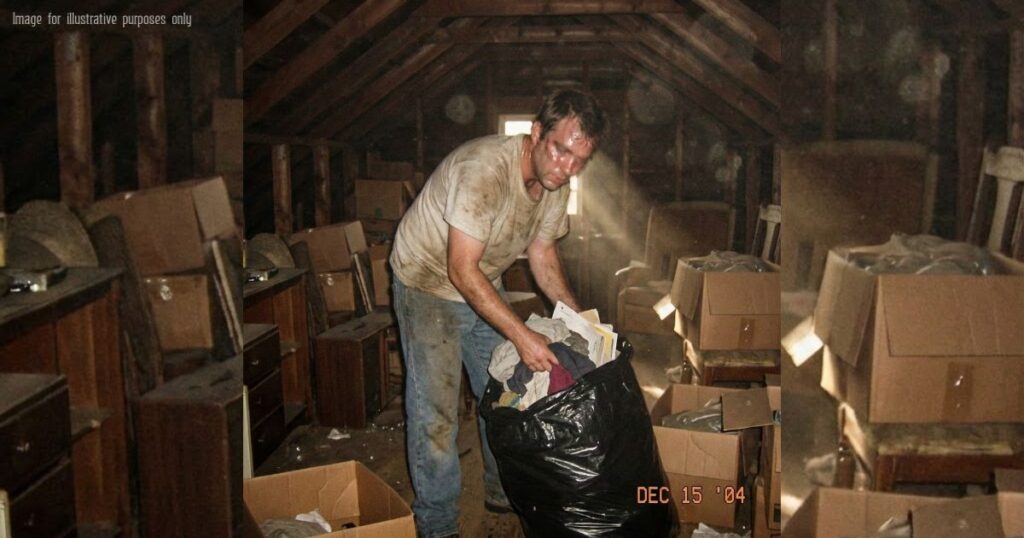
“The box,” she whispered. “In the attic.”
My sister stared at me, eyes wide.
I couldn’t speak.
My mother’s gaze drifted, but her mouth kept moving.
“Don’t throw me away,” she said softly.
And that’s when I realized the worst part.
It wasn’t just the facility.
It wasn’t just the money.
It wasn’t even her memory.
It was the fear beneath all of it—the fear that when she became inconvenient, she’d become disposable.
Just like she always fought to make sure I never felt.
I held her hand tighter.
“You’re not trash,” I said, voice breaking. “You never were.”
She looked at me like she didn’t fully understand the words, but she understood the warmth.
And for that moment, it was enough.
Here’s what I want to say—what Part 2 is really about, what I wish someone had told me before I almost made the decision that would’ve haunted me forever:
Stop making this a morality contest between “good children” and “bad children.”
Some people keep a parent at home and it destroys them.
Some people choose a facility and it saves their sanity—and keeps their parent safer.
Neither choice is clean.
Both choices can be loving.
And both choices can be selfish, depending on the heart behind them.
The real enemy isn’t the adult child who’s exhausted.
The real enemy isn’t the daughter who lives far away.
The real enemy is a reality where an entire generation is being crushed between raising kids and caring for parents while pretending they’re supposed to do it with a smile.
So yes—this will be controversial.
I’m going to say it anyway:
If you’ve never had to choose between your mother’s care and your child’s college savings… be careful who you judge.
If you’ve never had to calculate love in monthly payments… be careful who you shame.
And if you’re in it right now—if you’re the one holding the clipboard, signing the forms, swallowing the guilt—please hear me:
You are not heartless for being overwhelmed.
You are human.
But here’s the part I won’t compromise on, the part my mother taught me without meaning to:
Even if you can’t fix everything…
show up.
Even if she forgets your name…
hold her hand.
Even if you’re angry…
sit beside her anyway.
Because one day, the facility will stop calling.
The bills will stop arriving.
And the silence will become permanent.
And when it does, you won’t remember the exact amount you paid.
You’ll remember whether you were there.
And if you’re reading this and your mother is still alive—somewhere, anywhere—do yourself a favor:
Don’t wait for an attic box to teach you what you already know.
Call her.
Visit her.
Ask her who she was before you.
And if you want to argue in the comments about what the “right” choice is—home, facility, shared care, anything—go ahead.
But argue with compassion.
Because the truth is… most of us are one phone call away from finding out how hard love can be.
Thank you so much for reading this story!
I’d really love to hear your comments and thoughts about this story — your feedback is truly valuable and helps us a lot.
Please leave a comment and share this Facebook post to support the author. Every reaction and review makes a big difference!
This story is a work of fiction created for entertainment and inspirational purposes. While it may draw on real-world themes, all characters, names, and events are imagined. Any resemblance to actual people or situations is purely coincidenta