PART 2 — The Day the “Good Guy” Tried to Finish the Job
If you read Part 1, you already know I didn’t just cancel a wedding—I escaped a plan.
But what no one tells you is this: when you step out of someone’s cage, the person who built it doesn’t clap.
They panic.
And they start trying to drag you back in—quietly, strategically, with a smile.
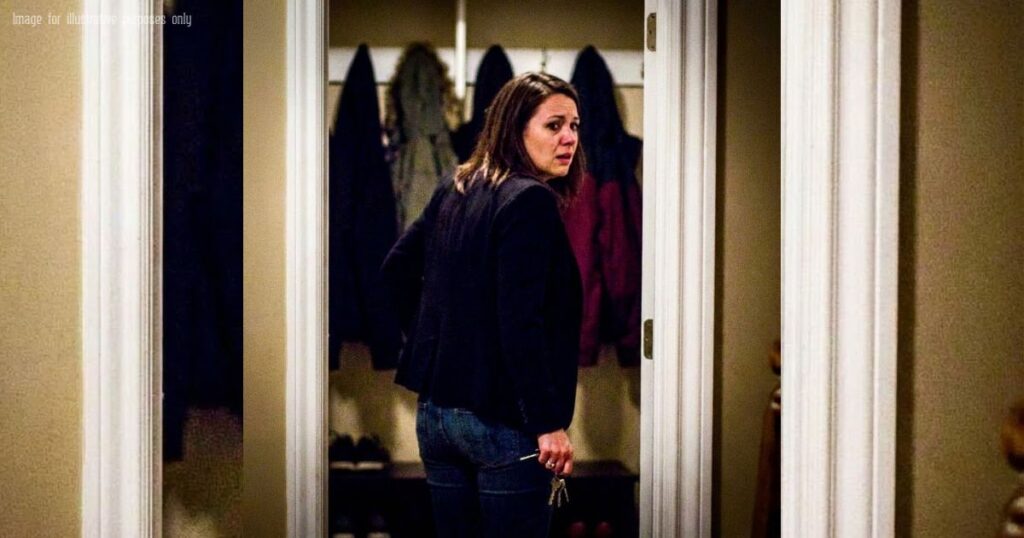
The first week after I called it off, I moved like a ghost through my own house.
Boxes everywhere. Half-empty closets. The dress still hanging in the guest room like a dare.
It was strange how fast a “future” can become clutter.
Friends I thought were solid went silent.
Not because they hated me—because my decision made them uncomfortable.
It made them imagine their own relationships, their own compromises, their own swallowed anger… and they didn’t want to.
The messages came in waves.
Some were sweet. “I’m proud of you.” “I wish I had your courage.”
Others were sharp, like people were personally offended that I didn’t “see it through.”
“You’re thirty-two,” one aunt wrote, like it was a diagnosis.
“Six years is a long time,” a friend said, as if time is a reason to accept being managed.
And the one that made my stomach turn the most: “Every man talks like that. You took it too literally.”
The smear campaign didn’t stop when the deposits cleared.
His mother posted vague quotes about “women who destroy good men” and “selfishness disguised as independence.”
His sister reshared it with little captions that felt like they were written with lipstick and teeth.
Mark did the opposite of what I expected.
He didn’t rage publicly. He didn’t drag me in a comment section.
He went quiet, like a person who believes silence makes him look innocent.
Then, on day nine, I found a plain envelope taped to my front door.
No fancy letterhead, no logos, no drama—just a few pages that made my vision blur.
It wasn’t a lawsuit. It was something softer.
A “request.” A “demand.” A neat little breakdown of money I “owed” because I “ruined” the wedding.
As if my soul had a cancellation fee.
I sat on the floor in my entryway and laughed once—one sharp sound that didn’t match my face.
Then I cried so hard my ribs hurt, not because I missed him… but because I realized something terrifying.
He still thought I belonged to the plan.
That night, I finally listened to the voicemails instead of deleting them.
His voice was a performance in stages: remorse, confusion, anger, sorrow, negotiation.
Like a man flipping through masks until one fits the moment.
“I don’t know what happened to you,” he said in one.
“I’m worried you’re not well.”
And there it was—the same poison, delivered gently: If you disagree with me, you must be broken.
A few days later, he showed up at my house anyway.
Not pounding, not screaming. Just standing there in the driveway with that familiar, reliable-guy posture.
Hands in his pockets. Shoulders slightly hunched. See? I’m harmless.
“I just want to talk,” he said, like I hadn’t given him six years of conversation.
Like my entire decision hadn’t been triggered by the first honest sentence I ever overheard.
I didn’t invite him in.
I didn’t have to be dramatic to be firm.
I stood on my porch, barefoot, and felt the cold air under my toes like a reminder that I was real.
He stared past me into the hallway, probably noticing the missing pictures, the emptier walls.
He blinked like he was calculating what was salvageable.
Not us—his image.
“You really think I meant that?” he asked.
He said it softly, almost affectionate, as if my memory was a misunderstanding he could pet into silence.
“I think you meant it enough to say it calmly,” I replied.
“And I think you meant it enough to say it in front of your mother and sister like it was normal.”
His jaw tightened for half a second.
It was tiny, but I saw it—the irritation of a man realizing his usual tools weren’t working.
Then he smiled again, because that’s what “good guys” do when they’re losing.
“You’re throwing away a good man,” he said.
And there it was again—the message aimed at every woman’s pressure point.
Don’t you know how rare a “good man” is? Don’t you know you should be grateful?
I wanted to say something cruel.
I wanted to remind him that “good” doesn’t include planning to “fix” someone like a defective appliance.
But I didn’t give him a fight to hold up as proof that I was “unstable.”
So I asked him one question.
“If you didn’t mean it,” I said, “what did you mean by ‘the leverage shifts’?”
His eyes flicked away.
Not because he didn’t understand the question—because he understood it perfectly.
And for the first time, the mask slipped.
“It’s just…” he began, then sighed like he was tired of explaining simple math.
“It’s just how marriage works. You stop acting like you’re alone. You think about the unit.”
The unit.
Not love. Not partnership. Not mutual respect.
The unit.
“And in your version,” I said, “I ‘calm down’ and ‘fall in line.’”
He opened his mouth, then shut it again.
A long beat hung between us, and in that beat I learned something I wish more people understood.
A person who truly loves you doesn’t need to be careful with their words when describing your future.
They don’t talk about you like a wild animal.
They don’t treat commitment like a trap.
He stepped closer, lowering his voice like we were sharing a secret.
“You’re making this into something it’s not,” he said. “My mom gets in my head. I was just trying to keep the peace.”
There it was—the classic excuse dressed up as virtue.
He wasn’t controlling; he was “peaceful.”
He wasn’t passive; he was “patient.”
He wasn’t planning my shrinkage; he was “protecting the relationship.”
I felt something settle in my chest, cold and solid.
Not anger. Not grief.
Certainty.
“I’m not your peace project,” I said. “And I’m not your unit.”
For a moment, his face went blank.
Not sad. Not heartbroken.
Blank—like someone staring at a locked door that used to open for them automatically.
Then he did the thing that still makes my skin prickle when I think about it.
He smiled—small, polite—and said, “You’ll regret this.”
Not I’ll miss you.
Not I’m sorry.
Not I understand why you’re hurt.
“You’ll regret this.”
A prediction. A warning. A future he still believed he could control.
He left after that, calm as ever.
And I stood on the porch shaking, not because I wanted him back…
but because I realized how many people confuse calmness with safety.
After he drove away, I walked into the guest room and unzipped the garment bag.
The dress smelled like steamed fabric and someone else’s dream.
I ran my fingers over the lace and whispered, “You almost disappeared.”
Then I did something that surprised even me.
I put the dress on.
Not for him.
Not for closure.
For proof.
I stood in front of the mirror, fully dressed for a wedding that would never happen, and I stared into my own eyes.
I looked like a bride, yes—but I also looked like a woman who had survived something invisible.
Because that’s the part people don’t respect.
They respect bruises. They respect screaming. They respect cheating scandals with screenshots.
But they don’t know what to do with a betrayal that sounds like a business plan.
Click the button below to read the next part of the story.⏬⏬