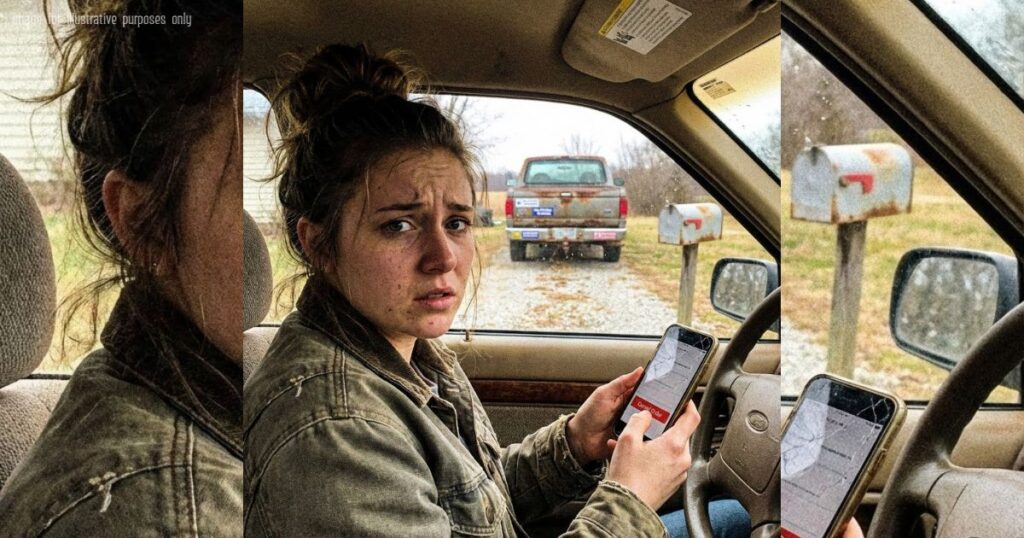
My notifications slowed from a hurricane to a rainstorm to a drizzle.
The silence that followed felt different from the silence in my apartment on Thanksgiving. Less like being forgotten. More like… being allowed to breathe.
Two weeks later, a winter storm rolled in like a threat.
The weather alerts went from “possible snow” to “historic event” in a matter of hours. The driver app lit up with orders from people panic-buying milk and bread and enough snacks to feed a small army.
I’d promised myself I would take a break from deliveries near Mr. Henderson’s place. Give him space. Give myself time not to feel like a walking apology.
But the storm didn’t care about our awkwardness.
By late afternoon, the map on my screen glowed red with delays. Drivers were dropping off the platform. Roads were closing. The app started sending out emergency notifications:
HIGH PRIORITY DELIVERIES: MEDICATIONS / ESSENTIAL SUPPLIES.
One address popped up on my screen, highlighted, with a little warning triangle next to it.
HENDERSON, R.
Items: Prescription refill. Canned soup. Batteries.
Estimated tip: “Generous.”
I stared at the screen while wind shook my windows.
This was the moment, I realized. The one all those comments had been arguing about without knowing it.
Was I going to be loyal to “my side,” to the people who thought sitting at his table was betrayal?
Or was I going to be loyal to the old man whose bones could feel storms coming, who had once passed me the potatoes with shaking hands and thanked the universe I was there to receive them?
I put on my boots.
The roads were worse than the app warned. Snow whipped sideways, turning my headlights into two useless cones of light. My wipers squealed, fighting ice. I gripped the steering wheel so hard my fingers hurt.
When I finally turned onto his road, the pothole we both hated was now a crater full of slush. My car fishtailed, corrected, kept going.
His house was dark.
For a second, panic knifed through me. Then I saw the faint glow of a candle in the front window.
I grabbed the bag of supplies and trudged through the snow, head down, jacket pulled tight. By the time I reached the porch, my hair was soaked and my jeans were stiff with cold.
I knocked.
The door opened slower this time, as if the house itself were tired.
Mr. Henderson stood there in a thick sweater, hatless, hair sticking up like he’d been running his hands through it. His flashlight was clamped between his teeth, beam bobbing as he looked me over.
“Well, I’ll be,” he mumbled around the flashlight, then pulled it out. “Of all the drivers in all the world, they send me the girl with the internet.”
Despite everything, I laughed.
“Hi,” I said, shivering. “Power out?”
“Since noon,” he said. “Lines are down somewhere. They say it might be a while.”
I held up the bag.
“I brought your stuff. And some extra soup. Don’t worry, I paid for it. Personal habit, I guess.”
He stared at me for a long beat, then stepped aside.
“Get in here before you freeze,” he grumbled. “Can’t have you slipping on my porch and suing me. I’m too old for court.”
I toed off my boots and followed him into the kitchen. The gas stove flickered with a small, defiant flame. A pot of water steamed quietly on top.
We moved around each other without talking at first. I unpacked the bag. He lined up the canned soup like little soldiers. The flashlight beam jumped around the room, landing on photos, on chipped tiles, on the cardboard sign resting against the wall.
I couldn’t stop glancing at it.
Finally, I cleared my throat.
“About the sign,” I said. “You’re right. This is a house, not a lesson. I had no right to turn our dinner into content. I’m still sorry.”
He kept his back to me, stirring the pot.
“And yet, here you are,” he said.
“I didn’t come to fix anything,” I said. “I came because the app said you needed batteries and soup, and because storms are awful when you’re alone.”
He snorted.
“Storms are awful even when you’re not alone,” he said. “Martha used to jump at every thunderclap. Said it sounded like the sky was dropping furniture.”
He turned then, face lit by candle and stove flame, shadows carving new lines into old ones.
“That post,” he said slowly. “After you edited it, the neighbor girl came back. Showed me. Read me your new words.”
I held my breath.
“A lot of folks don’t admit when they’re wrong anymore,” he said. “They just dig in deeper and shout louder. You didn’t.”
He shrugged one shoulder.
“Doesn’t make what you did okay. But it counts for something.”
We sat at the table again, bowls of soup between us, candles clustered like a makeshift campfire.
The room was quiet in a way the internet never is.
“I’ve been thinking about what everybody said,” I admitted. “The people who called me reckless. The people who called you dangerous. The ones who said I betrayed them by being kind to you.”
He raised an eyebrow.
“Betrayed them how?”
“By not cutting you off,” I said. “By not making everything transactional. By not treating you like an enemy first and a person second.”
“Huh,” he grunted. “Funny. I got the opposite. Couple fellas down at the diner—you know, before the storm—said I’d ‘gone soft’ letting ‘one of those kids’ into my house.”
He shook his head, a small smile tugging his mouth.
“As if letting you mash my potatoes was some kind of moral surrender.”
I rolled my eyes.
“I mean, my mashed potatoes are pretty persuasive.”
We both chuckled.
The candlelight softened him. Without the glare from the TV or the harsh overhead lights, he didn’t look like a stereotype. He looked like a man who had had a long life, and not all of it had been kind.
“So who are we betraying, exactly?” I asked. “You by being nice to me. Me by being nice to you.”
He slurped his soup thoughtfully.
“Maybe that’s the wrong question,” he said. “Maybe the real betrayal is letting other people—folks on screens, folks who make money off of us being mad—decide who we’re allowed to care about.”
The words sat between us, hot and heavy.
I thought about every app that had pushed my post to more people because strangers were arguing under it. I thought about how the platform had rewarded my moment of unthinking oversharing, then vanished when the consequences got real.
“I wanted to prove something,” I admitted. “Not just that kindness is possible. I wanted to prove that I’m… a good person. That I’m on the ‘right’ side. That I’m one of the ones trying to fix things.”
I stared at the flickering candle.
“But somewhere between the grocery aisle and your kitchen, I forgot that you’re not a prop in my moral performance.”
He was quiet for a long time.
Finally, he leaned back, chair creaking.
“Let me tell you something,” he said. “When Martha got sick, we spent a lot of time in waiting rooms. Doctors. Specialists. Therapists. All kinds of folks in scrubs and suits and fancy shoes.”
He rubbed his hands together, as if warming them on the memory.
“Most of them were good at what they did. But the ones I remember? The ones who made it easier to breathe? They weren’t performing goodness. They were just there. They sat with me when she was getting tests. They let me talk about her garden. They looked me in the eye, even when there wasn’t anything hopeful to say.”
He met my gaze.
“They didn’t turn me into a story,” he said. “They just stayed.”
A lump rose in my throat.
“I don’t know how to be that kind of person in a world that wants everything broadcast,” I said. “My whole generation has been trained to believe that if it isn’t shared, it doesn’t count. That our value is measured in views. That our pain—and other people’s pain—are raw materials for content.”
He blew out a breath, candle flame shivering.
“Maybe that’s the real rebellion, then,” he said. “Not voting one way or the other. Not slapping different stickers on our bumpers. Maybe the rebellion is keeping some kindnesses off the record.”
We sat with that.
Outside, the wind howled. Inside, the gas stove ticked softly. The house, stripped of electricity and noise, felt almost like a church.
“Can I ask you something?” I said.
“Shoot.”
“If I had asked you, that first night, ‘Hey, can I share this online?’ what would you have said?”
He didn’t answer right away.
“Honestly?” he said. “I probably would’ve said no. I don’t like being on camera. Never have. Don’t like people poking around in my business.”
He tilted his head.
“But I might have said yes,” he added, “if I knew why it mattered to you. If you’d told me you feel like you’re shouting into a void most days. That you wanted to show folks another way. That you needed to believe the world wasn’t as broken as it looks on those little screens.”
He smiled, just a little.
“I’d have at least had the chance to decide.”
It hit me, then, what the controversy under my post was really about.
It wasn’t just politics. It wasn’t just fear. It was consent. It was power. It was who gets to tell whose story, and why.
“I can’t promise I’ll never get it wrong again,” I said. “But I can promise that if you ever invite me to your table again, the only audience will be the dust bunnies and the photographs on your walls.”
He barked out a short laugh.
“Dust bunnies are harsh critics,” he said. “But fair.”
The flashlight on the counter flickered, then died. We sat in darkness for a heartbeat before the candlelight reasserted itself, gentle and stubborn.
He pushed his empty bowl away.
“You know what?” he said. “Next time those fellas at the diner give me grief about letting you in, I’ll tell ’em something.”
“What?”
“I’ll tell ’em I’d rather betray their expectations,” he said, “than betray my own humanity.”
My chest tightened.
“And if my people ask why I’m still bringing groceries to a man whose yard signs make me flinch,” I said quietly, “I’ll tell them I’d rather risk their judgment than let an old man sit alone in the dark.”
We didn’t toast to that. We didn’t take a selfie. We just sat there, two specks of light in a storm bigger than both of us.
Later, when the power came back on and the roads cleared and life slid back into its noisy, scrolling rhythm, I made a new rule for myself.
If an act of kindness needs an audience to feel worth doing, I probably need to check my motives.
Because here’s the part that will start arguments in the comments if you let it:
You do not owe loyalty to a group so much that you forget the person in front of you is a whole universe, not a talking point.
You can fight for justice, for safety, for change—and you should. But if your compassion only works for people who vote like you, talk like you, post like you, then it’s not compassion.
It’s branding.
Algorithms will always reward the loudest anger. They will always push the sharpest takes to the top. That’s how they’re built.
But no algorithm on earth can measure what happens when a lonely man and a tired young woman choose, over and over, to see each other as more than their stickers.
We still disagree on a lot of things, Mr. Henderson and I. We probably always will.
But when the snow comes down and the lights go out, none of that matters as much as who shows up at the door with soup and spare batteries.
So yes, be the one who buys the good coffee.
But more than that?
Be the one who shows up—even when it costs you likes.
Thank you so much for reading this story!
I’d really love to hear your comments and thoughts about this story — your feedback is truly valuable and helps us a lot.
Please leave a comment and share this Facebook post to support the author. Every reaction and review makes a big difference!
This story is a work of fiction created for entertainment and inspirational purposes. While it may draw on real-world themes, all characters, names, and events are imagined. Any resemblance to actual people or situations is purely coincidenta