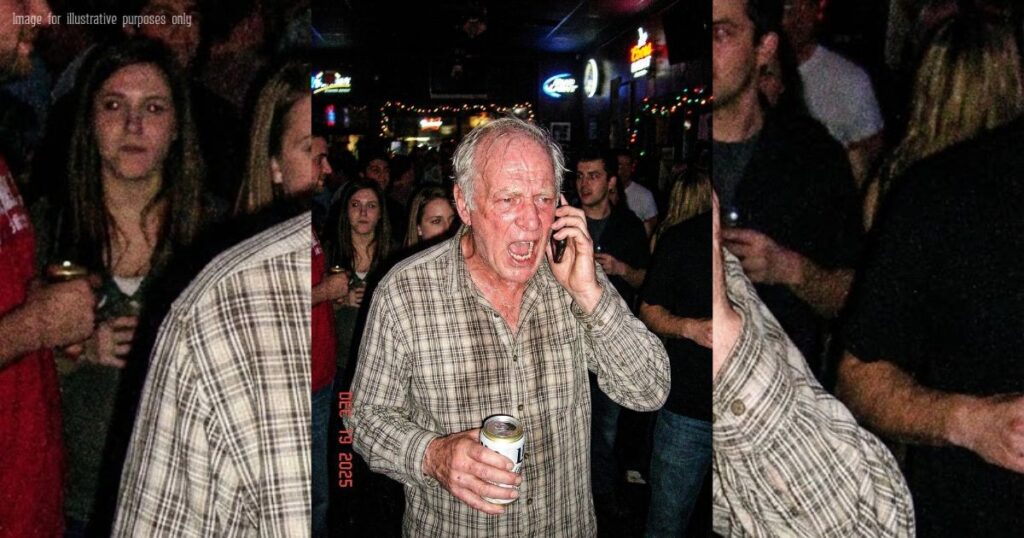
My son called the police because he thought I had been kidnapped. He was tracking my phone location, and when he saw the blue dot blinking in the middle of the University District at 2:00 AM on a Tuesday, he panicked.
He screamed into the phone, “Dad! Who has you? Are you okay?”
I laughed, taking a sip of cheap domestic beer. “Nobody has me, Robert. I’m just waiting for my turn at the microphone. They’re playing John Denver next.”
My name is Frank. I am 74 years old. And three months ago, I committed the most beautiful act of insanity of my entire life.
I sold my four-bedroom suburban house—the one with the manicured lawn and the homeowner’s association fees—and I moved into a run-down, three-bedroom apartment with three college students.
My family thought I had lost my mind. We sat down for a “crisis meeting” at a diner. My daughter-in-law, looking at me with that pitying gaze people reserve for toddlers and the senile, said, “Frank, be reasonable. This is a mid-life crisis, just thirty years too late.”
I looked her in the eye and said, “No, Karen. This isn’t a crisis of age. It’s a crisis of silence.”
You see, in America, we don’t talk enough about the silence. After my wife, Sarah, passed away two years ago, that big house in the suburbs didn’t feel like an achievement anymore. It felt like a tomb. It was as large as a stadium and as quiet as a library on a Sunday morning. The silence wasn’t peaceful; it was heavy. It sat on my chest. I would watch the dust motes dance in the afternoon sun and realize the only voice I’d heard in three days was the news anchor on the television.
I was dying. Not from heart disease or diabetes, but from the quiet.
So, I put up the “For Sale” sign. I sold the riding mower, the formal dining set nobody sat at, and the china cabinet full of plates we never used. I packed two suitcases and answered an ad on a community board: “Roommate wanted. Must pay rent on time. No drama.”
When I showed up at the door, the three kids—Jackson, Mia, and Leo—stared at me like I was a health inspector.
Jackson, a tall kid with messy hair and a hoodie, blinked. “Uh, sir? Are you… the landlord?”
“No,” I said, handing him a six-pack of craft soda. “I’m Frank. I’m the new roommate. And I promise my check clears faster than yours.”
The first week was a culture shock. It was chaos. There was music thumping through the thin walls at midnight. There were shoes everywhere except the shoe rack. The kitchen sink looked like an archaeological dig site of dirty dishes from the Jurassic period.
They were suspicious of me. On the first night, sitting in the living room on a couch that smelled vaguely of corn chips, Leo asked, “So, Frank… you got any… you know, issues? You gonna tell on us if we have people over?”
I leaned back. “Kids, I survived the seventies. I’ve seen things that would make your hair curl. Unless you’re building a bomb or hurting someone, I didn’t see a thing. But if you leave a milk carton empty in the fridge, we’re going to have words.”
Slowly, the dynamic shifted. I realized I wasn’t just the “old guy.” I was the Keeper of the Order and the Master of the Skillet.
These kids… they are so stressed. That’s something older folks don’t get. We think they’re lazy. They aren’t lazy; they are terrified. They are drowning in student loans, working gig jobs, and trying to pass classes. They eat instant noodles not because they love them, but because they cost fifty cents.
I decided to intervene.
One Tuesday, Jackson came home from a double shift, looking like a ghost. I had a pot roast slow-cooking for six hours. The smell hit him the moment he walked in. Real food. Meat, potatoes, carrots, rosemary.
“Sit,” I commanded.
He ate three plates in silence. When he looked up, he had tears in his eyes. “My mom used to make this,” he whispered.
That was the breaking point. I became the “House Pop.”
I wake them up when they sleep through their alarms for 8:00 AM exams. I taught Mia how to negotiate her car repair bill so the mechanic didn’t rip her off. I showed Leo that you can actually iron a shirt instead of buying a new one.
In exchange, they dragged me into the 21st century.
They taught me how to use the “tap to pay” on my phone so I don’t hold up the line counting change. They installed a music app for me and made me a playlist called Frank’s Jams. They taught me that “bet” means “yes” and “cap” means “lie.”
I used to think the younger generation was glued to their screens because they were antisocial. I was wrong. They are glued to them because they are searching for connection in a world that feels incredibly lonely.
One Friday night, they told me to put on my best shirt.
“We’re going out, Frank. No excuses.”
They took me to a dive bar near campus. Sticky floors, neon lights, and a crowd of twenty-somethings. When we walked in, Mia shouted to the bouncer, “He’s with us! He’s the OG!”
“Don’t worry,” Jackson said, handing me a drink. “It’s karaoke night.”
I haven’t sung in public since Sarah’s sister’s wedding in 1998. But the energy… it was infectious. The noise wasn’t annoying; it was electricity. It was life.
When they called my name, I walked up to the stage. I didn’t choose a modern song. I chose John Denver, “Take Me Home, Country Roads.”
I started shaky. But then I looked at the crowd. I saw Jackson, Mia, and Leo holding up their phones, grinning like idiots. I belted it out.
“Country roads, take me home…”
The whole bar—two hundred college kids—stopped drinking and started singing with me. They wrapped their arms around each other, swaying. For three minutes, there was no generation gap. There was no “Boomer” or “Zoomer.” There was just us, singing about belonging.
Someone filmed it. Apparently, I am now “viral” on the video app. It has 400,000 likes. The top comment says: “I miss my grandpa so much. This guy is the vibe.”
I pay my share of the rent. I do the dishes because I wake up earlier than everyone else. And once a week, I leave a hundred-dollar bill in the jar on the counter. I told them it’s for “Emergency Pizza Funds.” They don’t know that I know they use it to pay for textbooks.
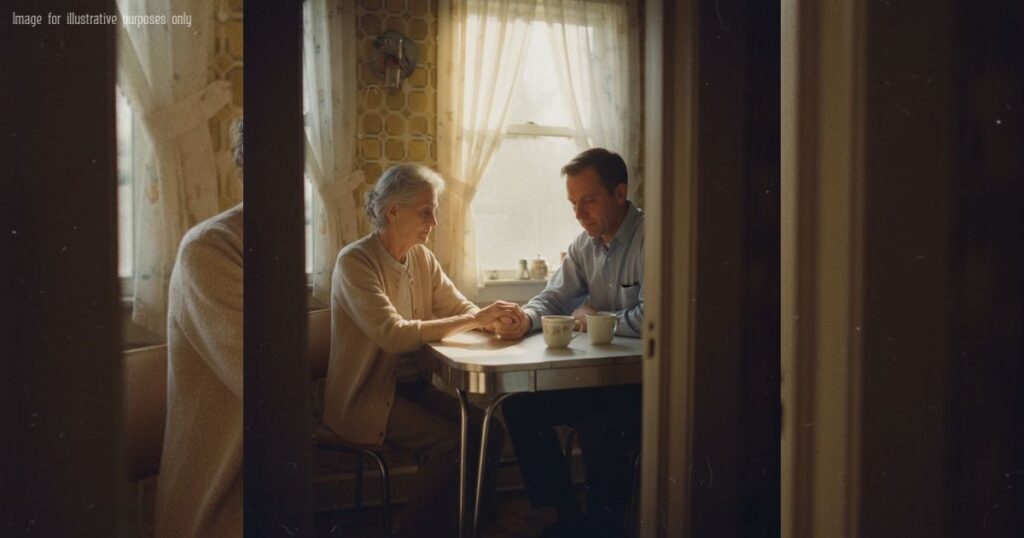
My son still asks me when I’m going to move into a “sensible” senior living community. He talks about safety, about stairs, about blood pressure monitors.
I tell him no.
“But Dad,” he asks, “Don’t you miss the house? Don’t you miss the memories?”
I look around the apartment. There’s a textbook on the floor. There’s a half-eaten bag of chips on the table. Someone is laughing in the other room about a bad date.
“No,” I tell him. “The house held my memories, Robert. But memories are looking backward. Here, I have the noise. I have the mess. I have the future.”
I am 74 years old. My joints hurt when it rains, and I take three different pills in the morning. But tonight, we are making tacos, and Mia needs advice on her art project, and Jackson needs to learn how to tie a tie for an interview.
I am not busy dying anymore. I am too busy living.
If you are sitting in a big, silent house, waiting for the phone to ring, waiting for permission to live… sell it. Find the noise.
We aren’t meant to fade away in the quiet. We are meant to sing “Country Roads” until our voices crack, surrounded by people who call us by our name, not our age.
—
PART 2 — The Day They Tried to Put Me Back in the Quiet
The morning after “Country Roads,” I woke up to the sound of my phone vibrating like it was trying to burrow through the mattress.
Not a polite buzz.
A full-body panic.
Twenty-seven missed calls from my son.
Nine voicemails.
And one text in all caps that made my stomach drop:
WE ARE COMING. DO NOT LEAVE THE APARTMENT.
Click the button below to read the next part of the story.⏬⏬