A dot appeared. Disappeared. Appeared again.
In my car. Behind my apartment.
My chest went tight, the same cold shiver from that morning in the basement.
I didn’t ask questions that felt like traps. I didn’t lecture. I didn’t say “think positive.”
I wrote: Stay in the car. Put both feet on the ground. Can you call someone who cares about you—right now? A friend, a sibling? If not, I can sit here with you while you call a hotline or emergency services.
I didn’t feel heroic. I felt terrified. Like I was holding a rope and praying the other end didn’t slip.
He wrote back: I don’t want to be a burden.
That word.
Burden.
The word Leo used.
The word that should come with a warning label.
I typed: You are not a bill. You are not a project. You’re a person. And if someone makes you feel like love has to be earned, that’s not strength. That’s cruelty dressed up in old language.
A minute went by.
Then: Can you really stay?
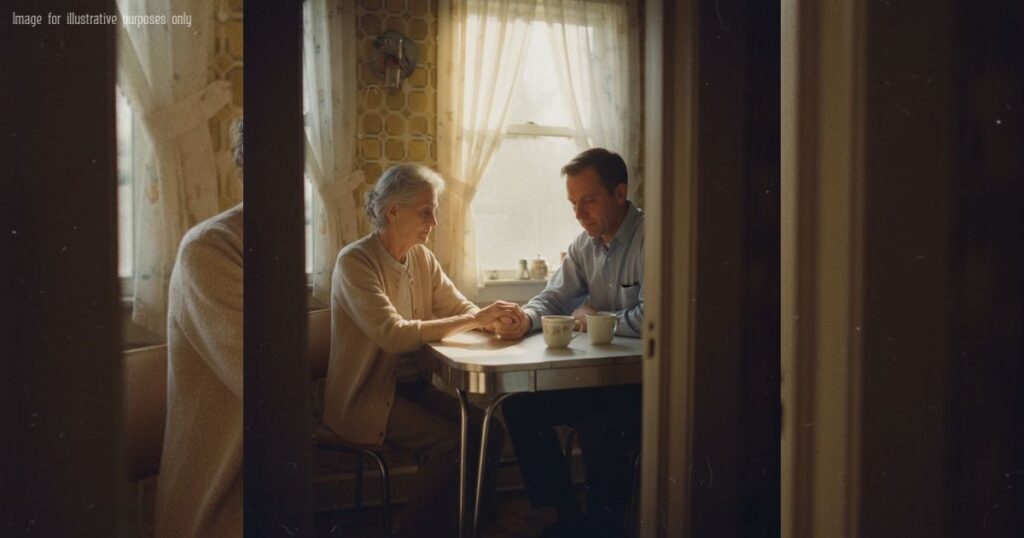
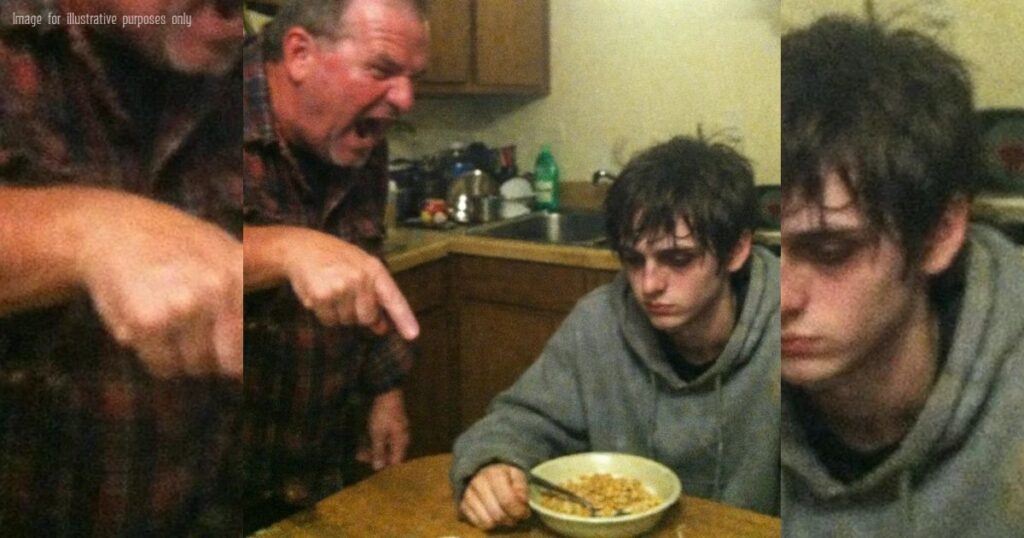
I looked at my empty kitchen. The mug I used to slam down. The chair Leo used to sit in, like he was trying to take up less space than he deserved.
I wrote: I’m here.
And I stayed.
For forty-seven minutes, we wrote back and forth. Short lines. Breaths. A name. A sister’s number. A promise to walk inside and knock on her door.
When he finally wrote, I’m going upstairs, my whole body sagged like I’d been holding up a wall.
I sat there in the dark and realized something that made me sick and grateful at the same time:
I couldn’t save Leo.
But maybe I could stop someone else from becoming another quiet headline in a family’s living room.
The next morning, I went back to the comment section.
My first instinct was to fight. To tell the tough-love crowd exactly what they could do with their opinions.
But I’d spent my whole life believing anger was strength, and I wasn’t interested in worshiping that anymore.
So I wrote one sentence and pinned it to the top.
If you’re here to debate whether my son “deserved” empathy, you’ve already answered the question.
That set people off.
Some cheered. Some attacked. Some told me I was “soft,” like softness is an insult and not the only thing that makes humans survivable.
And there it was—the controversy, the argument, the split down the middle of the American dinner table:
One side saying, The world is hard. Toughen up.
The other side saying, The world is hard. Be kind.
I used to think those were opposites.
Now I know the truth:
The world is hard either way.
But only one of those choices brings your kid home at night.
A week later, I met Leo’s friend in a diner off the highway. A skinny kid with tired eyes who couldn’t look at my face for long.
He slid into the booth and kept rubbing his hands together like he was trying to warm them.
“I should’ve… I should’ve called you,” he said.
I almost told him not to blame himself, because that’s the polite thing.
But I’m done with polite.
“Why didn’t you?” I asked, gentle but real.
He swallowed.
“Because Leo said you didn’t believe him,” he whispered. “He said you loved him, but… you only respected him when he looked like you.”
That sentence landed like a hammer.
Not because it was cruel.
Because it was accurate.
The kid stared at the tabletop and said, “He wasn’t lazy, Mr. — he was terrified. Every day. He felt like he was failing at life because life kept moving the finish line.”
I wanted to argue. Habit is a stubborn thing.
Instead I asked, “What did he need?”
His friend’s eyes filled.
“He needed permission to be human.”
I nodded, once.
And in that nod was the funeral, and the note, and my coffee mug hitting the counter like a judge’s gavel.
“Tell me about him,” I said.
So he did.
He told me stories I’d never heard. He told me Leo used to tip extra when the customer looked lonely. He told me Leo kept a pack of granola bars in his car for people on corners, because he couldn’t stand the idea of someone being hungry.
He told me Leo wasn’t weak.
Leo was worn down.
There’s a difference, and it matters.
That night I went home and stood at the top of the basement stairs.
I didn’t go down.
I just stood there, hand on the railing, and spoke into the air like the house was a witness.
“I see it now,” I said. “I see what I refused to see.”
My voice cracked, and I didn’t fix it.
Because some things aren’t meant to be fixed. Some things are meant to be felt, so they stop happening in silence.
I took my phone and opened the draft of a second post.
This one wasn’t a tragedy story.
It was a challenge.
If you’re older and you’re reading this, stop using your past as a weapon. If you’re younger and you’re reading this, stop calling your exhaustion laziness. If you’re a parent, ask one question today that doesn’t have a lesson attached: “Do you feel safe in your own head?” Then shut up and listen.
I stared at the words.
Then I added one more line, because it’s the line I wish someone had tattooed on my forehead twenty years ago:
Love that sounds like a lecture will always feel like rejection.
I hit post.
Some people called it brave.
Some people called it manipulative.
Some people told me I was “virtue signaling,” a phrase that means I don’t want to feel this, so I’m going to mock it.
The comments turned into a war zone again—parents versus kids, grit versus empathy, “handouts” versus “humanity.”
And I read every single one.
Not because I enjoyed it.
Because hidden inside the arguing, you could see the real thing underneath:
People are scared.
Older folks are scared the world they understood is gone.
Younger folks are scared it was never real for them in the first place.
And in the middle of that fear, we keep doing the same stupid thing we’ve always done:
We turn pain into a contest.
Who had it harder.
Who worked more.
Who deserves rest.
Who deserves compassion.
My son lost that contest.
He shouldn’t have had to enter it.
On Sunday, I went to Leo’s grave like I always do.
The grass was winter-brown. The wind had teeth.
I knelt down, set my hand on the stone, and said the only sentence that matters anymore.
“I’m listening now.”
And then I said something else, because grief changes you if you let it.
“I’m going to keep saying your name in places that pretend silence is strength.”
I stood up and looked at the row of other stones, other families’ permanent silences.
And I realized my life is split into two halves:
The half where I thought tough love was love.
And the half where I finally learned that love is not pressure.
Love is presence.
Love is believing someone when they tell you they’re tired—even if your pride wants to call them lazy.
Love is choosing your child over your ego.
And if that sentence makes someone angry enough to type a comment, good.
Let them type.
Let them argue.
Let them fight over the old rules.
Because if even one parent reads it and knocks on their kid’s door instead of slamming it…
Then maybe the silence doesn’t have to become permanent again.
Thank you so much for reading this story!
I’d really love to hear your comments and thoughts about this story — your feedback is truly valuable and helps us a lot.
Please leave a comment and share this Facebook post to support the author. Every reaction and review makes a big difference!
This story is a work of fiction created for entertainment and inspirational purposes. While it may draw on real-world themes, all characters, names, and events are imagined. Any resemblance to actual people or situations is purely coincidenta