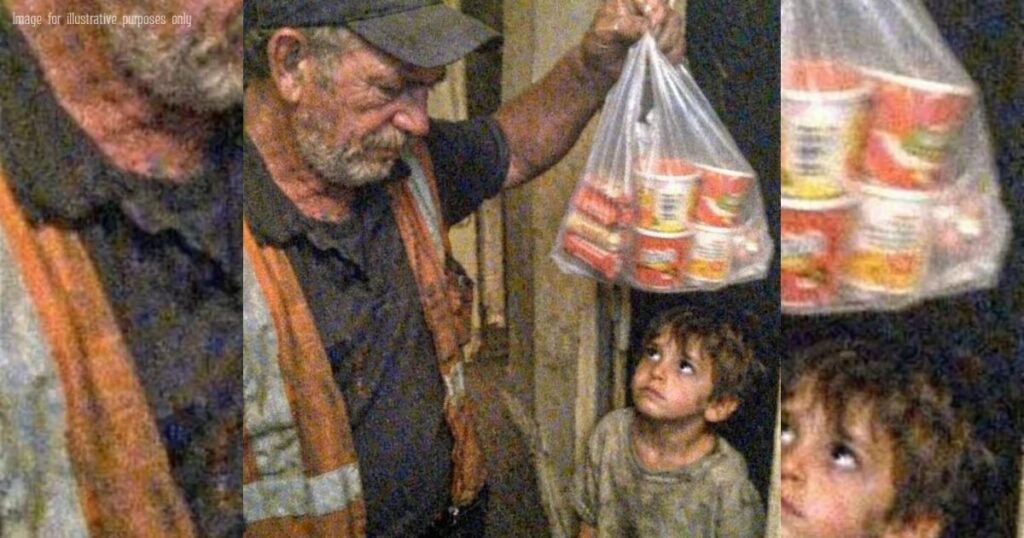
I looked at the pitiful bag of processed slop in my hand, then at the hungry kid in the doorway, and I did the only thing my conscience allowed: I canceled the order.
My truck is a ‘98. It rattles like a toolbox falling down a flight of stairs, but the heater works, and the engine block is solid iron. It’s a lot like me—old, loud, and struggling to keep up with a world that wants everything electric, silent, and immediate.
I’m sixty-eight years old. I spent forty years in a fabrication plant, welding beams for skyscrapers I’ll never set foot in. I should be fishing right now. I should be sitting on a porch. Instead, I’m staring at a glowing screen on a cracked smartphone, waiting for an algorithm to tell me where to drive for six bucks.
That’s the reality now. The pension didn’t stretch as far as the inflation did. So, on Sundays, instead of roasting a bird for the grandkids, I’m delivering “convenience” to strangers.
The ping came in at 4:45 PM. A grocery run. Not a big one. The list was heartbreakingly specific: two packs of the cheapest instant noodles, a loaf of white bread, a carton of milk, and a package of those generic, neon-red hot dogs that cost a dollar.
I picked it up from the 24-hour mart and drove to the address. It was one of those new “luxury” apartment complexes that are actually just plywood boxes slapped together with cheap siding, charging working folks half their monthly take-home pay.
I walked up to the third floor. The hallway smelled like carpet cleaner and stale dreams. I knocked.
The door opened, and a young man stood there. He couldn’t have been more than twenty-five. He was wearing a warehouse vest, the kind with the reflective strips worn off from too much friction. He had dark circles under his eyes that looked like bruises.
Behind him, a little boy, maybe five years old, came running up, clutching a plastic fork.
“Is it the roast, Daddy? Did Grandpa send the roast?” the kid chirped, his eyes wide.
The young man flinched. He looked at the plastic bag in my hand—the noodles, the hot dogs—and then back at his son. His Adam’s apple bobbed as he swallowed the lump in his throat.
“No, buddy,” the dad whispered, his voice cracking. “Grandpa couldn’t make it. It’s… it’s hot dog night. Like a campout, remember?”
The light died in that little boy’s eyes. It wasn’t a tantrum. It was a quiet, crushing resignation that no five-year-old should ever learn. He just dropped his hand holding the fork and walked back to the couch.
The dad looked at me, shame burning his face red. “Sorry,” he muttered, reaching for the bag. “Rough week. Warehouse cut hours. You know how it is.”
I looked at his hands. They were calloused, rough, scarred. Working hands. Honest hands. He wasn’t lazy. He was exhausted. He was drowning in a system that rewards speculation and punishes sweat.
I handed him the bag. I walked away.
I got to my truck. I put the key in the ignition. But I couldn’t turn it.
I sat there, gripping the steering wheel until my knuckles turned white. I could smell the phantom scent of my mother’s kitchen from 1975. Sundays meant something then. It didn’t matter if we were broke—and we were often broke—the house smelled like pot roast, onions, and thyme. It smelled like safety. It smelled like home.
We are losing that. We are trading our traditions for convenience and our dignity for cheap calories. We are letting a generation grow up thinking a “meal” is something you unwrap, not something you make.
I pulled the key out. I opened the delivery app and hit “Go Offline.”
I drove three miles to the real grocery store. The one with a butcher counter.
I checked my bank account on my phone. I had seventy-four dollars to last me until Wednesday. I walked in and went straight to the meat case.
“Give me a chuck roast,” I told the butcher. “Three pounds. And give me the one with the fat cap on it. Don’t trim it.”
I grabbed five pounds of russet potatoes, a bag of carrots, two yellow onions, a bulb of garlic, and a stick of real butter. Not margarine. Butter.
It cost me forty-two dollars. More than I made all day.
I drove back to the apartment complex. I didn’t buzz up. I waited until someone exited and caught the door. I walked back up to the third floor and banged on the door. Hard.
The young dad opened it, looking terrified. He probably thought I was there to complain about a tip.
“I forgot part of the order,” I lied.
I pushed past him. I know, not polite. But sometimes you have to be pushy to get past a man’s pride. I walked straight into his kitchen. It was tiny, clean, but sterile. The hot dogs were sitting on the counter, unopened.
“What are you doing?” the dad asked, his voice rising. “I didn’t order this. I can’t pay for this.”
“Lock the door,” I said, setting the grocery bags down. “And wash your hands. You’re going to learn something.”
I unpacked the meat. The kid looked over the back of the couch, curious.
“You know what this is?” I asked the boy.
“Meat?” he asked.
“This is Sunday,” I said.
I turned to the dad. “You got a heavy pot? Cast iron? Dutch oven?”
He rummaged around and found a dusty stockpot. “My mom gave me this. I never use it.”
“You do today.”
For the next two hours, I didn’t deliver food. I delivered a lesson. I showed him how to salt the meat heavily. I showed him how to sear it in the pan until the crust was brown and mahogany, creating that fond at the bottom of the pot that holds all the flavor.
“Don’t rush it,” I told him as the oil popped. “The problem with everything out there,” I pointed to the window, “is that everyone is rushing. Good things take time. You can’t download a good dinner.”
We chopped the onions. I showed him how to cut them so they don’t fall apart. We scraped the bottom of the pot, deglazed it with a little water (since we didn’t have wine), and threw the vegetables in.
When the lid went on and the heat went down to a low simmer, the smell started to change. It shifted from the smell of raw ingredients to the smell of alchemy. It smelled like savory beef, sweet onions, and earth.
The apartment changed, too. The tension that was hanging in the air evaporated. The kid came into the kitchen and sat on a stool, just watching the steam curl up from the vent.
“It smells like Grandpa’s house,” the boy whispered.
The dad was leaning against the counter, watching the pot. He looked at me, and his defenses crumbled.
“I feel like I’m failing him,” he said quietly, so the boy wouldn’t hear. “I work six days a week. I lift boxes until my back screams. And I still had to buy him hot dogs for Sunday dinner.”
“You aren’t failing,” I said sternly. “You’re fighting. There’s a difference. The world got expensive, son. It got mean. But you control what happens in this kitchen. You can’t control the prices, but you can control the time you put in. A chuck roast is a tough cut of meat. It’s muscle. It’s hard. But if you apply heat, and time, and patience… it becomes the best thing you’ll ever eat. We’re just like that roast. Tough times make us tender, if we don’t let them burn us.”
When the meat was done, it fell apart with a spoon. We mashed the potatoes with the butter.
We sat down at their small, wobbly table. No TV. No phones. Just three people and a steaming platter of food that looked like it belonged in a magazine, but tasted like memories.
The boy took a bite, and his eyes rolled back. “Whoa.”
The dad took a bite. He didn’t say anything. He just chewed, and I saw a tear track through the warehouse dust on his cheek. He wiped it away quickly with his thumb.
“This cost less than takeout,” I told him. “You have leftovers for three days. That’s lunch for you, dinner for him.”
I stood up to leave while they were still eating.
“Wait,” the dad said, standing up. “How do I… I can’t pay you yet.”
“You don’t pay me,” I said, putting on my cap. “You just keep the tradition. Sunday is for the roast. Sunday is for sitting down. Don’t let the world take that from you. If you lose the table, you lose the family.”
I walked out into the cold night air. My truck started with a groan and a shudder. I was out forty-two dollars and I’d missed the dinner rush. My app was flashing with notifications about “High Demand Areas.”
I turned the phone off.
I drove home in silence, listening to the tires hum on the asphalt. I was broke, tired, and my back hurt. But for the first time in years, I didn’t feel poor. I felt rich.
The Takeaway: We are living in an era where we are told to buy everything and make nothing. We are told we are too busy to cook, too tired to connect, and too broke to enjoy life. But dignity isn’t something you buy at a store. It’s something you build, one meal at a time. The system might be broken, but our tables don’t have to be.
Make the roast. Call your family. Take back your Sunday.
—
PART 2 — “If You Read Part 1, You Know I Turned Off the App”
If you read Part 1, you know I did something most folks would call reckless.
I went offline in the middle of a Sunday rush, spent forty-two dollars I didn’t have, and marched back into a stranger’s apartment with a three-pound chuck roast like it was a rescue rope.
I also did something else—something I didn’t think about until the adrenaline wore off.
I crossed a line.
Not a legal line. Not the kind that comes with sirens and handcuffs. I mean the newer kind. The invisible kind everyone keeps now. The “don’t get involved” line. The “mind your business” line. The “if you didn’t order it, you don’t deserve it” line.
Monday morning, that line came back to collect interest.
I woke up to the sound of my phone buzzing itself off the nightstand and onto the floor. The screen lit up like a bad omen.
ACCOUNT TEMPORARILY PAUSED.
A REPORT HAS BEEN FILED.
PLEASE CONTACT SUPPORT.
Click the button below to read the next part of the story.⏬⏬