The worst part was how familiar it felt.
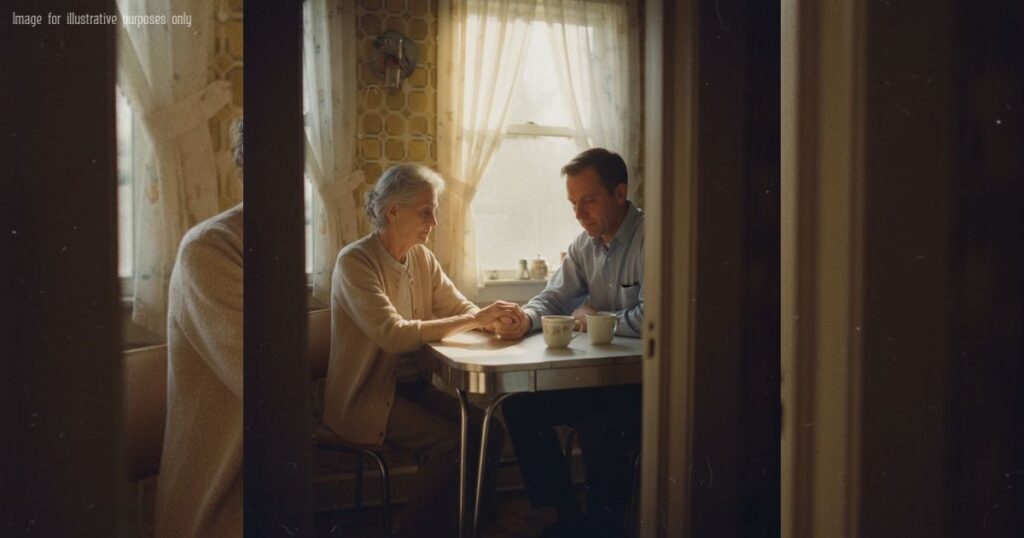
Like the whole country was my mother, leaning in close and hissing: Don’t make it awkward. Don’t embarrass him. Just smile.
The next morning at school drop-off, the air felt different.
Not everyone. Not most people.
But a few.
A mom near the gate looked at me like she recognized me, then quickly looked away. Two dads standing together stopped talking when I approached, like the conversation had a “mute” button.
My palms started sweating.
This was the part no one warns you about—the second violence. The social punishment for protecting yourself.
Mia hopped out of the car with her backpack bouncing. “Bye, Mom!”
She started toward the gate, then paused and ran back. She hugged my waist tight, face pressed into my coat, like she needed to anchor herself.
“Love you,” she whispered, so quietly I almost didn’t hear.
“I love you more,” I whispered back, and my throat tightened.
She ran off, and I watched her disappear into the building like I was watching my heart walk away.
In the parking lot, I sat in my car and didn’t start the engine.
I just stared at the steering wheel and thought about how easy it would be to stay silent.
To let the video pass. To let the comments burn themselves out. To shrink. To disappear.
Silence is what women are trained for. Silence is what keeps you “likable.” Silence is what keeps your inbox clean.
But silence is also what turns boundaries into a personal preference instead of a rule.
And I had already made one choice.
So I made another.
At home, I opened my laptop. Not my phone—my laptop. Something about the bigger screen made it feel less like doom-scrolling and more like reclaiming the story.
I wrote a post on my own page. No names. No location. No identifying details about Mia. Just the truth, in the simplest words I could manage.
I didn’t call him evil. I didn’t say all older people are bad, or all men are bad, or society is doomed.
I just wrote:
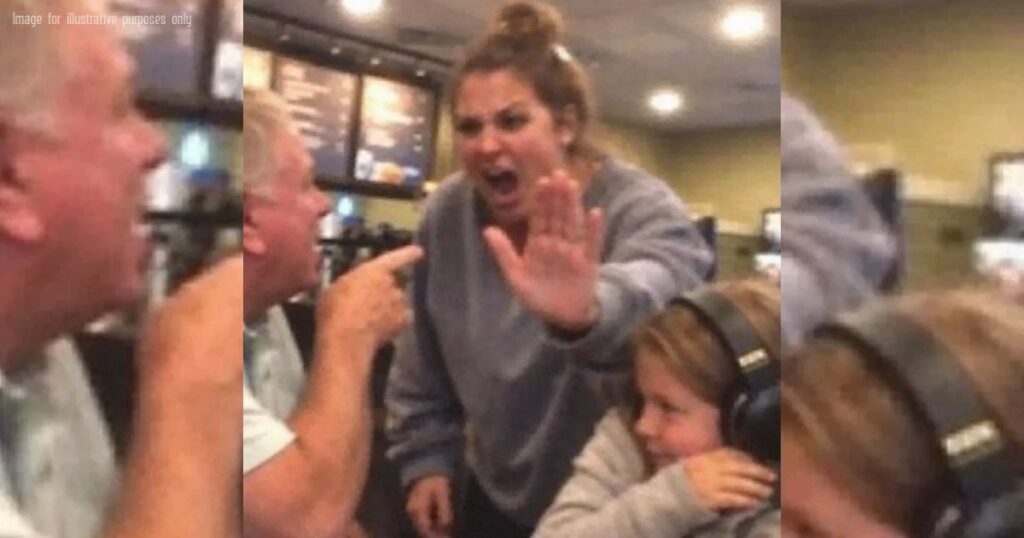
A stranger tapped my child’s table repeatedly until she took off her headphones.
He told her she was “too pretty to frown” and demanded a smile.
When she didn’t perform, he scolded her and blamed me.
He reached toward her face.
I stood up and said no. Loudly.
Then I wrote the line I knew would set people on fire:
If your friendliness requires a child’s compliance, it’s not friendliness. It’s entitlement.
I stared at it for a long time before I hit post.
Because I knew what it would do.
It would invite the same argument all over again.
It would pull in the people who want children to be accessible.
It would pull in the people who believe respect means obedience.
It would pull in the people who think a woman’s tone matters more than a man’s behavior.
It would be controversial.
But it would also be honest.
Within minutes, the comments started.
Some were kind. Strangers telling me their own stories. Women saying, “I wish someone had done that for me.” Parents saying, “Thank you for modeling that.”
And then, right on time:
“He was just being nice.”
“You could’ve handled it better.”
“Why do people hate old men now?”
“Kids need to learn respect.”
“You’re teaching fear.”
Fear.
That word again.
As if boundaries are fear. As if consent is paranoia. As if a seven-year-old should be trained to prioritize adult comfort over her own instincts.
I was reading, jaw clenched, when I got a new message request.
No profile picture. A plain username. My stomach dropped.
The message was short.
I was there. I filmed the whole thing. The clip going around is cut. If you want the full video, I’ll send it.
My hands started shaking again—this time not with adrenaline, but with something like relief so sharp it hurt.
I responded with one word: Yes.
When the file came through, I watched it with my breath held.
And there it was—the missing context. The taps. The demand. Mia shrinking. My voice steady. His hand moving toward her. My body stepping in front like a wall.
It wasn’t dramatic. It wasn’t glamorous.
It was a mother doing what mothers have done since the beginning of time: placing herself between her child and danger.
I posted a few carefully cropped stills—nothing showing Mia’s face, nothing identifying anyone—and I wrote:
This is what people mean when they say “it was harmless.”
Harmless looks like a hand reaching toward a child who has said no without words.
Harmless looks like a grown adult getting angry because a child won’t smile.
The internet shifted, the way it always does when new evidence drops—fast, messy, hungry.
Some people apologized. Some doubled down. Some moved the goalposts: “Okay, he shouldn’t have reached, but you were still rude.”
Still rude.
I sat back in my chair, and I felt a strange calm settle over me.
Because that was it, wasn’t it?
That was the whole fight.
Not whether he was right.
Not whether my daughter deserved autonomy.
But whether I had delivered that autonomy in a tone that kept him comfortable.
I thought about Mia asking, Was I bad?
And I realized this wasn’t just about one man in a coffee shop. It was about an entire culture that teaches girls the same equation, over and over:
Be pleasant = be safe.
But pleasant doesn’t keep you safe.
Pleasant keeps you quiet.
Pleasant keeps you convenient.
Pleasant keeps you easy to ignore.
That afternoon, when Mia got home, she dropped her backpack and went straight to the table, sketchbook open.
Then she looked up at me.
“Mom… are you in trouble?”
My chest tightened. “Why would I be in trouble?”
“Some kids said my mom was ‘mean on the internet.’”
My stomach turned cold.
I walked over and crouched beside her chair, so we were eye to eye. I kept my voice gentle, even though everything in me wanted to rage at a world that drags children into adult cruelty.
“Listen to me,” I said. “You did nothing wrong. And I did nothing wrong by protecting you.”
She blinked hard. “But people are mad.”
“Some people get mad when they don’t get what they want,” I said carefully. “Sometimes they call you names to make you feel small. But being called ‘mean’ is not the same as being wrong.”
She thought about that. Then, quietly: “So… I’m allowed to not smile?”
I swallowed.
“Yes,” I said. “You are allowed to have your own face. Your own feelings. Your own quiet.”
She nodded slowly, like she was putting a brick into a wall inside herself.
Then she picked up her marker and, without looking up, said, “If someone tells me to smile, I can say… ‘No, thank you.’”
A laugh escaped me, wet and shaky. “You can.”
“And if they don’t stop?”
“You get loud,” I said.
She nodded once. Firm. Like a tiny judge.
Then she added, very seriously, “Not like screaming, though. Like… boss loud.”
Boss loud.
I turned away so she wouldn’t see my eyes fill.
Because that was the message. That was the whole thing I’d been trying to claw out of decades of conditioning:
We don’t have to raise girls who are nice.
We can raise girls who are clear.
And here’s the part people will argue about until the end of time:
If your definition of “respect” requires a child to override their instincts for an adult’s comfort, it’s not respect—it’s training.
So tell me.
If it was your daughter at that table—headphones on, minding her business—would you rather she be polite… or safe?
Thank you so much for reading this story!
I’d really love to hear your comments and thoughts about this story — your feedback is truly valuable and helps us a lot.
Please leave a comment and share this Facebook post to support the author. Every reaction and review makes a big difference!
This story is a work of fiction created for entertainment and inspirational purposes. While it may draw on real-world themes, all characters, names, and events are imagined. Any resemblance to actual people or situations is purely coincidenta