I didn’t want to text her. I didn’t want to sound like I was handing her a bill for gratitude.
But if friendship only flows in one direction, it’s not really friendship.
“Got laid off today,” I typed. “We’ll be okay for a while, but I’m scared. Just needed to tell someone who understands overdue bills.”
Her reply was almost instant.
“Sarah. I’m so sorry. I hate that feeling. Do you have enough for this month? For food? Please say yes.”
“Yes,” I wrote back. “For now. We have a small cushion. Mark still has his job. I’m just not used to being the one doing math at the gas pump.”
“Welcome to the club,” she replied, adding a laughing-crying emoji. “It’s a terrible club, but you’re not alone.”
A week later, a box showed up on my porch.
This time, the crooked handwriting on the top had my name.
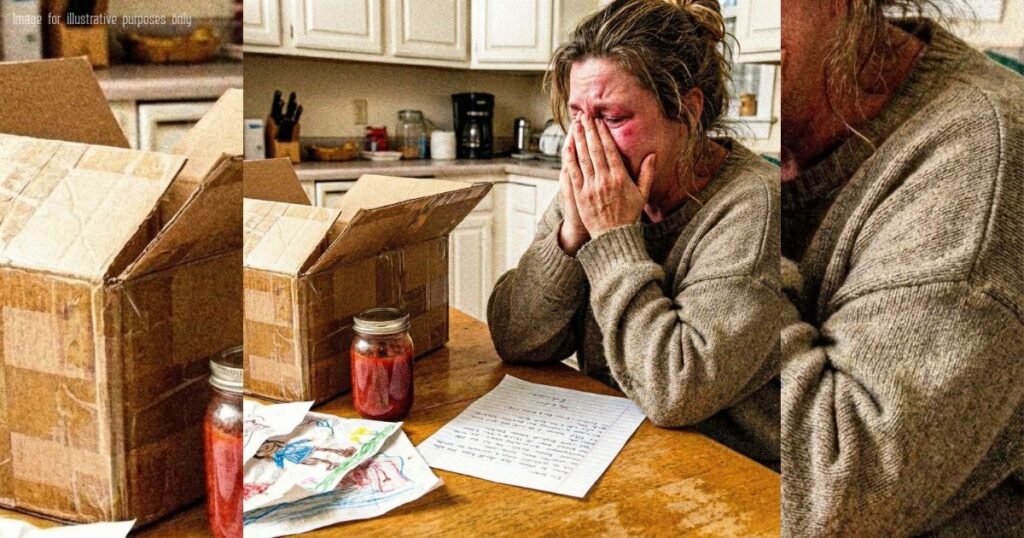
Inside was a bag of decent coffee—the kind I never splurge on. A small framed drawing clearly done by Sophia: three stick figures labeled “US” with a giant red heart around them. A note in Maria’s shaky handwriting:
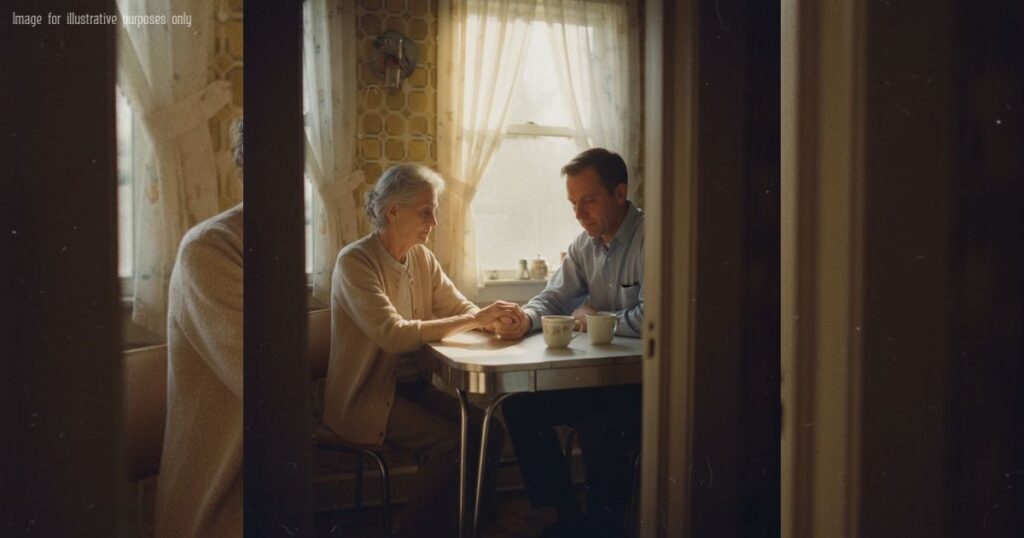
“You saved us once. We can’t pay your bills. But we can remind you you’re not alone. You’re allowed to receive, too. Love, M & S.”
At the bottom was a $25 grocery store gift card.
My first instinct was to send it back.
You need this more, I wanted to say. We’re not that bad off. We still have a house. I still have a car that runs. We’re fine. We’re fine. We’re fine.
That was pride talking—the same pride that keeps people from posting their needs in groups because they don’t want to be ripped apart in the comments.
I looked at the gift card, then at the drawing. I remembered the picture of Sophia in her pink coat, grinning in their freezing apartment. I remembered telling strangers online that the point of the story wasn’t who “deserves” help more, but that we don’t let each other drown while we argue about who’s sinking correctly.
I took a picture of the drawing and the coffee (not the gift card numbers) and sent it to Maria.
“Okay,” I wrote. “I surrender. Thank you. I’ll think of you when I buy ridiculously overpriced strawberries.”
“You better,” she replied. “Sophia says get whipped cream, too.”
I didn’t post that story.
Not because I was ashamed we were struggling, but because sometimes the most radical thing you can do is let kindness stay small and unshareable. Not content. Not a “brand.” Just a quiet loop of giving and receiving between two porches and two kitchen tables.
But here’s the part you might disagree with me on.
I still think you should share your acts of kindness sometimes.
Not as performance, not as a constant highlight reel of how generous you are. But because the internet is drowning in examples of cruelty, scams, and people treating each other like enemies. If algorithms amplify what we feed them, maybe it’s not the worst thing to throw in a few stories that smell like strawberry jam and permanent marker.
When we hide every good thing out of fear that someone will call it bragging, all that’s left on public display is the worst of us.
So go ahead and argue with me.
Tell me I’m naive. Tell me I’m encouraging people to be reckless with their trust, or giving cover to systems that should be doing better. I don’t have a comeback big enough to solve all the things you’re worried about. I’m worried about them, too.
All I have is this:
A little girl who slept in a pink coat in a cold apartment and now runs around a backyard her parents worked themselves ragged to afford.
A mom who almost hit “delete” instead of “ship.”
A comment section that exploded with anger and still, somehow, organized three coat drives.
A cardboard box that showed up on my porch the week I needed to be reminded that I’m not always going to be the helper; sometimes I am also the one who needs help.
Be as cautious as you need to be. Lock your doors. Ask your questions. Check things out.
But when you feel that quiet nudge—the one that whispers, “What if she’s telling the truth?”—I hope you listen.
Because maybe the real divide right now isn’t between rich and poor, or city and country, or whatever labels show up on the news.
Maybe it’s between the people who walk past the box on their porch without opening it, and the ones who take a deep breath, grab the scissors, and say,
“Okay. Let’s see who I might be able to save today.”
Even if, in the end, they end up saving you, too.
Thank you so much for reading this story!
I’d really love to hear your comments and thoughts about this story — your feedback is truly valuable and helps us a lot.
Please leave a comment and share this Facebook post to support the author. Every reaction and review makes a big difference!
This story is a work of fiction created for entertainment and inspirational purposes. While it may draw on real-world themes, all characters, names, and events are imagined. Any resemblance to actual people or situations is purely coincidenta