My father has broken his own “Golden Rule” exactly one time in forty years.
“Never call a man while he is on the clock. You earn your keep, and you let him earn his.”
That rule was ironclad. Not for birthdays, not for bad news, not for just saying hello. To him, the workday is sacred.
Until last Tuesday.
My name is David. I’m 44, a Logistics Director for a major shipping hub outside of Columbus, Ohio. My life is a blur of Zoom links, supply chain crises, and a calendar that looks like a game of Tetris.
But at 10:14 AM, the world stopped.
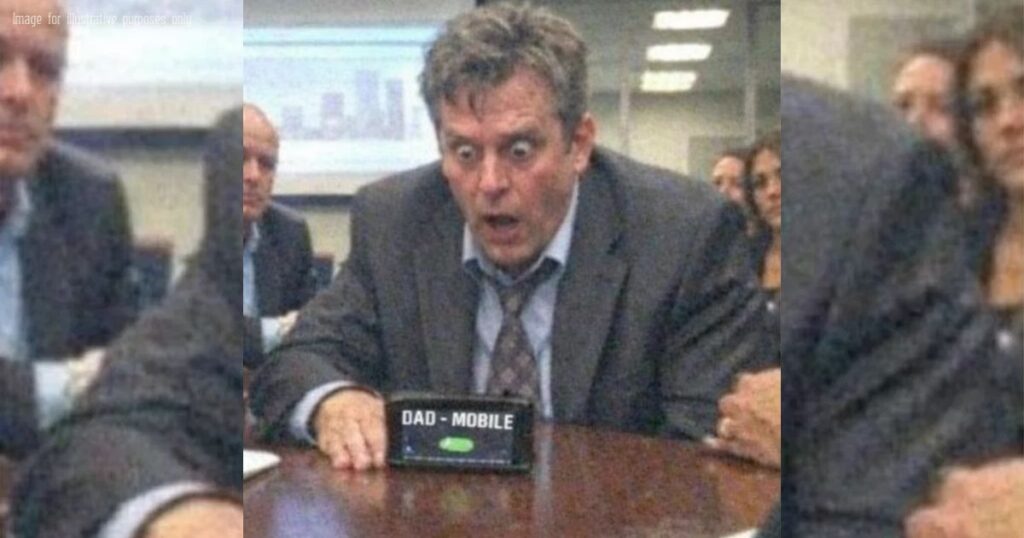
My phone buzzed against the mahogany conference table. I glanced down, ready to swipe it to voicemail. Then I froze.
“DAD – MOBILE”
My dad, Arthur, is 81. He is a retired welder who spent fifty years joining steel beams on skyscrapers. He has hands like vice grips and a back made of rebar. He is the kind of man who once stitched his own cut thumb with a sewing needle because “the ER takes too long.”
For Arthur to call me at 10:14 AM on a Tuesday isn’t just weird. It’s terrifying.
I stepped out of the meeting, my heart hammering against my ribs. “Dad? Is it Mom? Are you hurt?”
Silence. Then, a sound I had never heard before. A shaky, shallow breath.
“Davey…” His voice wasn’t the booming baritone that used to command a welding crew. It sounded thin. Like paper. “I… I hate to disturb you, son. I really do. It’s the heat. The stove went out. And I can’t… I can’t get the bag up.”
The pellet stove. It’s their only source of real heat in the living room. A standard bag of wood pellets weighs 40 pounds.
For a man who used to haul oxygen tanks up thirty flights of stairs, 40 pounds is a joke. It’s a feather.
“I’m coming,” I said, already sprinting to the parking lot. “No, finish your meetings. Just… whenever you can. Wear a coat, the wind is cutting today.” “I’m thirty minutes out. Sit tight.”
I drove fast, the grey Midwestern sky pressing down on the windshield. My mind was racing. I pictured him as the giant he used to be. The man who taught me to change a tire in the rain. The man who never asked for a dime, a ride, or a favor.
When I pulled into the driveway of the modest brick ranch house, it looked normal. The lawn was manicured; the flag was flying. But inside, the house felt wrong. It was silent. It was cold—bitingly cold.
He was standing by the window. He was wearing his faded navy work jacket, the one with the union patch on the shoulder. But inside the jacket, he looked lost. He looked… shrunken.
“I’m sorry, Dave,” he muttered, refusing to meet my eyes. “Calling you out of work for a bag of sawdust. I’m pathetic.”
We walked to the stove. It sat dark in the corner. Next to it, the 40-pound bag was slumped against the wall, the plastic ripped at the top. Sawdust was scattered on the carpet where he had struggled.
“I tried to lift it,” he whispered. “I got it to my knees… and my hands just let go. They just shook.”
He looked at his own hands—scarred, tough, capable hands—with pure betrayal. “I built the addition on this house alone. And now? Now a bag from the hardware store beats me.”
I saw tears in his eyes. It wasn’t sadness. It was humiliation. It was the crushing realization that the warrior was losing his strength.
My “fixer” instinct kicked in. I wanted to say: “Move, Dad, I got it.” I wanted to grab the bag, dump it in, and be the hero.
But I stopped.
If I did it for him, I would be confirming his nightmare: That he was done. That he was a burden.
So, I took off my blazer.
“Dad,” I said. “Remember when we rebuilt that transmission on the Chevy? I was 16 and trying to force that bolt in?”
He looked up, a flicker of life returning to his eyes.
“You told me: ‘Don’t force it, Davey. Leverage. We do it together. I hold, you turn.'”
I walked to the bag. “Let’s do it like that. We’re a crew. I’ll take the weight at the bottom, you guide the pour. Just like the old days.”
He hesitated. He looked at the stove, then at me. Slowly, he nodded.
He stepped up. He placed those familiar, calloused hands on the top corners. I squatted and cupped the bottom.
“On three,” I said. “One. Two. Three.”
We lifted it together. The weight was shared. The pellets poured into the hopper with a loud, satisfying rattle. It wasn’t heavy for me. But the weight we lifted off his pride? That was heavier than the whole world.
He pressed the start button. The flame caught. The orange glow returned.
He turned to me. We aren’t a family of huggers. But he grabbed my forearm, his grip surprisingly tight.
“Good work, son,” he said softly. “Good work, Dad.”
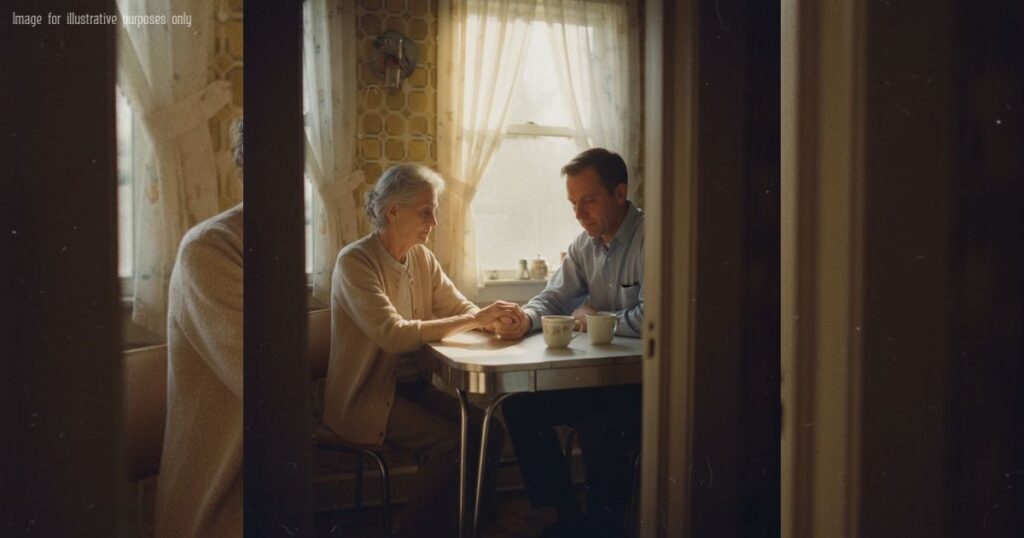
We sat at the kitchen table for twenty minutes. We drank terrible, instant coffee. We didn’t talk about his shaking hands. We talked about the Buckeyes. We complained about the price of gas. We talked about how the neighborhood is changing.
Simple things. Sacred things.
When I left, he tried to give me a $20 bill for “gas money.” I refused it, so he forced a jar of his homemade pickles into my hand instead.
“Drive safe,” he called out. “Watch out for the deer on Route 33.”
I had to pull over two miles down the road because I couldn’t see through the tears.
I realized something terrifying today.
Our parents don’t leave us all at once. They don’t disappear in a sudden explosion. They leave us in inches. They fade in silence, day by day, while we are busy scrolling through emails and worrying about quarterly reports.
They start finding the stairs scary. They start feeling cold when it’s 72 degrees. They start feeling invisible.
And they don’t ask for help because they are terrified we will look at them with pity.
So, please. Read this.
If they call you for something “small”… If they ask you to fix the remote control. If they need help reaching a lightbulb. If they just “can’t get the jar open.”
GO.
Do not say, “I’ll come this weekend.” Do not say, “FaceTime me and I’ll show you.” Get in the car. Go now.
They don’t need the lightbulb changed. They need to know they still matter. They need to know they haven’t been left behind in a quiet house at the end of the street.
Enjoy the bad coffee. Listen to the story you’ve heard five times.
Because one day, you will walk into that kitchen, and the coffee pot will be cold. The house will be silent. And you would give every dollar in your 401k, you would give your own right arm, just to get one more “inconvenient” phone call in the middle of a workday.
Go see them. Today.
—
PART 2 — The Pellets Weren’t the Emergency. His Pride Was.
I thought the story ended with the orange glow coming back to life.
I thought the lesson was simple: show up, lift together, drink bad coffee, leave with a jar of pickles and a lump in your throat.
I even thought the hardest part was over.
Then Thursday happened.
At 8:06 AM, I was back in my office, back in my glass-and-steel world where every problem has a timeline and every human emotion is an “impact.”
My calendar was stacked so tight it looked angry.
I told myself I’d earned a clean day.
No interruptions.
Click the button below to read the next part of the story.⏬⏬