PART 2 — The Pellets Weren’t the Emergency. His Pride Was.
I thought the story ended with the orange glow coming back to life.
I thought the lesson was simple: show up, lift together, drink bad coffee, leave with a jar of pickles and a lump in your throat.
I even thought the hardest part was over.
Then Thursday happened.
At 8:06 AM, I was back in my office, back in my glass-and-steel world where every problem has a timeline and every human emotion is an “impact.”
My calendar was stacked so tight it looked angry.
I told myself I’d earned a clean day.
No interruptions.
No emergencies.
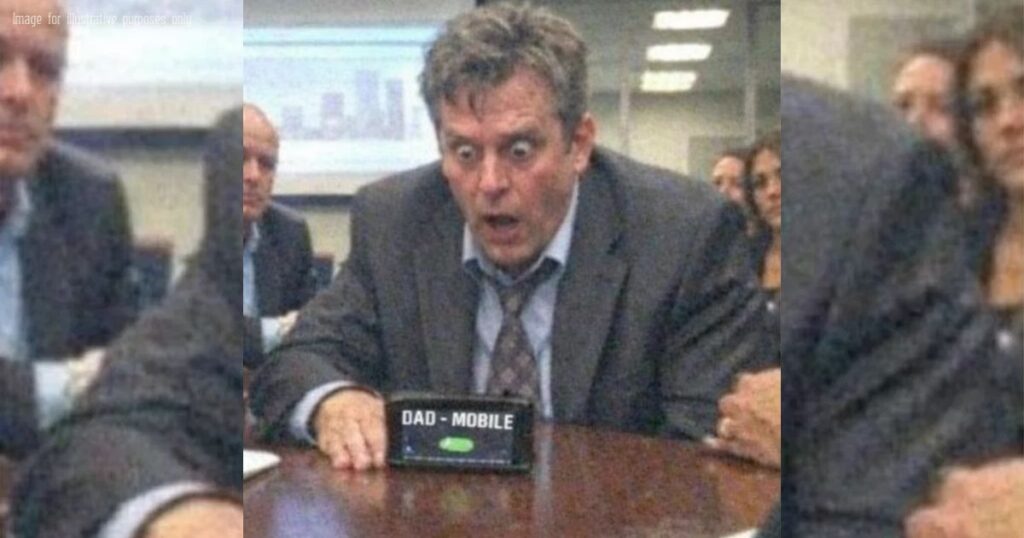
At 8:07, my phone buzzed.
“DAD — MOBILE.”
For a second, I just stared at it like it was a live wire.
Because once your father breaks his Golden Rule, your brain stops believing in coincidences.
I answered on the first ring. “Dad?”
His voice came in low, like he was calling from inside a closet.
“Davey. You at work?”
“Yes. What is it?”
A pause. A breath that sounded like someone stepping carefully around broken glass.
“I’m fine,” he said quickly. Too quickly. “Don’t come. I’m just… I’m just letting you know the stove is running. We’re warm.”
That made no sense.
Nobody calls during the workday to announce they’re warm.
“Dad,” I said, keeping my voice calm. “What happened?”
Silence.
Then I heard something else. Not words. A faint metallic clink. Like a spoon hitting a mug.
And underneath that… my mother’s voice, distant and tight.
“Arthur, give him the phone.”
My stomach dropped.
“Dad,” I said again, sharper now. “Put Mom on.”
He didn’t argue. That alone told me everything.
My mom took the phone, and her voice had that careful brightness she uses when she’s trying to hide fear from the person she loves.
“Hi, honey,” she said. “He’s okay. It’s nothing. He just—”
“What happened?”
A beat. Then the truth squeezed out in pieces.
“He went outside to get another bag,” she said quietly. “By himself. He didn’t tell me. I heard the back door. And then I heard… him.”
Her voice cracked on that last word.
“He slipped,” she finished. “On the step.”
My throat tightened. “Did he fall?”
“No,” she said. “He caught the rail. But he—” Another pause. “He couldn’t get up for a minute. He was down on one knee like… like a man praying to the concrete.”
I closed my eyes.
Because I could picture it perfectly.
My father—who once carried steel like it was wood—down on one knee in the cold, bargaining with his own body.
“What does he want you to tell me?” I asked.
Mom exhaled, and suddenly her voice turned tired. Not old. Not weak. Just… tired.
“He wants you to go to work,” she said. “He wants you to stop coming every time he looks human.”
That line hit me harder than any fall.
Because that wasn’t about me.
That was about him trying to erase the evidence.
Trying to keep the image intact.
The version of Arthur that doesn’t need anyone.
I opened my eyes and stared at the reflection of myself in my office window—tie, badge, clean hands. A man who moves boxes on screens while his father struggles with a real one.
“Put him on,” I said.
A shuffle. Then his voice.
“I’m fine,” he said immediately, like it was a script. “Your mother’s making it bigger than it was.”
“Dad.”
“I told you,” he pushed. “Don’t come. I’m embarrassed enough.”
And there it was.
The real emergency.
Embarrassment.
Pride.
A fear so sharp it makes old men do dangerous things just to prove they’re still the hero in their own story.
“Listen,” I said, lowering my voice. “I’m not coming to rescue you. I’m coming to be on the crew.”
“You were on the crew Tuesday,” he snapped. “And now look. I’m a project.”
“You’re not a project,” I said. “You’re my father.”
He didn’t answer.
So I did what I’ve done in a hundred meetings when a problem refuses to be solved by force.
I changed the question.
“Dad,” I said. “When you were foreman, what did you do when a guy got hurt?”
A long pause.
Then, softer: “I pulled him off the line.”
“Did you call him pathetic?”
“No.”
“Did you fire him for bleeding?”
“No.”
“What did you do?”
His voice came out rough. “I told him to sit his ass down before he made it worse.”
“Exactly,” I said. “So why are you the only man on earth you won’t treat like you’d treat your crew?”
I could hear him breathing. Heavy. Angry. Not at me.
At the mirror I’d held up.
Then he said the sentence that ended the argument.
“I don’t want to be one more thing you juggle, Davey.”
I swallowed.
Because that wasn’t pride talking anymore.
That was love mixed with fear.
That was the terror of becoming a burden to your own kid.
“I’m already juggling,” I said quietly. “Work. Life. Every stupid thing that screams for my attention. But you?” I exhaled. “You’re not a ball. You’re the reason I even learned how to juggle.”
He didn’t answer.
But I heard a small sound I recognized from childhood.
The sound of my father losing a fight without admitting it.
A sigh through the nose.
A surrender disguised as breathing.
“Fine,” he muttered. “Just don’t make a thing out of it.”
I did make a thing out of it.
Just not the way he expected.
I walked into my boss’s office with the same calm tone I use when a shipment gets delayed.
“I need to leave for a couple hours,” I said. “Family situation.”
He didn’t look up from his screen. “Can it wait until lunch?”
My jaw flexed.
This is the part people argue about in comments.
This is where the country feels split right down the middle—between the people who say “work is work,” and the people who say “if you don’t show up for your parents, you’ll regret it forever.”
I’m telling you what happened.
I said, “No.”
He finally looked up, and his eyes did that corporate math.
Not how are you?
Not is your father okay?
Just calculation.
“David,” he said, slow, like he was explaining gravity. “We all have parents. We all have problems. If everyone left every time life got inconvenient, nothing would run.”
I stared at him.
And I realized something ugly.
Some places don’t see you as a son.
They see you as a function.
“Then it’s a good thing I’m not everyone,” I said.
His face tightened.
“Be careful,” he warned. “You’re in a leadership role.”
I nodded. “So I’m leading.”
And I left.
My hands were shaking by the time I got to my car.
Not because I was scared.
Because part of me—the trained, obedient part—was still expecting punishment for choosing family over productivity.
That’s how deep the conditioning goes.
I drove to my parents’ house under a sky the color of aluminum.
When I walked in, the stove was running. The house was warm.
My mom was at the sink, pretending to rinse a dish that was already clean.
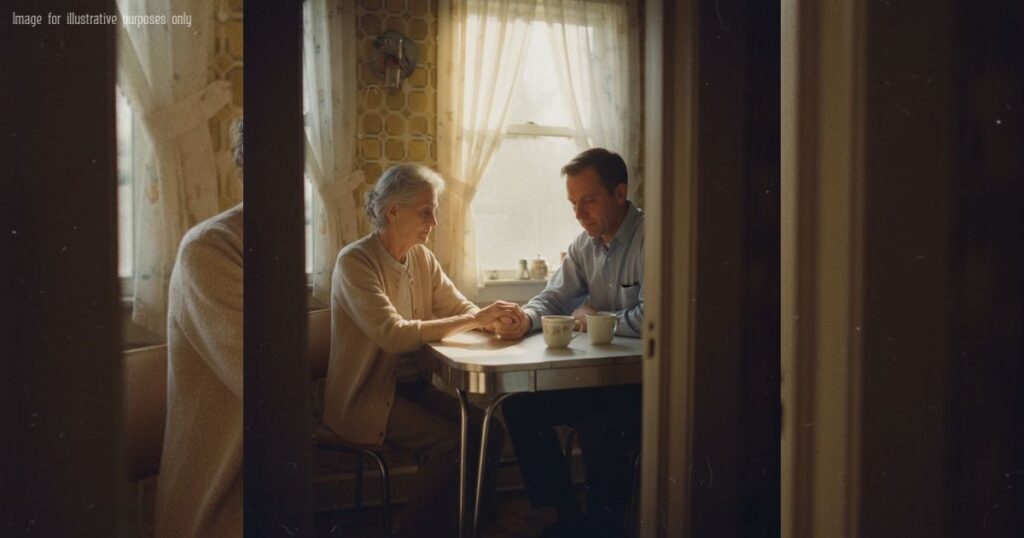
My dad was sitting at the kitchen table, hands folded like he was waiting for a verdict.
He didn’t look up when I walked in.
“Did you get fired?” he asked.
The question was blunt.
But underneath it was a lifetime of providing. A lifetime of believing a man’s worth is measured by what he brings home.
“No,” I said. “Not yet.”
He flinched like I’d slapped him.
“Don’t joke.”
“I’m not joking,” I said. “I’m telling you the truth. I might get in trouble. I might not. But here’s what I need you to hear: I would rather be in trouble for showing up than be safe at work and haunted at your funeral.”
My mom made a small sound—half laugh, half sob—and turned her back to us.
My father stared at the table so hard I thought he might burn through it.
Then, finally, he whispered, “I didn’t fall.”
“I know,” I said gently. “But you tried to lift the world alone again.”
His jaw worked.
“I just wanted to prove—”
“I know what you wanted,” I cut in. Not harsh. Firm. “You wanted to prove you still get to be Arthur.”
He swallowed.
Click the button below to read the next part of the story.⏬⏬