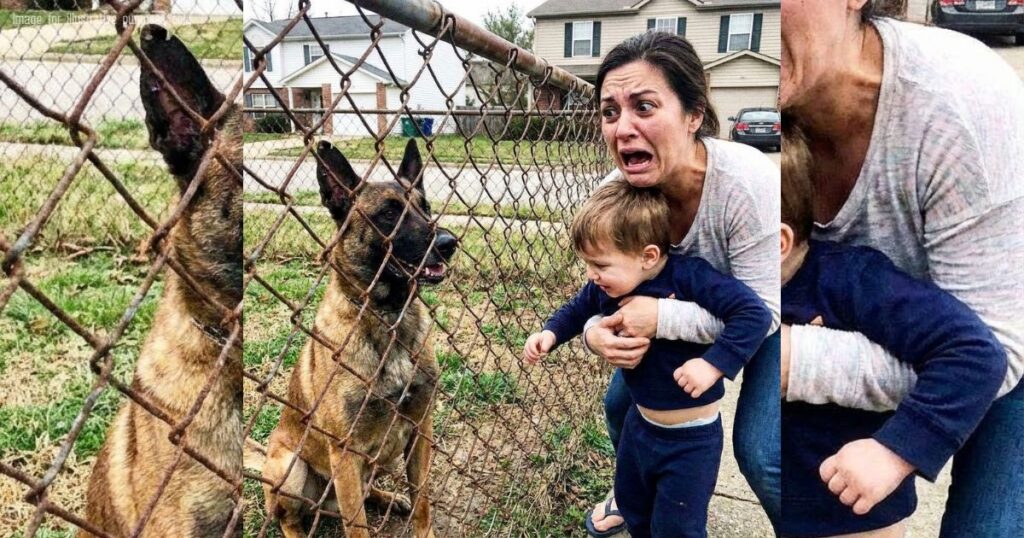
“Have you ever met him?” Elena demanded suddenly. She pointed at me. “Have you ever stood on the other side of the fence and actually looked into his eyes instead of at a comment thread?”
Citrus woman opened her mouth. Closed it. Shrugged. “I don’t need to pet something that could put my kid in the emergency room.”
“I didn’t ask if you’d pet him,” Elena said. “I asked if you’d met him.”
That’s the part no one wants to talk about. It’s not that they’re afraid to touch; it’s that they’re afraid to know. Once you know someone’s story, it gets harder to use them as a symbol in your argument.
It’s easy to debate a type of dog, a type of veteran, a type of kid.
It’s harder to look at Atlas. At Mac. At Toby.
At yourself.
The board called a “short recess.”
Humans spilled out into the hallway and onto the porch, clustering into little groups, whispering, phones out. Some looked at me like I was a bomb that hadn’t gone off yet. Others looked like they wanted to wrap me in blankets and apologize for everything the world had ever done to me.
That’s the other thing about going viral: strangers will argue about your soul based on eight seconds of shaky video and a caption.
Toby stayed in his chair, one hand on my back. His fingers dug into the fur between my shoulders, grounding himself in my heartbeat. I felt the vibration of his small body through my spine.
Mac stared at the floor. Elena paced.
“You don’t have to do this,” Mac muttered. “I can move. I can find a place with fewer rules.”
Elena stopped pacing. “So they win?” she asked. “The rules win. The fear wins. They get to say a piece of paper matters more than what your dog did for my child?”
Mac’s jaw clenched. “I’m tired,” he admitted. “Tired of fighting for every inch of normal life. The VA. The forms. The appointments. The neighbors. I just wanted one quiet street.”
I shifted, pressing my weight against his leg.
Quiet streets are never really quiet. Not in the mind of someone who’s heard what explosions do to bodies.
You can pull a soldier out of the war, but you can’t always pull the war out of the zoning laws that decide where he’s allowed to live.
When they called us back in, the room felt different.
The citrus woman wasn’t in her chair.
She was on the floor.
With me.
She sat a cautious distance away, hands on her knees, posture tight. The trainer had clearly done something—arranged some controlled exercise while we were out.
“Hi, Atlas,” citrus woman said, voice strained. “I, uh… I brought my son to meet you outside earlier. With the trainer.”
Mac stiffened.
“He’s okay,” she added quickly. “You didn’t even look at him. You were too busy staring at that stupid tennis ball.”
I considered growling at the insult to my ball, but I let it go.
“I watched you,” she said. “You scanned every car that went by. Every bike. Every sound behind you. You never put yourself between my kid and the door, not once.”
Her eyes met mine. There was still fear there. Fear doesn’t vanish in a montage. But there was also something like reluctant respect.
“I still don’t want my child hugging you,” she said honestly. “But I’m starting to believe you’re not waiting for a chance to hurt him.”
That’s not a Hollywood confession.
But it was real.
Sometimes the bravest thing a human can say isn’t “I was wrong.” It’s “I’m trying to be less wrong than I was yesterday.”
The HOA president banged his little gavel on the table.
“We’ve heard testimony from residents, from the dog’s owner, from Mrs. Vance, and from a certified behavior specialist,” he said. “We still have to consider our legal obligations, but we also have to consider who we want to be as a community.”
He glanced at me. At Mac. At Toby.
“Effective immediately,” he continued, “Atlas will be reclassified.”
The lawyer shuffled papers. “We don’t have a category that—”
“We do now,” the president said quietly. Then louder: “We are removing the term ‘Level 4 Liability’ from our documents. It will be replaced with ‘High-Responsibility Animal.’”
People shifted in their seats.
“This means additional precautions,” he went on. “Posted signs, proof of ongoing training, clear emergency contacts. It also means HOA funds will be used to upgrade fencing where needed—not just punish owners with impossible requirements.”
Mac blinked. “You’ll… help fix the fence instead of just threatening fines?”
The president nodded. “Our job is to reduce risk, not dump it all on the people already carrying the heaviest loads.”
He looked directly at Mac as he said it.
Lawyer-man cleared his throat but didn’t argue.
“And as for Atlas,” the president concluded, “this board recognizes his actions on the night of the storm as an act of service that saved a child’s life. He is permitted to remain, under the new guidelines.”
There were claps. Not everyone clapped. Two people stood up and walked out, faces tight.
Change always leaves someone mad enough to type about it later.
Elena exhaled like she’d been holding her breath for three weeks. Mac’s shoulders slumped, some invisible armor sliding off his back.
I just lay there.
I hadn’t understood every word, but I understood the smell in the room had shifted—from fear-only to fear-mixed-with-hope.
That’s the best you can hope for, most days. Hope never comes alone. It always walks in holding fear’s hand.
After the meeting, people approached us in ones and twos.
A paramedic who lived three doors down. “My partner’s alive because of a dog like him,” she said, rubbing my ear. “People don’t know half of what these dogs do.”
A teacher. “We’ve been trying to get Toby to engage for years,” she told Elena. “If Atlas is part of that breakthrough… I’ll come fight the board myself if I have to.”
A teenager. The one who posted the video. “Sorry if I made things worse,” he mumbled, shoving his hands in his pockets. “I just thought people should see. Like… actually see you.”
Mac clapped a hand on his shoulder. “You did what you thought was right,” he said. “That’s more than most.”
On the way out, we passed a cluster of residents staring at their phones, thumbs moving fast. Some glared. Some smiled. Some looked conflicted.
That’s what controversy really is: not a war between good and evil, but a mirror no one expected to stand in front of at a 7 p.m. meeting on a weeknight.
That night, back on our porch, Mac sat on the steps with a beer he didn’t finish.
Elena came over with Toby. No roast or gift this time. Just a kid in fuzzy socks, staring at me with wide, serious eyes.
The air was cold but not cruel. The kind of cold that nips instead of devours.
“Okay, buddy,” Elena whispered to her son. “Remember what we practiced?”
Toby stepped forward, slow as snowmelt. He held a small plastic device with big buttons—his talker. He pressed one with his thumb. The recorded voice emerged, slightly mechanical but unmistakable.
“Hi, Atlas,” it said.
Toby’s mouth moved with it, just a fraction of a second late.
His real voice followed, a ghost riding the back of the digital one.
“Hi… Atlas.”
He reached out and laid his palm flat against my chest.
Right over my heart.
I didn’t move. Didn’t breathe. Didn’t blink.
In the desert, the highest honor a handler can give you is trust. To step out where your nose has passed and believe you did your job right.
On a porch in a small American neighborhood, a different kind of trust pressed a tiny hand into my ribs and said my name.
Mac wiped his eyes with the back of his hand. “He promoted you,” he said roughly. “From heating pad to speech therapist.”
Elena laughed through her tears. “The app is losing its mind,” she added, shaking her head. “Half the comments are ‘I want an Atlas on my street.’ The other half are ‘this is irresponsible, dogs shouldn’t be near vulnerable kids.’”
She looked at me, at her son, at Mac.
“They don’t get it,” she said softly.
Mac shrugged. “Some people never will.”
I shifted my paws, settling my weight more evenly so Toby wouldn’t lose his balance.
Maybe they didn’t. But some would.
Here’s the part no one tells you when a story goes viral:
The internet moves on.
The neighborhood doesn’t.
The outrage storm will find a new target, a new dog, a new parent, a new rule. But the fence between my yard and Elena’s? That stays. The footsteps on the sidewalk? Those keep coming. The small hand on my chest, learning to trust the rhythm under the scars? That hand has to live here tomorrow, and the next day, and the next.
A video can make you a symbol.
A life makes you a neighbor.
Humans keep asking the wrong question. They ask, “Is this dog safe?” like safety is a yes or no checkbox.
They never ask, “Are we building a world where anyone different is allowed to be safe with us, instead of only when they’re useful to us?”
That’s the controversy no board wants on the agenda.
My name is Atlas.
On paper, I am a “High-Responsibility Animal.”
Online, I am a “hero,” a “threat,” an “inspiration,” and a “walking lawsuit with teeth,” depending on which comments you read.
Out here, on this cracked concrete porch between two imperfect houses, I’m something simpler.
I am a barrier between a boy and the dark.
I am a mirror for the neighbors who would rather fear what they don’t understand than admit they might have been wrong.
I am proof that sometimes the scariest thing on your street isn’t the dog behind the fence—it’s the story you’ve been telling yourself about who deserves to belong on your side of it.
Judgment will always be free.
Understanding will always cost you something—your pride, your certainty, your favorite headline.
But if a retired bomb dog and a seven-year-old who doesn’t always have words can meet in the middle of a yard and choose trust over fear, maybe the rest of you can, too.
You don’t have to pet us.
You just have to see us.
Thank you so much for reading this story!
I’d really love to hear your comments and thoughts about this story — your feedback is truly valuable and helps us a lot.
Please leave a comment and share this Facebook post to support the author. Every reaction and review makes a big difference!
This story is a work of fiction created for entertainment and inspirational purposes. While it may draw on real-world themes, all characters, names, and events are imagined. Any resemblance to actual people or situations is purely coincidenta