🧩 PART 2: The Fence Didn’t Fix the Fear
The fence went up in a day.
The backlash took less than an hour.
By the next morning, my phone buzzed like an angry beehive—notifications stacking on my screen until the words blurred. Some people were still praising Ranger, calling him a hero.
But the other comments?
They were sharp. Suspicious. Hungry.
“Nice sob story. How do we know this isn’t a scam?”
“So we’re just letting attack dogs live next to kids now?”
“Funny how there’s always money for a vet when it’s someone’s ‘service dog,’ but not when normal families are struggling.”
A few were worse—accusations that didn’t even feel like they belonged to my neighborhood. Like strangers had wandered in just to throw stones, then leave.
And the thing that made my stomach drop wasn’t the hate.
It was how fast the neighbors I knew started picking sides.
Oak Creek Estates wasn’t arguing about a dog anymore.
We were arguing about who deserved compassion.
At 9:13 AM, I got an email from the HOA Board.
NOTICE OF VIOLATION: UNAPPROVED EXTERIOR MODIFICATION / UNSANCTIONED SOLICITATION / SAFETY CONCERN.
They used the same tone they used for trash bins left out too long—cold, certain, moral.
The fence company had done beautiful work. But the Board claimed the style wasn’t “consistent.” They also said the piles of donated supplies on Mr. Henderson’s porch qualified as “community solicitation.”
Like kindness was a prohibited substance.
Then, at 9:26 AM, a second email arrived—this one from the city.
ANIMAL SEIZURE PROCEEDING: SCHEDULED INSPECTION REMAINS IN EFFECT.
Withdrawal of complaint did not automatically cancel enforcement. There were “procedures.” There were “timelines.”
There were “requirements.”
The words on the screen felt unreal.
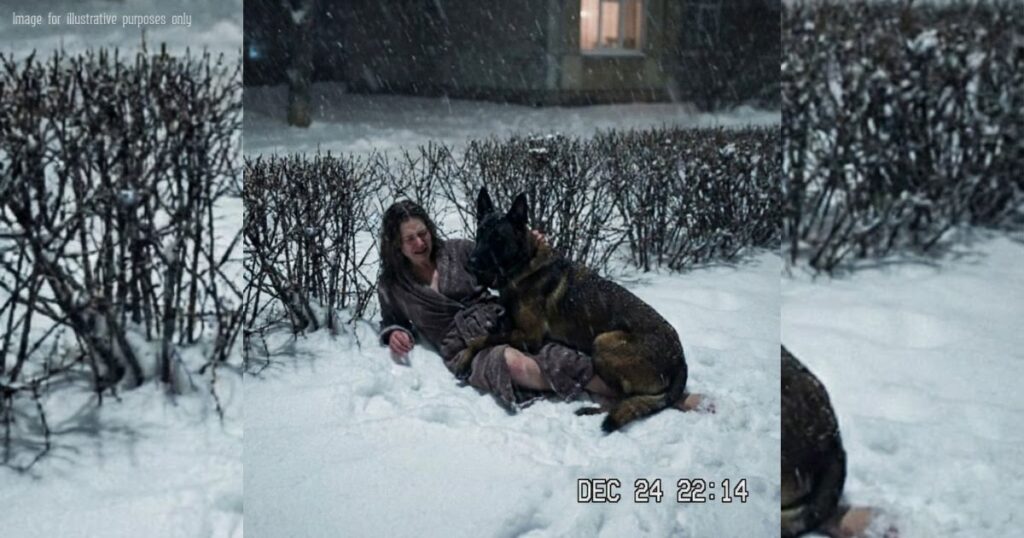
Ranger had saved my life.
And the system was still coming to take him.
I drove to the corner lot in my son’s car with my cast propped on a pillow, the winter sun glaring off the snowbanks. My chest felt tight the whole way, like guilt had turned into a physical organ.
Mr. Henderson opened the door before I could knock.
He looked like he hadn’t slept.
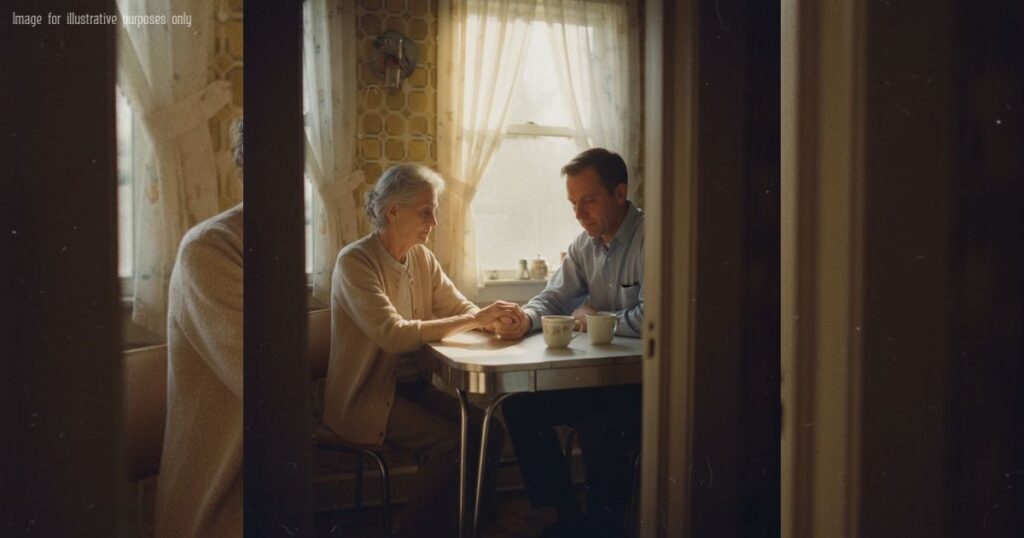
Inside, the house was warm now—people had delivered heaters, firewood, groceries—but his eyes still carried that hollow, hyper-alert look of someone who lived too long in survival mode.
Ranger limped toward me, slower than before.
His tail wagged once.
Then he sat, disciplined, like he was waiting for orders from a world that no longer existed.
“I saw the emails,” I blurted. “They’re still—”
“I know,” Mr. Henderson said quietly.
His voice didn’t shake this time.
That scared me more than tears.
“They’re going to inspect. If they decide he’s ‘dangerous,’ they’ll take him anyway.”
“No,” I said immediately, too loud. “No. We’ll fight it. We’ll—”
He held up a hand.
“Ma’am…” He swallowed. “I appreciate what you did. I do. But you don’t understand what happens next.”
He nodded toward my phone, which was still buzzing.
“They’ll dig into my life. They’ll ask questions. They’ll poke at every crack in the wall until they find something they can call a problem.”
He looked at Ranger.
“And he’ll pay for it.”
I stepped closer, lowering my voice like we were standing near a sleeping child.
“What are you saying?”
His jaw tightened.
“I’m saying I might surrender him before they take him.”
The words hit me like another fall on black ice.
“No,” I whispered. “You can’t.”
He didn’t look at me when he answered.
“I’m tired,” he said simply. “Tired of proving we deserve to exist.”
Ranger’s ears flicked, sensing the shift.
He leaned his head against Mr. Henderson’s knee, like he was anchoring him to the room.
And that’s when I realized the most dangerous thing in Oak Creek Estates wasn’t a Belgian Malinois.
It was the way we treated human beings like paperwork.
I went home and did something I’d never done before.
I called people I usually only waved at.
Not texted. Not liked. Not reacted with a heart emoji.
Called.
The neighbor with the fence crew came back with permit paperwork, stamped and neat, like legality could be built with a clipboard. A local canine trainer offered to do a behavioral evaluation—no drama, no theatrics, just professional documentation.
The vet printed records showing Ranger’s age, injuries, treatments, and history of training.
We made a binder.
A literal binder—because apparently in America, compassion needs three-hole punches to count.
By Tuesday afternoon, the inspection date spread through the neighborhood like smoke.
And then, the video appeared.
Someone had filmed Ranger in Mr. Henderson’s yard—Ranger pacing the fence line, head high, body tense.
In the clip, a teen voice laughed.
“Bro, look at this thing. It’s like a military dog.”
Ranger barked—one hard, sharp warning bark.
The clip ended there.
No context.
No explanation that the teen had thrown a snowball over the fence first.
No mention of Ranger’s bad hips, or that he couldn’t run far even if he wanted to.
Just the bark.
Just the frame of teeth.
Just enough to light a match.
Within an hour, the neighborhood app turned into a courtroom.
“THIS is what you all are defending??”
“I don’t care if it ‘saved her.’ One day it’ll snap.”
“You can’t guilt-trip us into risking our kids.”
And then the counterfire:
“Are you hearing yourselves? The dog didn’t even cross the fence.”
“This man served the country and you’re worried about paint and property values.”
“If you’re so scared, teach your kids not to antagonize animals.”
The arguments got ugly fast.
Not because anyone was completely wrong.
But because nobody was listening long enough to be right.
That night, the HOA called an emergency meeting at the community center.
I showed up in my winter coat with my cast hidden under a long skirt, clutching the binder like it was a passport to humanity.
The room was packed.
Folding chairs. Fluorescent lights. Coffee in paper cups.
People I’d known for five years suddenly looked like strangers with opinions sharp enough to cut.
The HOA President—polished, perfect hair, perfect smile—tapped the microphone.
“We are here to address community concerns regarding an animal residing at the corner property,” she began, voice calm like a bedtime story. “We understand there have been… emotional reactions.”
Emotional.
That’s what they called it when your life got saved.
A man stood up first.
“I have two kids,” he said. “I’m not sorry. I don’t want a dog like that near the sidewalk.”
A woman behind him chimed in.
“Exactly. People are acting like this is about being heartless. It’s not. It’s about safety.”
Then someone else:
“And fairness. So the whole neighborhood can crowdfund a fence for one guy, but what about everyone else struggling? What about single parents? What about seniors without viral posts?”
The room murmured. Heads nodded. Arms crossed.
That was the real controversy, hiding under the dog debate like a second storm.
Who gets help.
Who gets believed.
Click the button below to read the next part of the story.⏬⏬