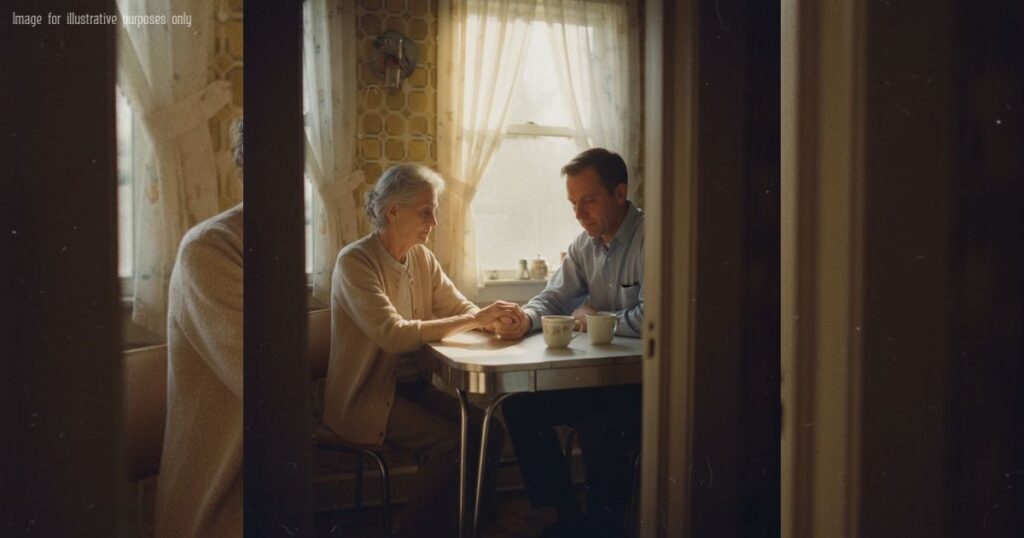
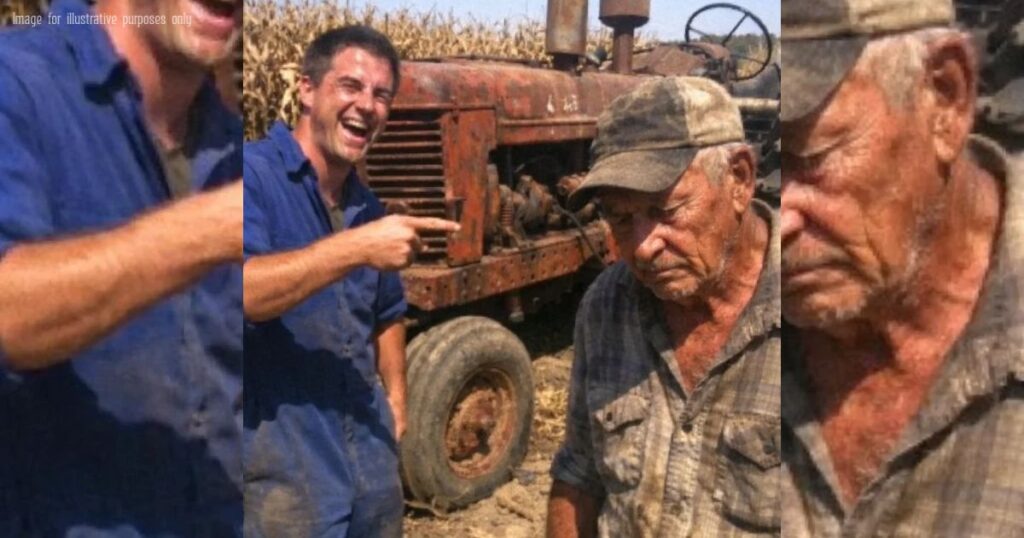
The mechanic laughed and told me to scrap the tractor. He said it was dead, useless iron—kind of like how the world looks at an old man like me. I almost believed him, until a stranger with calloused hands proved us all wrong.
My name is Elias. I’ve farmed this same patch of Nebraska dirt since I was twelve. I’ve outlived my wife, my friends, and according to the bank, I’ve outlived my usefulness. My son is a software developer in Seattle; he sends me Christmas cards but hasn’t stepped foot in a cornfield in a decade.
The crisis hit on a Tuesday. My 1978 harvester—my father’s pride and joy—coughed a cloud of black smoke and died halfway through the harvest.
I called the dealership in town. The technician, a kid barely old enough to shave, plugged a laptop into the side of a new model and didn’t even look at my old rig. “Can’t get parts for that relic, Elias,” he said, tapping on his screen. “We can finance a new one for you. Fully automated. GPS guided.”
“I don’t need a spaceship,” I grumbled. “I need to get this corn in before the frost.”
He shrugged. “Times change, old timer.”
Desperate and back-breakingly short-handed, I went to the employment office. They sent me Mateo.
Mateo didn’t look like the farmhands I grew up with. He was twenty-eight, from Venezuela, with eyes that looked like they’d seen too much and a voice so quiet you had to lean in to hear him. He didn’t speak much English.
My neighbors drove by slowly, staring. I knew what they were thinking. I heard the whispers at the feed store about “outsiders” and “taking jobs.” Truth be told, a part of me—the stubborn, old part—was skeptical too.
“You ever drive a beast like this?” I asked, kicking the tire of the dead harvester.
Mateo shook his head. “No, Señor. But… I fix.”
He didn’t ask for a manual. He didn’t ask for a computer. He asked for a wrench.
For three days, we worked in the blistering heat. I watched him. He didn’t treat the machine like scrap metal. He treated it like a living thing. He cleaned the carburetor with a toothbrush. He rewired the ignition using patience and instinct. His hands were covered in grease, bleeding from skinned knuckles, but he never complained. Not once.
On the third afternoon, he signaled for me to turn the key.
The engine didn’t just start; it roared. A deep, guttural thrum that I hadn’t heard in years. It was the sound of my childhood.
Mateo wiped his forehead, a shy smile breaking through the grime on his face. He patted the rusty fender. “Good machine,” he said in broken English. “Old. But strong heart.”
I looked at him, really looked at him, for the first time. I didn’t see a stranger anymore. I saw the same grit my father had.
That Friday, I took Mateo to the diner in town for lunch. It was a risk. The place was full of regulars—men I’d known for fifty years, men who spent their mornings complaining about how the country was going to hell.
When we walked in, the chatter stopped.
Buck, a local who sold his land years ago and now spent his days loudly discussing politics, leaned back in his booth. “Elias,” he boomed. “See you got yourself some… imported help. Couldn’t find a local boy to do the work?”
The diner went silent. Mateo stiffened, his eyes dropping to his plate. He looked ready to apologize for his own existence.
My blood ran hot. I remembered the technician with the laptop who wouldn’t touch my engine. I remembered the “local boys” who were too busy for hard labor.
I placed my hand on Mateo’s shoulder. It was firm.
“You know that ’78 harvester, Buck?” I asked, my voice cutting through the room. “The one everyone told me was trash?”
Buck nodded, confused.
“This young man fixed it,” I said. “He didn’t use a computer. He used his hands. He spent three days in the dirt, sweating to save a farm that isn’t even his.”
I looked around the room, meeting every pair of eyes.
“We sit in here and talk about the ‘good old days.’ We talk about values. About hard work. About respect.” I pointed at Mateo. “Well, while you boys were talking about it, he was doing it. He showed more respect for this land in three days than most people do in a lifetime.”
I turned back to Buck. “He didn’t take a job from anyone, Buck. He stepped up to do the job nobody else wanted. That’s about as American as it gets.”
Buck’s face went red. He looked down at his coffee. A few other men nodded slowly. The waitress, a lady I’ve known since high school, walked over with a pot of coffee and filled Mateo’s cup first. “On the house, honey,” she said softly.
Mateo looked up at me, his eyes watering. “Thank you, Patron,” he whispered.
“No,” I said, breaking bread. “Thank you, Mateo.”
We finished our meal in peace.
I’m still an old farmer in a changing world. I still worry about the future. But out there in the fields, listening to that old engine hum alongside a young man from thousands of miles away, I realized something.
We spend so much time fighting over who belongs here, drawing lines in the sand. But the soil doesn’t care where you were born. It only cares about who is willing to tend to it.
The “Good Old Days” aren’t gone. They just look a little different than we expected. They look like a stranger’s calloused hands, reaching out to fix what’s broken.
You don’t need to speak the same language to understand dignity. And sometimes, to save the things we cherish most, we have to open the gate for someone new.
—
PART 2 — The Week After the Diner
The next morning, I walked into the feed store like I always do—same bell over the door, same smell of molasses and rubber boots—except it didn’t feel the same anymore.
Heads turned.
Not the friendly kind. The measuring kind.
Like I’d walked in wearing someone else’s skin.
I nodded at Earl behind the counter. He nodded back, but his eyes slid past me to the door, like he expected Mateo to walk in behind me with mud on his jeans and the whole town’s fear on his shoulders.
He didn’t.
Click the button below to read the next part of the story.⏬⏬