Then he reached behind him and waved.
And that’s when I saw it.
A second truck, parked down the road. The tailgate dropped. Lumber stacked inside.
Two-by-fours.
Plywood.
A bucket of screws.
He nodded toward it. “Name’s Caleb,” he said. “And if you let me, I can build you a better stand. One with a roof. One that doesn’t get ruined by rain, or… by people who treat it like a joke.”
I stared at him.
Caleb—the man I’d almost turned into a villain in my head—standing there offering labor like a confession.
Behind us, a car slowed.
A woman got out, older, bundled in a coat too thin for the wind.
She approached carefully, like the table might bite her.
Then she stopped when she saw it was empty.
She looked around, panicked for a moment.
Caleb saw her too.
He didn’t hesitate.
He opened the cooler in the back of my truck—the one I’d refilled that morning—and pulled out two cartons of eggs I’d kept back for restocking.
He held one out to her.
Not like charity.
Like a neighbor passing salt across a table.
The woman’s lips trembled.
“I can pay,” she said quickly, digging through a purse like she was trying to dig her pride out of the bottom.
Caleb shook his head once. “Not today,” he said. “Just… eat.”
Her shoulders dropped, and she hugged the carton to her chest like it was a baby.
She didn’t say thank you.
She couldn’t.
She just walked away fast, head down, carrying dinner like it was contraband.
I watched her go, and something inside me snapped into place.
This wasn’t about whether people deserved help.
Everybody thinks they know the answer to that question until hunger comes for their own house.
This was about what kind of town we wanted to be when nobody was watching.
And now everybody was watching.
That night, the county notice arrived in my mailbox like a slap.
Official paper. Official words. No room for nuance.
Miller came over with a six-pack of cheap soda like we were planning a war.
“You gonna shut it down?” he asked.
I read the notice again. Then again.
“People are arguing about it like it’s a religion,” I said.
Miller snorted. “In this country, everything becomes religion.”
I sat at my kitchen table and thought about the woman with the eggs. About Mara’s tired eyes. About Caleb’s confession. About that challenge coin that had walked away and come back as a twenty.
Then I thought about the comments online.
The ones that said, If you can’t feed yourself, that’s your fault.
And the ones that said, If you’re comfortable while your neighbor starves, that’s your fault.
Here’s the truth nobody likes to say out loud:
Both sides think they’re defending dignity.
One side thinks dignity means never needing help.
The other thinks dignity means never being punished for needing it.
And meanwhile, the eggs are eight dollars and the people are tired and the world keeps spinning like a ceiling fan.
The next morning, I drove into town for the hearing.
Not a courtroom. Not a trial.
A small meeting room with folding chairs and a flag in the corner and fluorescent lights that make everyone look sick.
There were people there I didn’t expect.
Mara showed up in her scrubs, hair pulled back tight.
Caleb sat in the back, hands folded like he was afraid to touch anything.
A young mom with a stroller.
A man in a clean work shirt who smelled like diesel.
Even the pickup guy and the Prius woman from my driveway were there—sitting three chairs apart, not talking, but not leaving.
And then there were the others.
The ones with stiff smiles and crossed arms.
The ones who don’t miss meals, but miss empathy.
A man stood up and said, “We’re turning into a free-for-all. This is unsafe. This is encouraging dependency.”
A woman stood up and said, “My husband works two jobs and we still can’t keep up. Dependency? We’re already dependent—on prices we can’t control.”
Someone else said, “What if someone gets sick?”
Someone said, “What if someone freezes?”
Back and forth.
Anger that wasn’t really about my picnic table.
Anger that had been living in them for years and finally found a target that didn’t fight back.
I sat there listening, my hands folded so tight my knuckles turned white.
Then the official at the front—nice haircut, careful voice—looked at me.
“Mr. Hart,” he said. “Do you want to say anything?”
I stood up slow.
The room went quiet in that way people go quiet when they want a show.
I didn’t give them a show.
I gave them the truth.
“I’m not a politician,” I said. “I’m not a preacher. I’m a farmer. And farmers know two things: you don’t get a harvest without work, and you don’t get a harvest without weather you can’t control.”
A few heads nodded. A few eyes rolled.
I kept going.
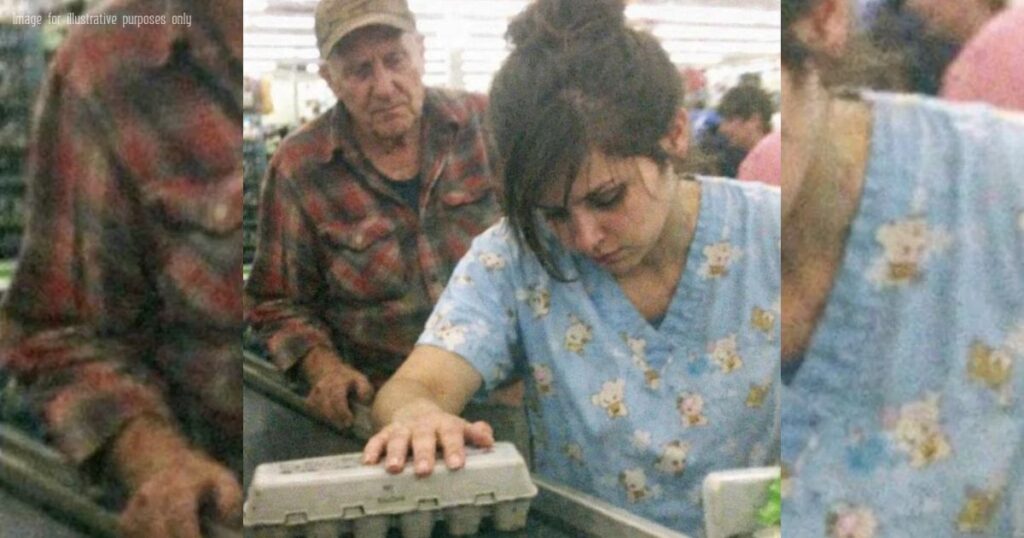
“I put that table out there because I watched a healthcare worker put eggs back at the register,” I said. “Not because she was lazy. Because she was tired. And because eggs cost more than dignity should.”
Mara’s face went red, but she didn’t look away.
I let that sit.
“And then I watched people—people in this room—fix my fence without asking. Leave honey. Leave zucchini. Trade labor for food. Trade kindness for survival.”
I held up the notice.
“You want to call it unsafe,” I said. “Fine. Then let’s make it safer. You want to call it enabling? Fine. Then come meet the people who take from it. Look them in the eye. Tell them they’re the reason the country is falling apart.”
Silence.
Not comfortable silence.
The kind that feels like someone turned on the lights in a messy room.
I looked around at them—at the angry ones and the scared ones and the ones pretending not to care.
“We’re all so obsessed with who deserves what,” I said quietly, “that we forgot what it does to a person to be hungry in public.”
My throat tightened. I swallowed it down.
“I’m not asking anyone to agree with me,” I said. “I’m asking one question: when your neighbor is hurting, do you want them to starve quietly so you can feel morally clean?”
That’s when the pickup guy stood up.
He cleared his throat like he hated attention.
“I don’t agree with Silas about much,” he said.
A few people chuckled.
“But I’ve seen that table keep peace where social media tries to start a war,” he added. “And I’d rather live next to a man who trusts people than a town that punishes him for it.”
Then the Prius woman stood up too.
“I don’t agree with him either,” she said, nodding toward the pickup guy. “But I’d rather argue about dinner recipes than watch families go hungry while we debate principles.”
Somebody in the back whispered, “Amen,” like a reflex.
The official at the front rubbed his forehead, like his job had just gotten complicated.
Finally, he said, “We can do a trial period. Thirty days. Keep it orderly. No commercial signage. No solicitation. We’ll revisit.”
I didn’t know what half those words meant in a practical sense, but I knew what the tone meant:
They weren’t shutting me down today.
On the drive home, the sky looked wider.
Caleb followed me back to the farm.
He didn’t say much. He didn’t need to.
He built a roof over the picnic table that afternoon, using the lumber he’d brought.
A simple lean-to. Nothing fancy.
He added a second shelf, lower, for canned goods people might leave.
Mara came by after her shift and taped a new note beside my old sign.
Not replacing it.
Adding to it.
It said:
“Please leave some for the next neighbor. Hunger doesn’t take turns.”
That night, I checked the stand one last time before bed.
There were tomatoes again.
Eggs.
A jar of honey.
A bag of apples.
And in the tin box, there was something that wasn’t money.
A note.
Written in block letters like someone didn’t trust their handwriting to be seen:
“I was the one who complained. I thought you were making us look weak. Then I watched my grandson take food from your table when he thought nobody was looking. I’m sorry.”
Underneath it was a five-dollar bill, folded crisp like a flag.
I stood there in the dark, the cold air biting my cheeks, and I realized something that made my chest ache:
Most people aren’t cruel.
They’re terrified.
Terrified of needing help.
Terrified of admitting it.
Terrified that if they open the door for someone else’s hunger, someday their own hunger will walk right in behind it.
I locked the tin back onto the table and started up the driveway, slow, careful, like a man carrying something breakable.
Because I was.
I was carrying the fragile, stubborn idea that maybe—just maybe—this country isn’t doomed.
Maybe it’s just malnourished.
And here’s the part people will argue about, the part that will light up comment sections like dry hay:
If you saw someone take from that table without paying—would you stop them… or would you let them eat and trust the story you can’t see?
Thank you so much for reading this story!
I’d really love to hear your comments and thoughts about this story — your feedback is truly valuable and helps us a lot.
Please leave a comment and share this Facebook post to support the author. Every reaction and review makes a big difference!
This story is a work of fiction created for entertainment and inspirational purposes. While it may draw on real-world themes, all characters, names, and events are imagined. Any resemblance to actual people or situations is purely coincidenta