Part 2 — The Week the “Old Folks Table” Stopped Being Invisible
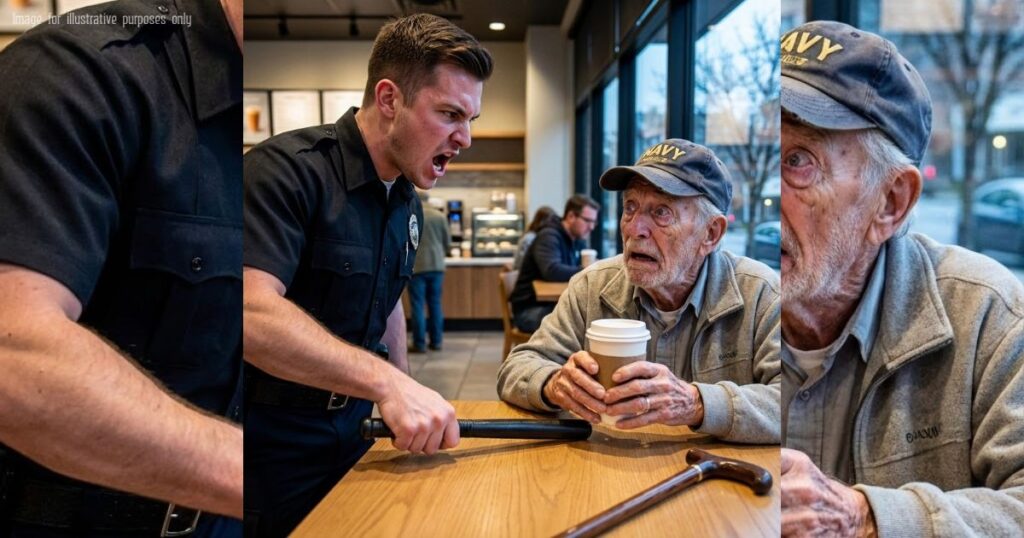
If you saw the clip of the security guard trying to kick Arthur out, you probably think the story ends with a warm cocoa and a wholesome lesson.
It didn’t.
That video didn’t fix anything.
It lit a match in a room full of gasoline, and then everyone argued about who should be blamed for the fire.
By Monday morning, the downtown library felt different the second I walked in.
Not louder.
Not busier.
Sharper.
Like the building itself had teeth.
The glass lobby doors whooshed open and I saw it right away—new signs, printed on thick paper like they wanted to look “official” without admitting they were panicking.
WORK ZONES ARE FOR ACTIVE USE.
NO SLEEPING. NO LOITERING.
SEATING IS FOR READING, STUDYING, OR COMPUTER USE.
And underneath, in smaller letters:
Repeated violations may result in a temporary ban.
Temporary ban.
From the last free warm place in the city.
I headed for The Corner with my backpack tight on my shoulder, like I was entering enemy territory.
Arthur was already there.
Same faded Navy cap.
Same cane.
Same shoulders pulled inward like he was bracing for impact.
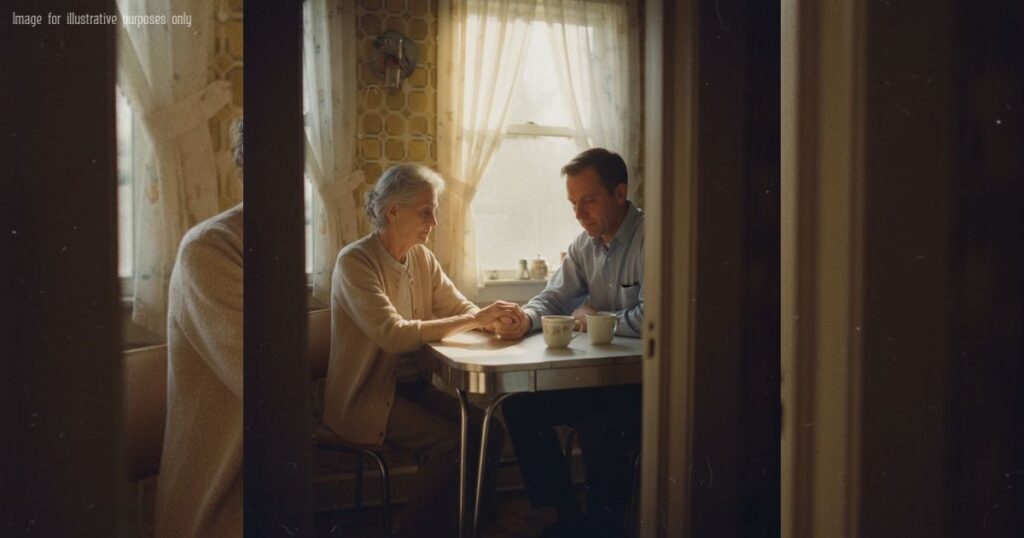
Mrs. Gable sat beside him, knitting in slow, stubborn loops.
But today there were two things I’d never seen before.
A small laminated placard on the table that said “FOUR SEATS MAX — ONE HOUR LIMIT WHEN BUSY.”
And a woman in a blazer standing ten feet away, pretending to browse a shelf while watching them like a hawk watches a mouse.
Arthur’s eyes met mine and he tried to smile.
It didn’t reach his face.
“Morning, Leo,” he said, voice soft.
Mrs. Gable tilted her head. “You look like you’re about to apologize for existing.”
“I’m not,” I said, sitting. “I’m about to be annoying on purpose.”
That got a tiny breath of laughter out of her.
It was the first good sound in the room.
Then the blazer woman walked over.
She wasn’t the guard.
She was worse.
The guard was a kid doing a job.
This woman looked like a policy with legs.
“Hi,” she said, smile too practiced to be real. “I’m Ms. Caldwell. I oversee patron experience.”
Patron experience.
Like a library was a theme park.
She nodded at Arthur. “Sir, I just want to make sure you understand our updated expectations.”
Arthur straightened like a soldier being inspected, even though he wasn’t one.
“Yes, ma’am,” he said quickly. Too quickly. Like fear had trained him.
Ms. Caldwell’s eyes flicked to me. “And you are…?”
“Leo,” I said. “Regular patron. Active use.”
I popped my laptop open like it was a shield.
She smiled again. “Wonderful. Then you’ll understand that our space has to stay accessible for students and working professionals. We’ve had… concerns.”
Concerns.
That word is a magic trick.
It makes cruelty sound like caution.
“What kind of concerns?” I asked.
Her smile held. “People have reported feeling uncomfortable.”
Arthur’s hand tightened around his cup.
Mrs. Gable stopped knitting.
I felt my chest get hot, the way it does right before you say something you’ll pay for later.
“Uncomfortable with what,” I said, “the fact that some people age in public?”
Ms. Caldwell’s eyes sharpened. “We’re not discussing anyone’s age. We’re discussing behavior. Sleeping. Taking up space for long periods.”
Arthur cleared his throat. “I won’t sleep,” he said. “I don’t mean to—my eyes just—”
“I know,” Ms. Caldwell said, and she actually sounded like she believed him.
Then her voice cooled again.
“But we’ll be enforcing the policy consistently. This isn’t personal.”
It’s never personal.
That’s the whole point.
She walked away, heels clicking like punctuation.
Arthur stared at his hands.
“I don’t want you getting in trouble because of me,” he said.
I leaned in. “Arthur, you got in trouble for being tired. That’s not on you.”
Mrs. Gable’s knitting needles started again, faster this time, like she was trying to stab the air.
“The city,” she muttered, “has decided discomfort is an emergency and loneliness is not.”
We sat in that weird silence for a minute.
The kind where you can feel other people watching without looking.
Then a guy in a hoodie wandered near The Corner, phone held chest-high.
Not obviously recording.
Worse—casually recording.
Like we were content.
He whispered to himself, “This is them… this is the table… yo.”
I stared right at his camera.
He didn’t flinch.
He just smiled, like I should be grateful.
And that’s when it hit me.
The video didn’t just make people care.
It made people feel entitled.
Entitled to stare.
Entitled to judge.
Entitled to turn Arthur into a mascot for whatever argument they wanted to win online.
By lunchtime, The Corner was surrounded by strangers.
Some were kind.
Some were curious.
Some were vultures dressed as supporters.
One girl dropped a five-dollar bill on the table like we were a street performance.
“Buy him something warm,” she said, loud enough for everyone to hear, then walked away without making eye contact.
Arthur’s face went red.
Mrs. Gable slid the bill back toward me like it was contaminated.
“We are not a spectacle,” she said.
But the strangest part?
Not everyone was there to support.
A man in a fitted jacket stopped beside our table, stared at Arthur’s cap, and sighed dramatically.
“Look,” he said, “I’m not trying to be mean. But I come here to work. And every day it’s the same group holding the good seats. Some of us actually have deadlines.”
His tone wasn’t angry.
It was reasonable.
That’s what made it dangerous.
Because reasonable people can still say brutal things if they feel justified.
I took a slow breath.
“You want the seat,” I said. “Then sit. We’re not stapled to it.”
He scoffed. “It’s not about one seat. It’s about the principle. This place is turning into a hangout.”
Mrs. Gable looked up, eyes calm but sharp as glass.
“Son,” she said, “this is a public library. It has always been a hangout. You just preferred the version of hanging out that looks like productivity.”
The man blinked.
He wasn’t used to older people speaking back.
He muttered something about “entitlement” and walked off.
Arthur watched him go, then whispered, “Maybe he’s right.”
I slammed my laptop shut a little too hard.
“No,” I said. “He’s not right. He’s just stressed. And the city taught him to aim his stress at you instead of the people who keep raising rent.”
Arthur flinched, like I’d said something forbidden.
So I softened.
“I’m not talking politics,” I said. “I’m talking math. People are squeezed. They pick the nearest target.”
Mrs. Gable nodded slowly.
“Generations aren’t enemies,” she said. “Poverty is. Isolation is. And we’re all being trained to blame the wrong faces.”
That afternoon, Ms. Caldwell came back, this time with a clipboard.
And behind her—two security guards.
Not just the kid from before.
Two adults.
Big shoulders.
Neutral expressions.
They weren’t there to negotiate.
They were there to remove.
“Arthur Henderson?” Ms. Caldwell asked, voice politely loud.
Arthur’s whole body went tight.
“Yes,” he said.
Click the button below to read the next part of the story.⏬⏬