PART 2 — “The Day the Speech Went Viral (and the Kid I Was Trying to Save Disappeared)”
By the time I got home that night, my old flip-style phone—yes, I still carry one—was vibrating itself off the kitchen counter.
It wasn’t one call.
It was a swarm.
Voicemails. Texts. Emails I didn’t know I could receive on a device that simple.
And one subject line, repeated like a chant:
YOU’RE TRENDING.
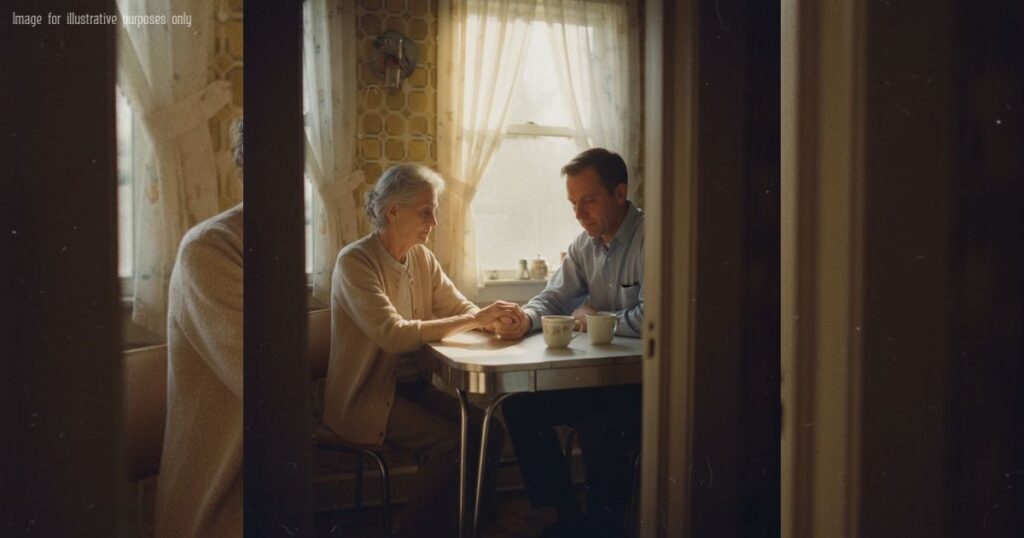
I stood there in my dim kitchen, still smelling like auditorium carpet and stale coffee, and stared at my hands like they belonged to someone else.
They were still stained with ink.
Proof that I had done something stubbornly human in a world that wanted everything clean and automatic.
I didn’t “go viral” because I said something clever.
I went viral because someone filmed an old teacher walking out like he was walking out of his own funeral.
Someone had clipped my speech into thirty seconds. Then fifteen. Then eight.
A grainy video of me pointing at that giant data graph.
My voice, cracked and furious, saying:
“The truth is in the margins.”
People love a quote.
They love a villain.
They love a hero even more—until the hero inconveniences them.
I opened my laptop—an old one with a sticky “I ❤️ BOOKS” decal on the lid—and watched the clip play on loop.
Comments poured in beneath it like rainwater finding every crack.
Half of them made me want to laugh in disbelief.
The other half made my stomach sink.
“He’s right. My kid needs a human.”
“Old man is scared of technology.”
“Teachers are biased. Machines are fair.”
“Machines are biased too—just better at hiding it.”
“If he cared so much, why are his students failing tests?”
“If he cared so much, why didn’t he retire?”
And then the one that hit like a slap:
“So he refuses to use safety tools… and he’s proud?”
That’s the thing about the internet.
It can turn a lifeline into a courtroom in under an hour.
I closed the laptop.
Not because I couldn’t handle the criticism.
I’ve been criticized my whole career—by parents, principals, teenagers with sharp tongues, and my own conscience at three in the morning.
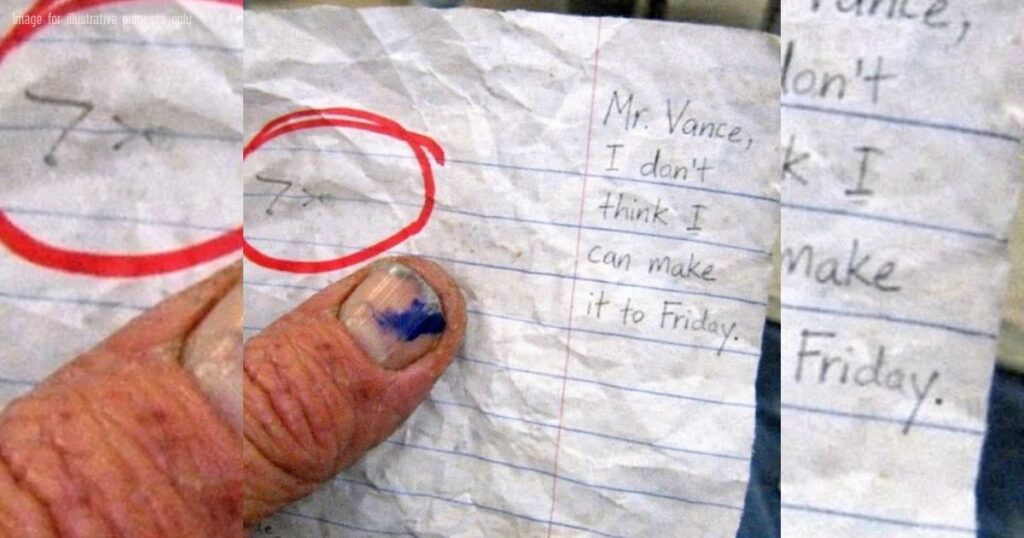
I closed it because I suddenly saw Leo’s quiz again.
That faint, trembling pencil.
Mr. Vance, I don’t think I can make it to Friday.
And I realized something terrifying:
While strangers argued about my “hot take,” a quiet boy in a gray hoodie might be running out of days.
The next morning at school, the hallway felt like a different planet.
Teachers weren’t just nodding at me anymore.
They were staring.
Some with admiration.
Some with panic.
Some with the tight, resentful look of people who think you just made their lives harder.
Ms. Miller found me by my classroom door, eyes wide.
“They’re saying the district is furious,” she whispered.
“Of course they are,” I said, unlocking the door with a key that still had the old school logo on it—back when we believed a logo meant pride, not branding.
She swallowed.
“People are calling you… brave.”
I hung my coat.
“They’ll call me worse by lunch.”
She gave a shaky laugh, then hesitated like she was about to confess something.
“They also said,” she murmured, “that Dr. Sterling is scheduling ‘compliance meetings.’ For anyone who walked out.”
The word compliance landed heavy.
Like a hand pressing down.
Like a reminder that courage doesn’t pay the electric bill.
“Where’s Leo?” I asked.
Ms. Miller blinked. “Leo?”
“Second period.”
“Oh.” Her face shifted. “I don’t know.”
I checked my roster on the district portal—another screen, another login, another password I could never remember without writing it on a sticky note like a criminal.
ABSENT.
I stared at the word longer than I should have.
Absent could mean overslept.
Absent could mean sick.
Absent could mean he was sitting in the nurse’s office pretending his stomach hurt because it’s easier than saying his heart does.
Absent could also mean something else.
Something quiet.
Something final.
I set my bag down and pulled out the quiz.
I didn’t need to. I had already memorized the message.
But I did anyway, like touching a bruise just to confirm it’s real.
Then I did the thing the district hates most.
I acted before a form told me to.
I walked straight to the counseling office.
Ms. Ruiz, the school counselor, was the kind of adult every kid deserves and very few get: warm without being fake, firm without being cruel.
Her desk was covered in sticky notes and small rubber stress balls shaped like fruit.
A jar of pens with little motivational quotes taped to them.
A sign that said: YOU ARE NOT A PROBLEM TO BE SOLVED.
I held out Leo’s quiz like it was fragile glass.
Her eyes dropped to the pencil message, and the air changed.
No dramatic gasp.
No cinematic clutching of pearls.
Just the quiet, professional stillness of someone who’s seen this before.
“How long have you had this?” she asked.
“Since Friday,” I said. “I… I saw it in the margin.”
“And you didn’t file it through the system?” Her tone wasn’t accusing. It was simply factual.
“The system wasn’t involved,” I said. “It would’ve missed it.”
She exhaled through her nose, a slow burn of frustration.
“I need his address,” she said. “Now.”
I gave it to her. I knew it because I know my kids. Not just their grades. Their stories. Their shoes. Their silence.
Ms. Ruiz stood up.
“I’m calling home,” she said. “And I’m notifying the principal. This is protocol.”
“Good,” I said.
Then, because I’m sixty-two and I’ve lived long enough to know protocol doesn’t hug anyone, I added:
“And I’m going too.”
She looked at me, sharp.
“Mr. Vance—”
“Not alone,” I said. “I’m not doing anything reckless. But I’m not staying in my classroom while a kid disappears.”
For a second, I thought she’d argue.
Then she nodded once.
“Okay,” she said. “But we do this together.”
That’s what a real team looks like.
Not a dashboard.
Not a data chart.
Two adults refusing to let a child become a statistic.
We found the principal in his office, sweating through his dress shirt like he’d been handed a grenade.
“Vance,” he said the moment he saw me, voice tight. “We need to talk about yesterday.”
“Later,” I said. “Leo’s missing.”
That stopped him.
He blinked. “What do you mean missing?”
Ms. Ruiz spoke calmly.
“Absent today. Concerning note on an assessment. Potential risk.”
The principal’s face drained.
You could almost see the gears turning.
Not the human gears.
The bureaucratic ones.
Liability. Reporting. Headlines.
He reached for his phone.
“I’ll call the attendance office,” he said.
“Call whoever you want,” I said. “But we’re going to his house.”
His mouth opened like he was about to say policy.
Then he looked at the quiz note again.
And whatever was left of his own humanity pushed through the paperwork.
“Okay,” he said, swallowing. “Okay. Go.”
Leo’s apartment complex was fifteen minutes from the school, behind a strip of tired storefronts and a cracked parking lot.
It was the kind of place you don’t notice unless you have to.
The kind of place kids live when grown-ups say they “just need to try harder.”
Click the button below to read the next part of the story.⏬⏬