Part 2 — The Day the Clip Escaped the Hospital Walls
By the time the elevators carried us back up to the floor, my sneaker had stopped feeling wet.
Not because it was clean.
Because you get used to anything when you have no choice.
Zoe walked beside me with her badge swinging like a tiny pendulum, her eyes too wide, like she’d just stepped off a cliff and was still waiting to hit the ground.
Behind us, the line of bodies kept coming—nurses, therapists, a few doctors—quiet, stubborn, exhausted people who had just done the most dangerous thing in a modern workplace:
They chose a human being over a spreadsheet.
And I knew, deep in my bones, that the building was going to punish us for it.
Hospitals don’t like rebellion.
They like “compliance.”
They like smiling staff photos on the website and silence in the hallways.
They like a world where the only screams are behind closed doors, and the only questions are asked in training modules you click through at 2:00 AM.
I pushed open the double doors to Trauma and the smell hit me—bleach, sweat, plastic, old fear.
A young man was vomiting into a bag in Bay Two, his mother rubbing his back with the kind of frantic tenderness you only see when someone is helpless.
A respiratory therapist was jogging past with a tank, already late.
A monitor in the corner screamed like a smoke alarm.
And the moment I stepped into it, the conference room disappeared.
Because this—the mess, the noise, the need—this was the real presentation.
No laser pointer required.
Zoe swallowed hard. “Are we… are we in trouble?”
“Of course we are,” I said.
I didn’t mean it cruelly.
I meant it like weather.
Rain happens.
Winter comes.
Administrators retaliate.
That first night, we worked like we always do—too fast, too much, trying to patch a sinking ship with our bare hands.
But something was different.
People looked up more.
They made eye contact in the hallway like, Are you real? Are you seeing what I’m seeing?
It was as if the act of standing up had reminded us we still had spines.
At 9:13 PM, my phone buzzed.
Not a patient call.
An email.
SUBJECT: Professional Conduct Reminder
I didn’t open it right away.
I already knew what it would say.
The next day, it wasn’t just an email.
It was printed copies taped to the breakroom fridge like a threat disguised as stationery.
We value respectful dialogue.
All staff must adhere to communication protocols.
Disruptions to organizational initiatives may result in corrective action.
“Corrective action,” Zoe whispered, reading it like it was a diagnosis.
“Translation,” I said, pouring coffee that tasted like burnt regret. “They want us scared.”
Zoe’s hands were shaking again, but she wasn’t crying.
That mattered.
Around noon, Jared came back.
Of course he did.
Men like him don’t retreat. They rebrand.
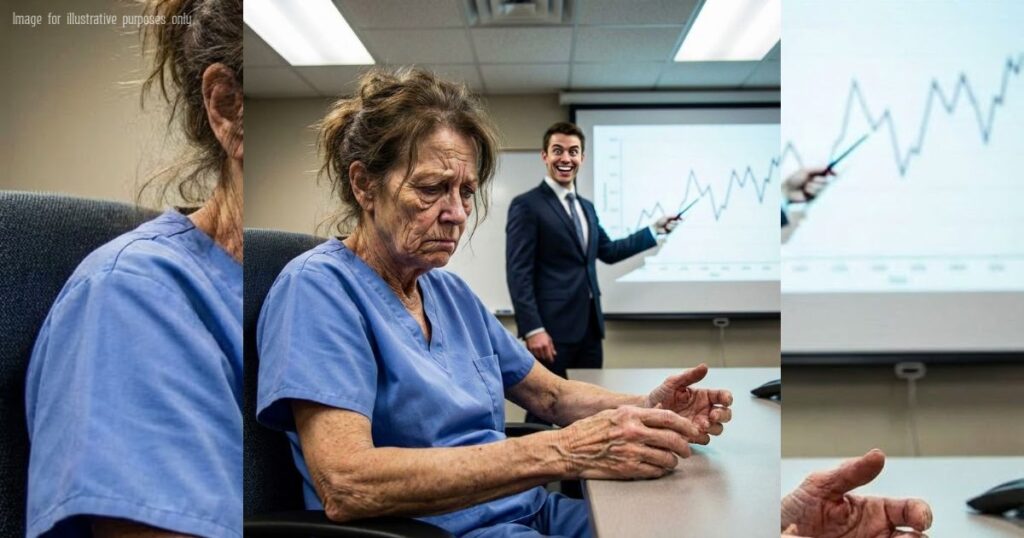
This time he didn’t bring the jagged mountain graph.
He brought a smile and two administrators in expensive shoes and a woman with a tablet who looked like she had never cleaned vomit out of her hair.
They stood at the nurses’ station like tourists at an aquarium, peering at us through invisible glass.
Jared clasped his hands. “Exciting update. Based on staff feedback, we’re launching a new initiative.”
“Let me guess,” I said, without looking up from my charting. “You renamed empathy.”
He laughed like I’d told a joke at a dinner party.
“We’re calling it the Human Experience Enhancement Pathway.”
Zoe blinked. “That’s… that’s not a real thing.”
“It’s real if it’s in a PowerPoint,” Jared said.
Then he tapped the tablet.
A small device rolled forward on wheels—waist-high, white plastic, a screen with a friendly animated face.
It looked like a toy.
It looked like something you’d put in a child’s room to read bedtime stories.
“We’re piloting a bedside companion,” Jared announced. “It will handle routine reassurance, answer common questions, and reduce emotional labor.”
Emotional labor.
Like comfort was a mop bucket.
Like compassion was a workload you could outsource.
The little screen blinked. The cartoon face smiled.
“Hello!” it chirped. “I’m CareBuddy. I’m here to support your healing journey.”
The charge nurse, a woman named Denise who had been doing this longer than Jared had been alive, stared at it like it was a snake.
“Where does it plug in?” Denise asked.
Jared beamed. “It’s wireless.”
“No,” Denise said, voice flat. “I mean where do I plug in the part that matters.”
One of the administrators cleared his throat. “Let’s stay solution-focused.”
I watched Zoe’s face.
I could see two wars happening inside her.
One was fear—I need this job. I have loans. I have rent. I can’t get fired.
The other was disgust—This is wrong. This is not what I signed up for.
That second war was new.
And once it starts, it doesn’t stop.
That afternoon, Mr. Henderson crashed.
Not dramatically.
Not with TV drama and slow-motion shouting.
It was quiet.
He’d been borderline all day. Low blood pressure. Shallow breathing. The kind of slow slide you learn to respect because it sneaks up and kills people politely.
I walked into his room and saw his eyes.
Not the numbers on the screen.
His eyes.
He was staring at the ceiling like he was already halfway gone.
His hands trembled on the blanket.
The little rolling device was parked beside his bed, screen glowing.
CareBuddy’s face smiled brightly.
“I can guide you through a calming breathing exercise,” it said.
Mr. Henderson’s mouth opened like he wanted to speak, but the words wouldn’t come.
His lips were gray.
His forehead glistened with sweat.
I stepped forward, grabbed his wrist, and felt the pulse—thin, slippery, trying to disappear.
“Get me the doctor,” I snapped into the hall.
A new nurse—fresh, nervous, good heart—hovered behind me holding a tablet. “The system says he’s stable. It didn’t flag him.”
I looked at her. Really looked.
“Sweetheart,” I said, steady as I could, “if you ever choose the tablet over the face in front of you, you will kill someone.”
Her eyes filled instantly.
Not because I was harsh.
Because she knew I was right.
Mr. Henderson’s breathing hitched.
He made a sound—half cough, half plea.
I leaned close. “I’m here,” I told him, loud enough for his fear to hear. “I’ve got you.”
His eyes flicked to me.
And in them, I saw it.
Not pain.
Not even panic.
Relief.
That a human being had arrived.
The doctor came running.
Orders flew.
Fluids, meds, oxygen.
We stabilized him by inches.
The kind of inches that only exist because someone noticed the difference between a living face and a dying one.
When it was over, I stepped into the hallway and saw Jared standing there.
He’d been watching.
His smile was gone now, replaced by something defensive.
“What happened?” he asked.
“What always happens,” I said, my voice low. “A person didn’t fit your model.”
He lifted his hands. “The tool is designed to assist—”
“It sat there and chirped while a man slipped away,” I said. “It offered breathing exercises to someone who couldn’t breathe.”
Jared’s jaw tightened. “That’s an edge case.”
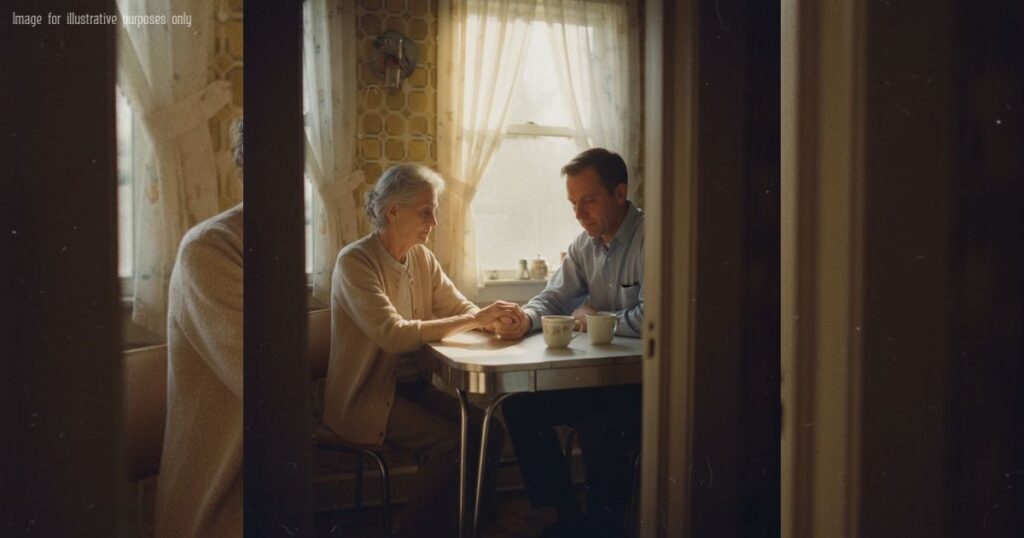
Mr. Henderson’s daughter arrived an hour later, hair messy, eyes red, clutching her phone like it was the only thing keeping her upright.
She rushed into the room and grabbed his hand with both of hers.
Then she looked at me.
“Thank you,” she whispered, voice breaking. “They told me yesterday he might not get approved for rehab. I… I don’t know how I’m supposed to do this. I work two jobs. I have kids. I’m—”
Click the button below to read the next part of the story.⏬⏬