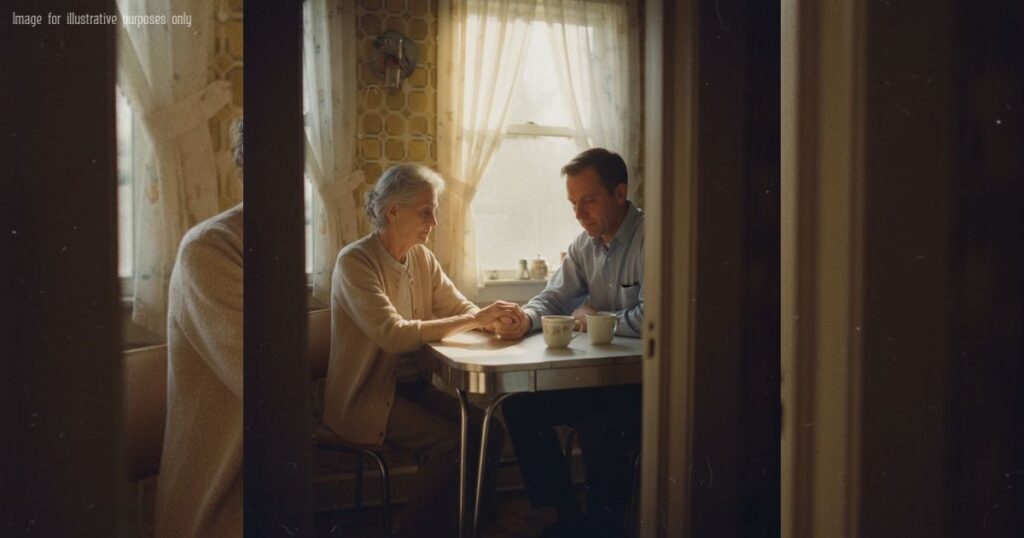
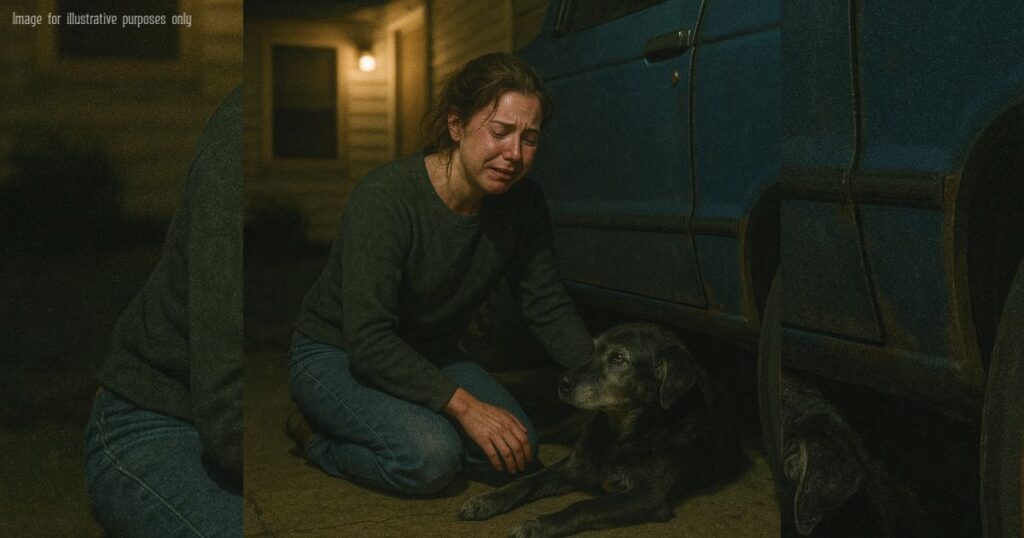
Some were gentle:
“I’m so sorry for your loss. Pets are family. You did the right thing.”
“Lost my dog last year. Took a day off and my boss rolled his eyes. Still glad I did. Hugs to you and your dad.”
Some were furious—but not at me:
“Our culture is broken if you have to apologize for grieving.”
“This is exactly what’s wrong with hustle mentality. You are not a machine.”
But not everyone saw it that way.
There were other voices too:
“It’s a dog. People can’t even get time off when their parents die. Check your privilege.”
“Must be nice to be able to just ‘say no.’ Some of us would get fired on the spot.”
“If my employee ditched a big client meeting for a pet, they’d be gone. This is the real world.”
Reading those stung in a different way.
Because here’s the messy truth: they weren’t entirely wrong.
It was a kind of privilege to tell my boss no and trust I wouldn’t be living in my car next week. It was easier to take a stand with a savings account and no kids asking what’s for dinner.
The comments section wasn’t just about a dog anymore.
It was about work, and money, and who gets to have boundaries…and who gets punished for even wanting them.
That post did something I didn’t expect.
It pulled people’s private grief out into the open like a tide.
In between the arguments, there were stories.
A waitress wrote about dropping her apron in the middle of a Saturday rush when her sister called to say their mother’s heart had stopped. The manager told her to finish her shift. She didn’t. She never got called back in.
A factory worker said he watched his dad die through a screen because he couldn’t get a day off to travel for the funeral. His manager sent condolences by text and asked him to “let us know when you’re ready to be back at 100%.”
A single mom admitted she’d scheduled her dog’s euthanasia for a Sunday night because she didn’t dare miss Monday morning.
Then there were the quieter confessions:
“I chose the meeting. I thought I’d go visit later. There wasn’t a later. I still hear the voicemail I never returned.”
“I told my grandpa I couldn’t come see him for his birthday because of deadlines. He died two weeks later. I’d give every promotion back for one more boring afternoon with him.”
I read these curled up on my childhood bed, phone burning in my hand, heart pounding with a strange mix of validation and shame.
Because while strangers were arguing about me in the comments, I knew something they didn’t.
I hadn’t always said no.
I had chosen the deck over the drive home more times than I wanted to admit.
That night, after Dad went to bed, I sat alone at the kitchen table with a stack of Buddy’s old collars and tags in front of me. The silence was thick.
My phone buzzed again—this time a message from my manager.
“Saw your post. Looks like it’s resonating with a lot of people.
We need to chat about boundaries and social media when you’re back, but… I’ve requested compassionate leave for you for the rest of the week. It’s not in the handbook, but we’ll make it work. Take care of your dad.”
I stared at the screen.
There it was again: the messy middle.
On one hand, my story had made my employer uncomfortable enough to mention “boundaries” in the same breath as grief.
On the other hand, someone inside that system had still gone out of their way to bend a rule for me and my old dog.
Real life is rarely pure villain and pure hero. It’s a lot of flawed people trying to hit targets while something they love is quietly dying in the driveway.
A week later, after the funeral for a dog that some people insisted was “just an animal,” I drove back to the city.
The van stayed behind. Dad said he wasn’t ready to let it go.
“I might sit out there sometimes,” he admitted gruffly, eyes on his boots. “You know… just to listen to the engine without starting it.”
I hugged him harder than I had in years. “I’ll come back more,” I promised. “Not just for holidays. Not just when something dies.”
He didn’t answer. He just nodded, but the way his shoulders shook told me he heard me.
On the drive back, my phone—mounted on the dashboard, volume off—lit up again and again with notifications. A podcast host asking if I’d talk about “pet grief and workplace culture.” A local reporter wanting an interview. A stranger offering to start a petition for “pet bereavement leave.”
Part of me wanted to say yes to all of it.
Part of me felt sick at the thought of turning Buddy’s last night into “content.”
In the end, I wrote one more post instead.
I wrote:
“My last story about Buddy blew up. I’ve read thousands of your comments and messages—stories of dogs and dads and bosses and choices you wish you could take back.
Some people are mad that I skipped a meeting. Some people are mad that I ever missed any at all. Some of you would have chosen differently than I did.
Here’s what I want you to hear:
You don’t owe the internet the ‘right’ kind of grief. You don’t have to justify loving a dog like family. You don’t have to rank your losses like there’s a scoreboard.”
Then I added the part I knew would make some people bristle:
“You also don’t get to demand that everyone live their life like a sacrifice to someone else’s expectations—whether that’s a job, a parent, a partner, or a comment section.
We can care about kids in shelters and cry over a dog. We can be grateful for a paycheck and say a meeting can wait. We can love our parents and admit we sometimes chose the easier thing.”
I hit post and braced myself.
The debate started all over again.
Some people accused me of being selfish. Others called me “brave.” A few said I was “romanticizing irresponsibility.” A few more said I was “finally saying what needed to be said.”
Here’s the secret, though:
I wasn’t trying to be any of those things.
I was just a tired woman who watched her old dog die with his head under her hand and realized, in that exact moment, that nothing on her calendar had ever loved her like that.
WHAT I’M DOING DIFFERENTLY NOW
I didn’t quit my job and move back home to raise chickens and write poetry in the van, though a small part of me wanted to.
What I did do is probably less dramatic—and more uncomfortable.
I started putting “Drive home to see Dad” on my calendar with the same seriousness as “Quarterly review.”
I told my manager, calmly, that there are lines I won’t cross anymore. That if my father ends up in a hospital bed, or if I’m holding another animal while it takes its last breath, I will miss the meeting. Any meeting. Every time.
I started treating my free time like the scarce, holy thing it is instead of something I could always give away and earn back later.
I stopped saying “Sorry, I’m just so busy” when what I really meant was “I chose something else.”
And I decided that if the worst thing people could say about me was “She left a client waiting because she was in the backyard burying her dog with her dad,” I could live with that.
I’m not telling you to blow up your life.
I’m not telling you to quit your job, or skip rent, or abandon responsibilities.
I’m telling you this:
Before you automatically say yes to one more “quick call,” ask yourself who is lying on some kind of cold concrete in your life, waiting for your car to pull in.
Maybe it’s a parent who keeps asking when you’ll visit and “doesn’t want to be a bother.”
Maybe it’s a child who has started assuming you’ll always be late to their game.
Maybe it’s a friend sending “We should catch up” texts that never make it onto the calendar.
Maybe it’s a dog whose hearing is going and whose hips hurt, who still wobbles to the door every time he hears a car in case it’s you.
We love to argue online about whose pain “counts.”
We love to grade each other’s choices from the safety of a comment box.
But at the end of the day, it’s not the internet you’ll be thinking about when you’re the one lying there, listening for footsteps.
It’ll be the faces you waited for.
The hands you hoped would show up.
So go ahead. Argue with me in the comments if you want. Tell me what you would’ve done differently. Tell me why I’m wrong.
But maybe send a text to someone who’s been waiting on you, too.
Maybe plan the drive.
Maybe sit in the old van before the driveway is empty.
Because “later” is a story we all love to tell.
Buddy is the one who taught me how fast it turns into “too late.”
Thank you so much for reading this story!
I’d really love to hear your comments and thoughts about this story — your feedback is truly valuable and helps us a lot.
Please leave a comment and share this Facebook post to support the author. Every reaction and review makes a big difference!
This story is a work of fiction created for entertainment and inspirational purposes. While it may draw on real-world themes, all characters, names, and events are imagined. Any resemblance to actual people or situations is purely coincidenta