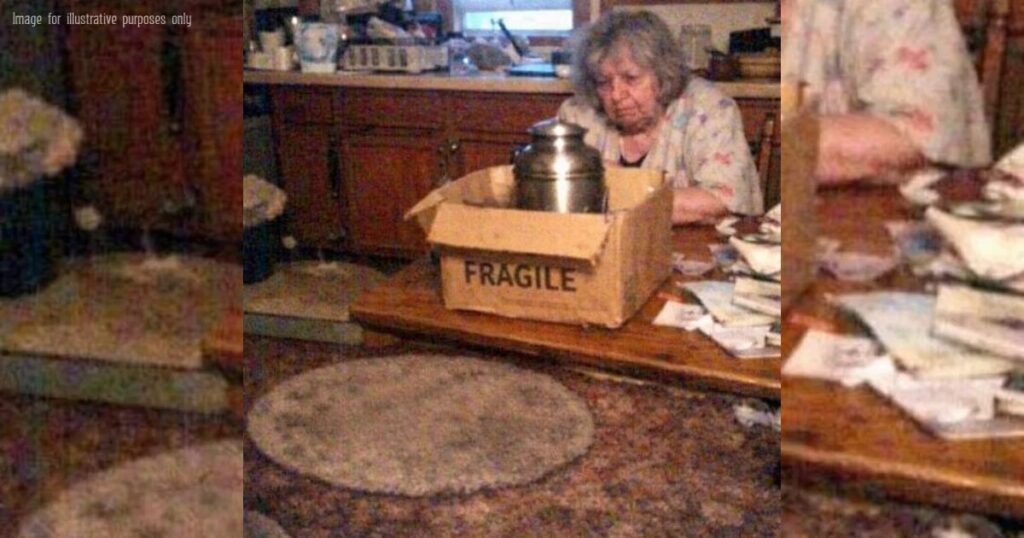
I bought my own urn online last Tuesday. It was on sale—thirty percent off because the box was dented. That is the reality of being seventy-nine in America today: you spend your mornings checking your dwindling 401(k) and your afternoons hunting for bargains on the afterlife.
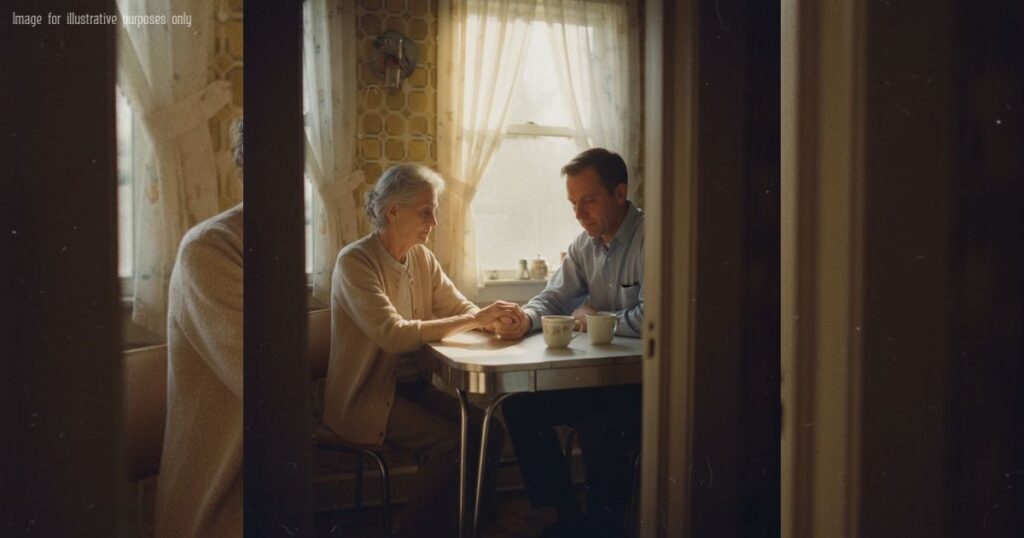
I sat in my kitchen in the suburbs of Ohio, listening to the hum of the refrigerator. It was the only voice I heard most days. My husband, Frank, has been gone for five years. My daughter lives in Seattle, managing a tech startup and two toddlers; she sends me digital gift cards for my birthday and texts me heart emojis, but she hasn’t heard my voice in three weeks.
I am invisible. It happens slowly. First, the cashier stops making eye contact. Then, the drivers in the parking lot look right through you. Eventually, you realize you are just a ghost haunting your own paid-off house.
I looked at the urn, then at the empty spot on the rug where Frank’s Beagle used to sleep. The silence was becoming a physical weight, pressing against my chest.
I grabbed my keys and drove to the County Animal Control. The building was a concrete block that smelled of bleach and lost hope.
“I’m looking to adopt,” I told the young man at the counter. He was wearing a shirt that said ‘Save the Planet’ and tapping furiously on a smartphone.
“Puppies are in the back, first aisle,” he said, barely looking up.
“I don’t have time for puppies,” I said, my voice sharper than I intended. “I don’t buy green bananas anymore, young man. I need a dog that is already ripe. Give me the one nobody looks at.”
He stopped tapping. He looked at me, really looked at me, for the first time. “Follow me.”
We walked past the chaos of the front rows—jumping Labradoodles and howling Hounds that families were fighting over. We went to the back, where the lights buzzed and the air was colder.
“This is Sarge,” the boy said quietly.
Sarge was a Boxer mix, brindle-colored with a face like a worn-out catchers mitt. His intake paperwork was taped to the wire: Surrendered by owner. Age: 11. Heart murmur. Hip dysplasia. Time remaining: 24 hours.
He was sitting with his back to the door. He didn’t turn around. He just stared at the concrete wall, shoulders slumped. He looked exactly how I felt: resigned.
“He’s on the list for tomorrow morning,” the boy whispered, embarrassed by the cruelty of his own job.
I knelt down. My knees cracked like dry twigs. “Hey, soldier,” I said.
Sarge turned his head slowly. One ear was tattered. His eyes were cloudy, filled with a deep, ancient exhaustion. He stood up, his back legs trembling with the effort, and walked to the bars. He didn’t lick my hand. He just pressed his forehead against the wire, right where my fingers were. He let out a long, shuddering breath.
“He comes with a lot of baggage,” the boy warned. “Pills twice a day. Special food. He gets scared of thunder.”
“I take four pills for breakfast and I sleep with a nightlight,” I said, standing up. “Wrap him up.”
The vet bills would eat into my heating budget, but I didn’t care. I signed the papers. I walked out of there with a seventy-pound shadow limping beside me.
We were a pair of broken things, Sarge and I.
He learned the rhythm of my house instantly. He knew that when I sat in the armchair, it was time to rest his heavy head on my foot. He knew that the mailman was a threat to national security. When my arthritis flared up and I couldn’t open the jar of pain cream, he would nudge my hand until I kept trying.
We saved each other from the silence.
But this winter was different. The “Arctic Blast” they talked about on the news hit the Midwest like a hammer. The temperature dropped to ten below zero. The wind screamed around the corners of my vinyl siding.
Then, the grid failed.
At 9:00 PM, the house went black. The furnace sputtered and died. The silence rushed back in, colder than before.
I got up to find a blanket. In the darkness, I forgot about the stack of magazines I had left by the hallway table.
My foot caught. Gravity took over.
I hit the hardwood floor with a sound that made me nauseous. A sharp, hot crack tore through my hip. The pain was blinding—white noise that drowned out the wind outside. I tried to scream, but the air was gone. I lay crumpled on the floor, the cold already seeping into my bones.
My cell phone was charging on the kitchen island. It might as well have been on the moon.
“Sarge,” I whispered, tears leaking from my eyes.
He was there. He didn’t bark. He sensed the fear. He lay down along the length of my back, a solid wall of muscle and heat. He licked the side of my face, his rough tongue scraping away the panic.
An hour passed. The house was freezing. The pain in my hip had turned to a dull, throbbing numbness. My eyelids felt heavy. I thought about Frank. I thought about the urn sitting in the box. It would be so easy to just sleep.
Suddenly, Sarge stood up.
He let out a low growl. He grabbed the sleeve of my heavy wool sweater in his teeth. He pulled.
He groaned, his old hips sliding on the slick floor, his claws scrambling for purchase. He dragged me two inches. Then he stopped, panting, his heart murmuring against his ribs. Then he pulled again.
He wasn’t dragging me to the kitchen. He was dragging me to the front door.
It was an agonizing procession. Inch by inch. When we finally reached the entryway, he stopped. He looked at the frosted window.
And then, he roared.
It wasn’t a bark. It was a boom—deep, resonant, terrified. WOOF. WOOF. Pause. WOOF. WOOF.
Next door lives a boy named Leo. He’s twenty. He dyes his hair blue and wears giant headphones that cover his ears. He works for a delivery app and leaves boxes of fast food on his porch. I’ve always been a little afraid of him. I thought he was just another person who didn’t see me.
But Leo was awake. And despite the headphones, he felt the vibration of Sarge’s desperation.
I heard boots crunching on the snow. A flashlight beam danced through the transom window.
“Mrs. Eleanor?” A muffled voice. “Your dog is freaking out. You good?”
“Leo!” I tried to yell, but it was a whisper.
Sarge threw his body against the door, scratching the wood, wailing.
Leo didn’t hesitate. He didn’t wait for a key. He kicked the door—once, twice—and the frame splintered. He burst in, bringing the swirling snow with him. His flashlight swept the floor and landed on me, and the big brindle dog standing over me like a gargoyle.
“Oh my god.” Leo dropped his phone. He ripped off his expensive jacket and threw it over me. “Don’t move, Mrs. Eleanor. I’m calling 911.”
Sarge collapsed, his legs finally giving out. He laid his head on my chest, his breathing ragged.
The ambulance ride was a blur of lights and sirens. But the moment of true panic came when they tried to load me in.
“My dog!” I grabbed the paramedic’s arm. “You can’t leave him. The house is freezing. He’s sick!”
Leo stepped into the ambulance light. He looked different without his headphones. He looked like a man. “I got him,” he said, his voice shaking. He clipped Sarge’s leash on. “He’s coming to my place. I’ve got a heater. I promise, Mrs. Eleanor. I won’t let him be alone.”
I spent surgery and ten days in rehab. The hospital bills are going to ruin me, but I am alive. Every morning, Leo sent me a selfie. Leo and Sarge on the couch playing video games. Leo sharing a burger with Sarge. Sarge sleeping on Leo’s bed.
When I came home yesterday, I was in a wheelchair. The house was warm again. Leo was waiting on the porch.
Sarge was sitting there. He looked stiffer than usual. But when he saw me, his whole back end wiggled. He hobbled down the ramp Leo had built for me. He buried his face in my neck, and I buried my face in his fur. We cried. Two old things that refused to be thrown away.
Leo stood by the door, smiling. “He really missed you. He kinda saved my week, too. It’s… it’s quiet over at my place usually.”
“I missed him too,” I said. I looked at the boy with the blue hair and the dog with the scarred face. “I guess we all just needed to be found.”
Here is the truth about America right now:
We live in a throwaway culture. We discard old phones, old clothes, old dogs, and old people. We hide them in nursing homes and shelters so we don’t have to look at the cracks.
But the things we discard often hold the most power.
No one is too old to be chosen. No one is too broken to save a life. The receipt for my urn is still on the counter, but I threw it in the trash today. I’m not ready to leave yet. I have a dog to walk, and a neighbor to check on.
Please share this. Not for the likes, but to remind someone that they are still visible. Adopt the senior dog. Talk to the neighbor kid. You might just save your own life.
—
PART 2 — The Door Leo Kicked In (And the Things That Crawled Out After)
If you’re reading this, it means I made it back into my house.
That sentence should feel ordinary. It isn’t.
The day after rehab discharged me, the van rolled into my driveway like a slow apology. Ohio was still wearing winter like a threat—gray sky, dirty snow, that wind that doesn’t just touch your skin, it argues with it.
My front door was no longer a door.
It was a sheet of plywood screwed into my frame, the kind you see after a storm or a bad night. Leo had painted it a careful beige that almost matched the old color, but you could still see the violence of it: the splintered wood, the warped molding, the place where my home had been forced open because my body had failed.
Sarge sat beside the plywood, rigid and proud, like a soldier guarding a temporary border.
When he saw me in the wheelchair, his whole back end wiggled like a flag. He tried to trot and remembered his hips. He turned the attempt into dignity and came anyway, inching toward me with that stubborn old-man energy I’d fallen in love with.
Click the button below to read the next part of the story.⏬⏬