“OLD DOG SAVES GRANDMA DURING BLACKOUT. THIS IS WHAT LOVE LOOKS LIKE.”
It had hundreds of thousands of views.
Then millions.
And the comments—
The comments were a war zone.
Half of them were beautiful.
People saying they cried. People saying they called their grandmother. People saying they went to a shelter that same day.
But the other half…
The other half made my stomach turn.
“Why is she living alone?”
“Put her in a facility.”
“This is why we need to stop pretending old people can manage.”
“That kid broke into her house. That’s a crime.”
“He only did it for clout.”
“Dogs aren’t heroes. This is just irresponsible ownership.”
“If you can’t afford bills, don’t get a dog.”
“The system is broken but y’all love trauma content.”
And then, because cruelty always has to get personal, they started aiming at Leo.
“Blue hair. Of course.”
“These gig kids are all the same.”
“He’s probably unemployed.”
“Hope he paid for the door.”
I stared at the screen until my eyes burned.
Sarge lifted his head at the sound of my breathing changing.
I turned the phone face-down on the table like it was a live grenade.
For years, my invisibility had been quiet.
Now my visibility was loud—and strangers were treating my life like a debate topic.
When Leo came over that evening, he didn’t look proud.
He looked hunted.
“I didn’t mean for it to—” he began.
“I know,” I said.
He swallowed. “People are saying I did it for attention.”
“Did you?” I asked, gently, because controversy loves a sharp question.
His eyes snapped to mine, hurt flashing like a match.
“I thought you were dead,” he said. “That’s what I thought. I thought I was too late.”
Silence sat between us.
Then I reached out and put my hand on his wrist—where he’d grabbed the sleeve of his jacket that night, where his pulse still ran fast like he was always racing something invisible.
“Then let them talk,” I said. “The people who need to believe you’re a villain… will. The people who need to believe goodness still happens… will.”
He blinked hard, once.
“Yeah,” he whispered. “But it’s… weird. Being seen. It’s like—”
“It’s like suddenly everyone has an opinion on your existence,” I finished.
He let out a shaky laugh.
“Exactly.”
That night, after Leo left, I did something that surprised even me.
I opened my notes app.
And I wrote a post.
Not a plea. Not a fundraiser. Not a performance.
Just the truth.
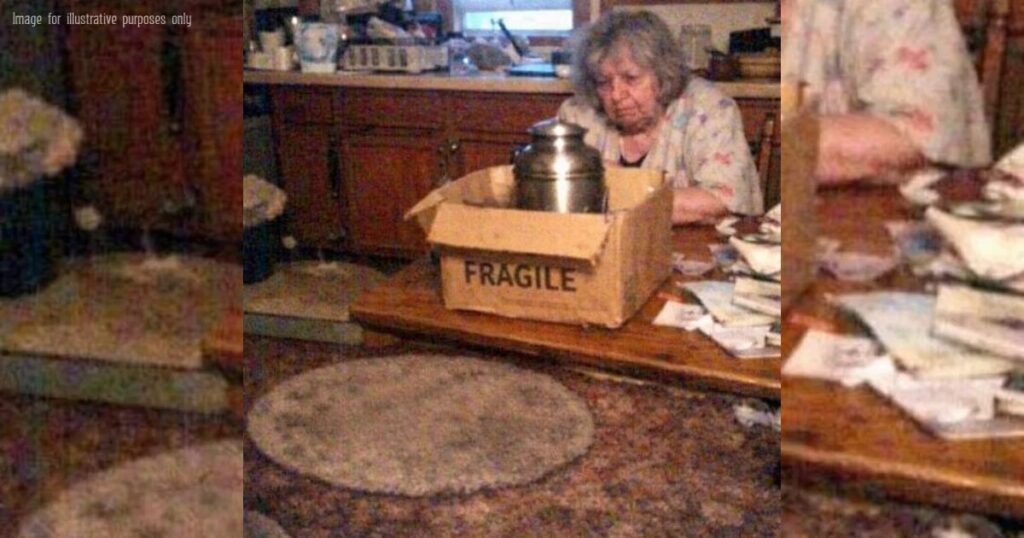
I wrote about the urn. I wrote about the shelter. I wrote about how Sarge pressed his forehead against the wire like he knew the clock was ticking.
I wrote about falling in the dark and realizing how easy it is to vanish.
I wrote about Leo’s boot hitting my door like a heartbeat.
And I wrote one line that I knew would split people clean down the middle:
“If you watched that video and your first thought was liability, you missed the point.”
I posted it.
Then I turned my phone off.
Because I am seventy-nine.
And I am done letting strangers decide whether my life is acceptable.
The next morning, Sarge had a hard time standing.
He tried anyway.
He always tried.
We took our slow walk—me in the chair, him limping beside me like an aging bodyguard—and the air tasted like metal and thaw.
Halfway down the block, a woman I didn’t recognize stepped out of her car and stared at us.
“Is that the dog?” she asked.
“Yes,” I said, bracing myself.
Her face crumpled. “I drove twenty minutes to tell you… thank you.”
I didn’t know what to do with that, so I did the only thing I’m good at.
I told the truth.
“I didn’t do anything,” I said. “He did.”
She crouched—careful, respectful—and let Sarge sniff her glove.
“I adopted my first dog yesterday,” she said. “He’s old. Everyone said I was crazy.”
I looked down at Sarge.
His cloudy eyes met mine like he understood that his life, which had been labeled 24 hours, had quietly rewritten someone else’s.
“Crazy isn’t always wrong,” I said.
When I got home, my phone was full again.
Messages. Comments. Arguments.
People fighting over whether an old woman should have a dog.
Whether a young man with blue hair can be a hero.
Whether kindness is real or content.
Whether we owe each other anything anymore.
And that’s when it hit me—the thing nobody says out loud because it sounds too bleak:
A lot of people don’t actually want hope.
They want a reason to stay angry.
Because anger feels like control.
So here’s my controversial question—my honest one:
If you heard a dog screaming next door at 9:00 PM during a blackout… would you go?
Would you knock?
Would you kick in a door if you had to?
Or would you stand on your porch, scrolling, waiting for someone else to handle the mess of another human life?
I used to think invisibility was the worst thing that could happen to a person.
Now I think the worst thing is this:
Being seen—and realizing how many people have trained themselves to look away anyway.
Sarge is asleep at my feet as I write this, his breathing shallow but steady.
Leo is coming over later to help me replace the plywood with a real door, even though he’s working tonight and should be resting.
Diane is making soup.
And my daughter—my brilliant, busy, faraway daughter—called yesterday. For real. Voice to voice.
She didn’t talk long.
But she said, “Mom… I didn’t know.”
Neither did I.
That’s the whole problem, isn’t it?
We don’t know each other anymore.
We just assume.
So argue in the comments if you want.
Debate independence. Debate responsibility. Debate whether this was heroism or stupidity.
But if you take one thing from Part 2, let it be this:
A society that treats connection like a luxury will keep paying for loneliness like it’s normal.
And it’s not normal.
It’s just familiar.
Not to Sarge.
Not to Leo.
Not anymore.
Not to me.
Thank you so much for reading this story!
I’d really love to hear your comments and thoughts about this story — your feedback is truly valuable and helps us a lot.
Please leave a comment and share this Facebook post to support the author. Every reaction and review makes a big difference!
This story is a work of fiction created for entertainment and inspirational purposes. While it may draw on real-world themes, all characters, names, and events are imagined. Any resemblance to actual people or situations is purely coincidenta