PART 2 — The Hour I Turned My Phone Back On
I turned my phone back on after that hour of silence with Pop, and the screen lit up like a crime scene—missed calls, red badges, “URGENT” emails stacked like knives—proof that the world hadn’t calmed down just because I finally did.
For a second, I just stared at it.
It felt obscene, like bringing a bullhorn into a chapel.
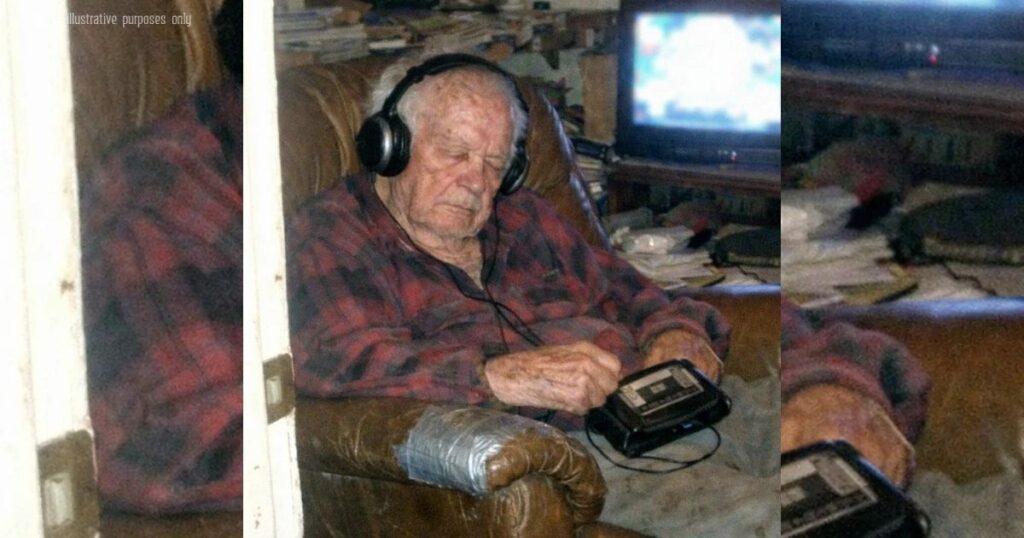
Pop didn’t flinch. He was still in his recliner, hands folded over his stomach, eyes on nothing in particular. The muted TV kept throwing rage-colored light across the room, but he might as well have been sitting in the dark.
“Well?” he asked.
“It’s… a lot,” I said, as if “a lot” could describe the panic that comes from remembering you belong to a machine that never sleeps.
My thumb hovered. Habit pulled me toward the inbox the way gravity pulls a dropped coin.
Pop nodded toward my hand. “How many strangers are screaming at you right now?”
I swallowed. “It’s my boss.”
Pop’s mouth curled into something that wasn’t quite a smile. “Your boss is a stranger with permission.”
That sentence landed harder than any news headline.
I scrolled. One email. Then another. Subject lines in all caps. A dozen messages in the group chat. A calendar reminder for a meeting I wasn’t attending because I was in a forgotten town, in a dying living room, listening to pancakes from 1993.
And then the one that made my stomach fold in on itself:
IF YOU DON’T SEND THE REPORT TONIGHT, DON’T BOTHER COMING IN.
My pulse jumped into my throat.
“There it is,” Pop said softly, like he’d predicted the weather. “The leash.”
“It’s not like that,” I heard myself say.
Pop raised one eyebrow. “Kid… if it wasn’t like that, your hands wouldn’t be shaking.”
I looked down. They were.
That’s the part nobody puts in the hustle posts. Nobody brags about trembling. Nobody captions a photo with I am terrified of disappointing someone who wouldn’t remember my name in a year.
I stood up and started pacing. The floorboards complained under my shoes.
“I can’t lose my job,” I said. “Everything is expensive. Rent, food, insurance—everything. You miss one paycheck and you’re—”
“—ashamed,” Pop finished for me.
I stopped.
Pop leaned forward, elbows on his knees, the old man posture of someone preparing to tell a story you don’t want to hear.
“I worked at the plant until it ate my lungs,” he said. “We were proud of being tired. Proud of missing birthdays. Proud of living on coffee and anger because it proved we mattered.”
He nodded toward the muted TV. A crowd on the screen pushed against a barricade, signs in the air, mouths open in silent shouting.
“Same disease,” he murmured. “Different decade.”
I opened my mouth to argue, but the truth was already sitting between us like a third person: I didn’t even like my job. I liked the idea of being safe. I liked the illusion that if I performed hard enough, life would stop threatening me.
Pop pointed toward the cassette player.
“Give me your phone,” he said.
“No,” I said too fast, the way people say no when you offer to take away their cigarettes.
Pop didn’t react. He just extended his hand.
“Just for a minute,” he said. “I’m not stealing it. I’m showing you something.”
Reluctantly, like I was handing over my last oxygen tank, I placed it in his palm.
He held it up, studied it like it was a strange tool someone had left on his porch.
“You know what this is?” he asked.
“A phone.”
Pop shook his head once. “No. This is a slot machine you carry in your pocket. And every time it buzzes, it tells you: pull the lever.”
He set it face down on the coffee table.
“Now,” he said, “watch.”
He reached for the cassette player and pressed play.
The hiss returned. Then the scrape of plates. The tiny human sounds. Nana’s laugh like warm water.
And then—something I hadn’t noticed before.
Beneath the breakfast, faint but there, was a noise from outside. A truck passing. A dog barking. The world continuing without them.
Pop tapped the table. “Hear that?”
“Yeah.”
“That’s life,” he said. “Not the talking. Not the opinions. The background. The ordinary. The part you can’t monetize.”
He slid my phone a little farther away from me, as if it might bite.
“You don’t need to quit your job,” he said. “You need to stop letting strangers put their hands on your throat.”
I looked at the dark screen, and something ugly rose inside me.
“Easy for you to say,” I snapped. “You’re retired. You already did it. People like me don’t get to ‘turn it off.’ Turning it off is a luxury.”
The words spilled out before I could polish them.
Pop didn’t look offended.
He looked… tired.
“Ah,” he said quietly. “There’s the argument everyone’s having now.”
I blinked. “What?”
“The one that keeps people fighting instead of fixing anything,” he said. “One side says: Work harder. Be grateful. The other says: Burn it down. Both sides still think the only thing that makes you human is what you produce.”
His voice sharpened for the first time, just a little.
“Kid, the most dangerous lie in this country right now isn’t politics. It’s this: If you rest, you’re worthless.”
I froze.
Because he wasn’t yelling. He wasn’t lecturing.
He was naming the thing that was quietly killing everyone I knew.
My friends in the city who slept with laptops in bed. My coworkers who bragged about being “always on.” The way we wore exhaustion like a medal because admitting we were drowning felt like weakness.
Pop stood up slowly, wincing, and walked to the sideboard. He pulled out a small cardboard box.
Inside were blank cassette tapes.
He handed one to me.
“Make one,” he said.
I stared at it. “Of what?”
Pop shrugged. “Of you being alive.”
“That’s… weird.”
Pop smiled. “So is living like a ghost, Alex.”
He went to the kitchen. The house smelled like old wood and coffee and dust that had been waiting for company.
A minute later, he called out, “You hungry?”
I didn’t realize I was until he asked.
“Yeah,” I said. “Yeah, I am.”
He cracked eggs with hands that shook just slightly.
He moved slow, but there was purpose in it. Like every tiny action mattered because it was happening at all.
I pulled my phone from the coffee table when he wasn’t looking—pure reflex—and the screen woke up immediately, eager, like a dog that hadn’t been walked in days.
Another email.
Another threat.
Another reminder that somewhere, someone believed my humanity could be measured in response time.
My thumb hovered over the keyboard.
Pop turned from the stove, saw the glow, and didn’t scold me.
He just said, “What do you want to be remembered for?”
The question hit like a punch because it wasn’t philosophical.
It was practical.
I pictured my boss’s face. I couldn’t even see it clearly. Just an idea of a person behind a chain of emails.
Then I pictured Pop in his recliner, listening to Nana chew pancakes like it was holy music.
I set the phone down again.
Face down.
Like a small funeral.
Pop nodded once, approving, and went back to flipping pancakes.
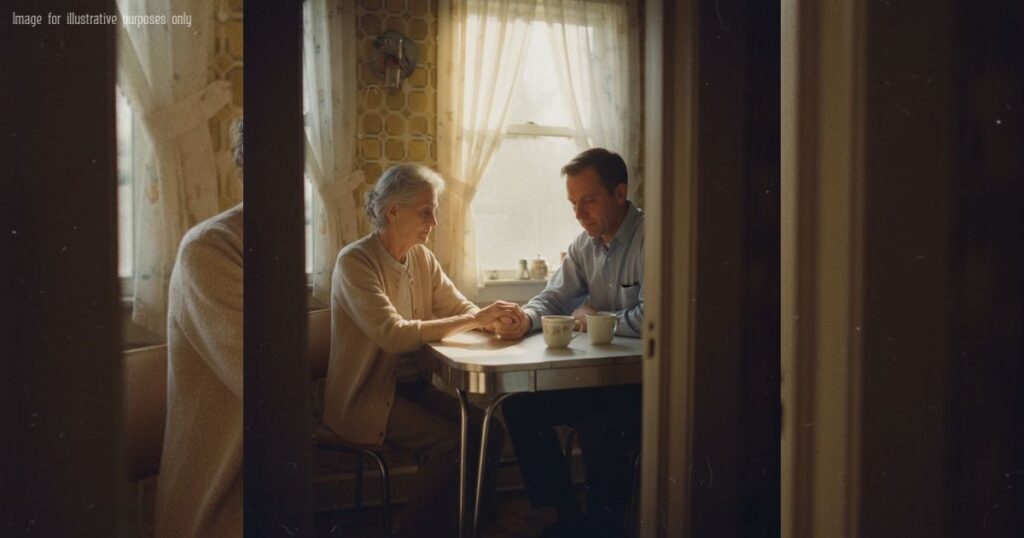
We ate at the kitchen table where I used to do homework. The chair legs squeaked the same way they had when I was twelve.
Pop pressed record on the cassette player and slid it to the center of the table.
The red light came on.
I suddenly felt self-conscious. Like I was being watched. Like I needed to perform.
Pop took a bite and chewed slowly.
He didn’t look at me.
He didn’t fill the air with clever words.
He just… ate.
So I did too.
At first, the silence felt itchy. My brain kept trying to scratch it with something—anything—like a person reaching for their phone in a grocery line.
But then the weirdest thing happened.
The silence stopped feeling empty.
It started feeling full.
Full of butter and coffee and the small human sounds of two people existing in the same space without trying to win anything.
And then, right in the middle of that fragile peace—
My phone buzzed.
Loud. Violent. Like a grenade on a wooden table.
Pop didn’t move.
I did.
I hated myself for how fast my body reacted.
The screen lit up with a call.
DAD.
My chest tightened.
I hadn’t talked to my father in weeks. Not a real conversation. Just short texts. Birthday emojis. “Busy.”
I stared at the name until the call went to voicemail.
Pop kept chewing.
I couldn’t.
My throat felt packed with something heavy.
“You gonna call him back?” Pop asked, still calm.
“I don’t know,” I whispered.
Pop nodded toward the cassette player. “You just did.”
I frowned. “What?”
“You picked up,” he said, tapping his ear. “Just not with your hand.”
I stared at him like he’d done a magic trick.
And then it hit me: I’d been so addicted to constant communication that I’d forgotten listening counted as love too. That simply letting something ring without panicking was its own kind of strength.
I swallowed. “Why is he calling?”
Pop’s eyes went distant for a moment.
“Because I didn’t answer my phone this morning,” he said.
My stomach dropped.
“You didn’t tell him I was here.”
Click the button below to read the next part of the story.⏬⏬