PART 2 — THE COMPLAINT
By the time I got home, my stew smell still clung to my hoodie like smoke.
I hadn’t even kicked off my shoes when my phone buzzed again.
“Your account is under review.”
No explanation. No human name. Just a cheery little banner on my glass screen that basically said: Congrats. You tried to be a person today. The algorithm didn’t like it.
I stared at it until my eyes burned.
Then I did what every tired American does when they feel powerless.
I refreshed.
Same message.
I refreshed again.
Same.
I opened my fridge—empty except for a half carton of eggs and the sad heel of a loaf of bread—and felt the heat rise in my chest all over again, not just rage this time, but fear.
Because being right doesn’t pay rent.
Being moral doesn’t refill your gas tank.
And in this country, compassion is often just another unpaid shift.
My phone buzzed again.
Unknown number.
I almost didn’t answer, but something in my gut told me to.
“Hello?”
A woman’s voice, smooth as polished wood. Professional. Controlled.
“Is this Michael?”
“Yeah.”
“This is Ms. Larkin, administrator at Oak Creek Manor.”
The way she said the name—Oak Creek Manor—made it sound like a brand, like a product you could return if you didn’t like it.
“We received a report,” she continued, “that you entered a resident’s room without staff permission, handled food items, and confronted employees in a restricted area.”
There it was.
Not “Are you okay?”
Not “Thank you for helping a resident.”
Just liability.
Just paperwork.
“My job is to protect our residents,” she said, voice still velvet, “and our staff. For everyone’s safety, you are not permitted on our premises going forward.”
I actually laughed, once, short and ugly.
“For everyone’s safety,” I repeated. “You mean for your safety.”
Silence.
Then she said, “If you have concerns, you may file them through the appropriate channels.”
Appropriate channels.
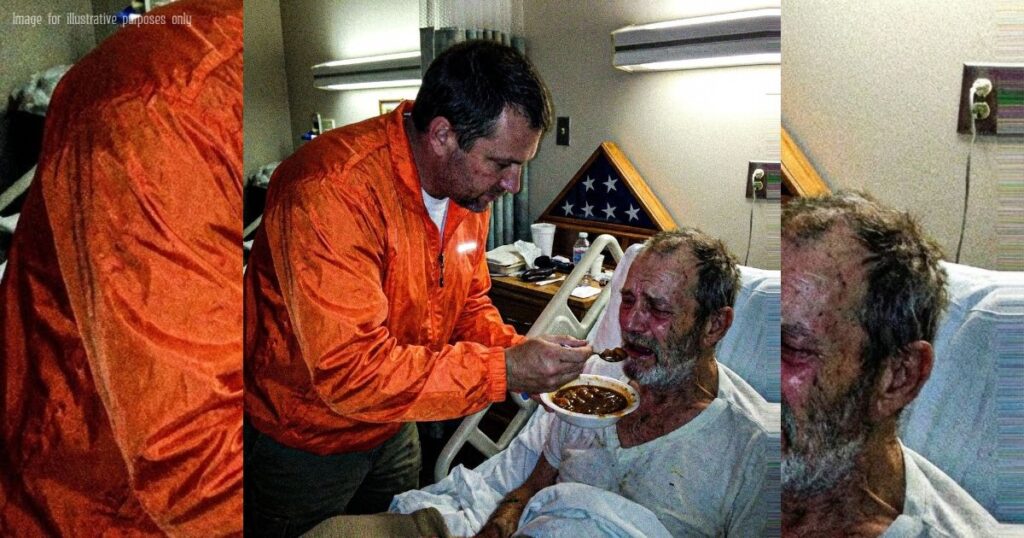
The same channels that let a man lie in his own urine with a warm cup of apple juice just out of reach.
“What’s his first name?” I asked quietly.
“What?”
“The resident. Mr. Henderson. What’s his first name?”
Another pause.
“I’m not at liberty to share—”
“Yeah,” I cut in, my voice going flat. “That’s what I thought.”
I hung up before she could say anything else, my hands shaking so bad I almost dropped my phone.
I sat on the edge of my couch and stared at my blank TV screen, seeing his eyes in it like a reflection.
Not angry.
Not accusing.
Just… tired.
Like he’d been waiting for something that wasn’t coming.
I thought about calling my dad back.
I thought about the promise I’d made—Sunday, stew, porch.
Then my phone buzzed again.
A message from the delivery app.
“We value the safety and comfort of our customers and partners.”
Partners.
That word is a joke.
I read the rest with my jaw clenched so hard my teeth hurt.
“Your access will remain paused while we investigate.”
Which meant: You don’t work until we say you work.
Which meant: Go be hungry somewhere else.
I set my phone down and put my head in my hands.
And that’s when my brain did the thing it always does when panic hits.
It started bargaining.
Maybe I should’ve stayed in my lane.
Maybe I should’ve just dropped the burgers and left.
Maybe it’s not my business.
Then I saw that tray again in my mind.
Cold gray meat.
Congealed gravy.
Six inches too far.
And something inside me snapped back into place.
No.
If that isn’t my business, then nothing is.
The next morning, I did something I never do.
I posted.
Not on a big platform with a million strangers—just a local community board where people argue about potholes and lost dogs and whether the fireworks are “tradition” or “annoying.”
I didn’t name the facility.
I didn’t name the staff.
I didn’t even use his full name.
I wrote it like a confession.
Last night I delivered food to a nursing home and found a veteran in a room alone, thirsty, hungry, and soaked. I helped him. And I got kicked out for it. If you have someone in care, please go check on them. In person.
I hit publish and immediately regretted it.
My stomach turned.
Because once you throw a truth into the internet, you don’t get to decide what it becomes.
Within an hour, the comments started.
And they weren’t what I expected.
Some people were kind.
“Thank you for doing the right thing.”
“My grandpa is in a home. I’m going today.”
“Care workers are drowning. This is bigger than one room.”
But then the other kind came.
The kind that made my chest feel tight.
“You had no right.”
“You’re not staff. What if you hurt him?”
“Why are you attacking nurses? They’re underpaid and understaffed.”
“This is fake.”
“If families actually visited, this wouldn’t happen.”
“If you can’t afford care, don’t live so long.”
That last one sat there like a dead rat on the sidewalk.
A few people liked it.
A few laughed.
I stared at the screen until the words blurred.
This was the controversy, I realized.
Not politics.
Not parties.
Not slogans.
The real divide is simpler and uglier:
Do we believe old people still count?
Do we believe a human being’s worth expires when they stop producing?
Because that’s what the comments were really arguing about.
Whether Mr. Henderson deserved better.
Or whether “better” is only for people who can pay.
By Friday, my post had been shared so many times I couldn’t keep up.
A woman messaged me privately.
Her profile photo was a tired face in a car, seatbelt across her chest, eyes like she hadn’t slept in years.
My mom is at Oak Creek Manor, she wrote. Room 312. I haven’t visited in three weeks because I’m working doubles. I’m going tonight. What should I look for?
I stared at her question for a long time.
Because I’m not a lawyer.
I’m not a doctor.
I’m not an expert.
I’m just a guy with a steering wheel imprint on his palms.
So I typed back the only honest thing I knew.
Look at her eyes. Look at her hands. Look at her water. Look at her sheets. And ask her one simple question: “Have you been lonely?”
She replied with a single word.
Okay.
Sunday came like a verdict.
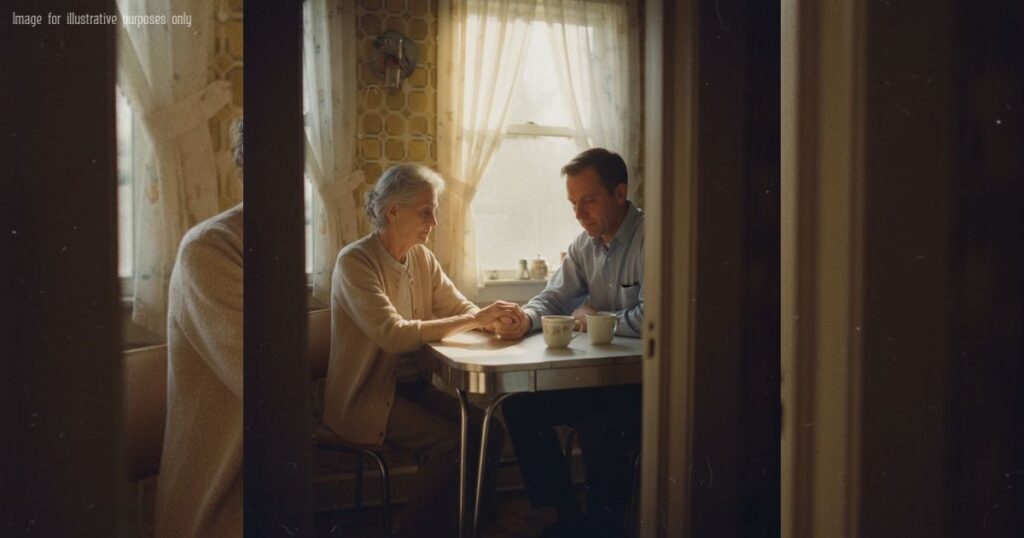
I showed up at my dad’s place with a pot of stew so big it felt like I was trying to feed a whole neighborhood.
He opened the door in sweatpants, hair a mess, and for a second he looked older than I remembered.
Not fragile.
Just… human.
We stood there awkwardly, two men who share blood but forget how to share feelings.
Then he stepped forward and pulled me into a hug so hard my ribs protested.
“Hey,” he said into my shoulder, voice rough. “Hey, kid.”
I didn’t realize how much I needed that until it happened.
We sat on the porch like I promised.
Cold air, cheap plastic chairs, the distant sound of someone mowing a lawn they probably couldn’t afford to water.