PART 2 — The Bolt Wasn’t the Hard Part
I thought the roar of that old engine was our ending.
I thought the crack of rust surrendering under our hands was the climax—the moment my father and I finally found the same language.
But two days later, in my glass tower of meetings and muted microphones, I learned the truth:
Sometimes the bolt is just the excuse people use… when what they really need is proof they still matter.
The first thing I noticed back in the city was the silence.
Not the quiet of peace—more like the quiet of a museum. The lobby was all polished stone and filtered air. The kind of place where nothing leaks, nothing squeaks, nothing smells like real life.
I stepped out of the elevator and caught my reflection in the mirrored wall.
My hands were still stained. Not dirty—stained. Grease had settled into the little cracks around my nails like a memory my body refused to delete.
A coworker glanced down at my cuffs, at the faint black smear on my wrist, and laughed like I’d worn a costume to a funeral.
“Rough weekend?” he asked, smiling the polite smile people use when they’re dying to judge you without being caught.
I almost lied. I almost said, Yeah, just a mess in the kitchen.
Instead I heard my father’s voice in my head—Close your eyes. Feel the tension. Let it know you’re there.
So I said, “Best weekend I’ve had in years.”
He blinked like he didn’t know what to do with that answer.
Neither did I.
At 9:30, I sat in a conference room with a view of the river and a screen full of charts. A manager I’d never met in person—someone whose face existed mostly as a floating head in video calls—clicked through a deck about “efficiency,” “streamlining,” and “strategic alignment.”
Words that meant one thing: fewer people.
He didn’t say “layoffs.” He said “restructure,” like we were furniture.
He didn’t say “replace.” He said “leverage automation,” like we were machines that could be traded in for newer models.
As the slides marched forward, I felt something ugly crawl up my spine.
Not fear of losing my job—though that was there, hiding under my ribs.
It was the sensation of becoming unnecessary.
The same sensation my father had felt under that truck.
A rotary phone in a smartphone world.
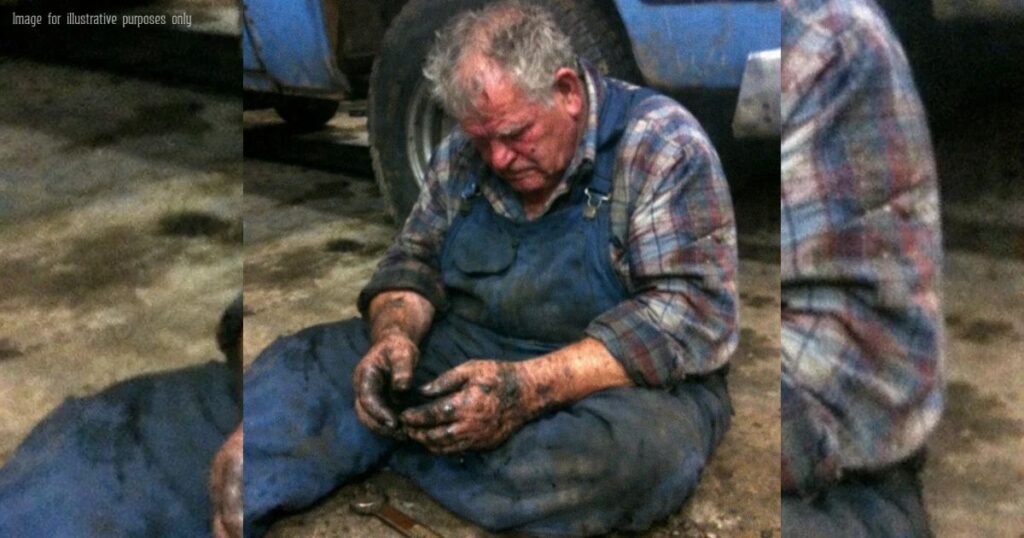
I thought of his hands shaking as he said, I’m useless, Benny.
I thought of my hands hovering over my laptop like they were holy instruments.
And I realized something that made my throat tighten:
In this room, with our degrees and our clean shoes, we weren’t “safe.”
We were just better dressed.
I called my father at lunch.
It rang seven times.
No answer.
I told myself he was napping. He’d worked hard. He deserved rest.
Then I pictured him alone in that garage, stubborn as iron, crawling under the truck again because he refused to bother anyone.
I pictured the wrench slipping.
I pictured his head hitting concrete.
My stomach went cold.
I called again.
Still nothing.
So I did the stupid thing.
The thing people like me always do when we don’t know how to handle love:
I opened my calendar.
My week was packed. Meetings stacked on meetings like plates in a sink. I had a “deliverable” due Friday. I had dinner plans with someone I only half-liked because the city teaches you to fill your time so you don’t have to feel anything.
I stared at that digital schedule and suddenly it looked like a cage made of polite obligations.
I texted my father: Pick up. Now.
A minute later, my phone buzzed.
I’m fine. Was outside. Phone was in the house.
I exhaled so hard it hurt.
Then the second text came.
Don’t get mad. I tried the bolt again. Just wanted to see if I still had it.
My chest tightened, not with anger—something sharper.
“Dad,” I whispered into the empty hallway outside the cafeteria. “You already proved it.”
He didn’t respond for a long moment. When he finally did, his message was short.
Did I?
That Friday, I drove back.
I told myself it was because I had a long weekend.
That was the lie I told my life, the lie that made my choices look reasonable.
The truth was simpler:
I couldn’t get that last text out of my head.
Did I?
When I pulled into the driveway, the garage door was closed.
That wasn’t like him.
My father kept that door half-open even in winter, like he needed the world to know he was still working.
I knocked. No answer.
I tried the door.
Unlocked.
Inside, the house smelled like old coffee and cold metal. A television murmured in the living room, volume low, like background noise for a life happening somewhere else.
“Dad?” I called.
“In here,” his voice answered—from the kitchen, rough and flat.
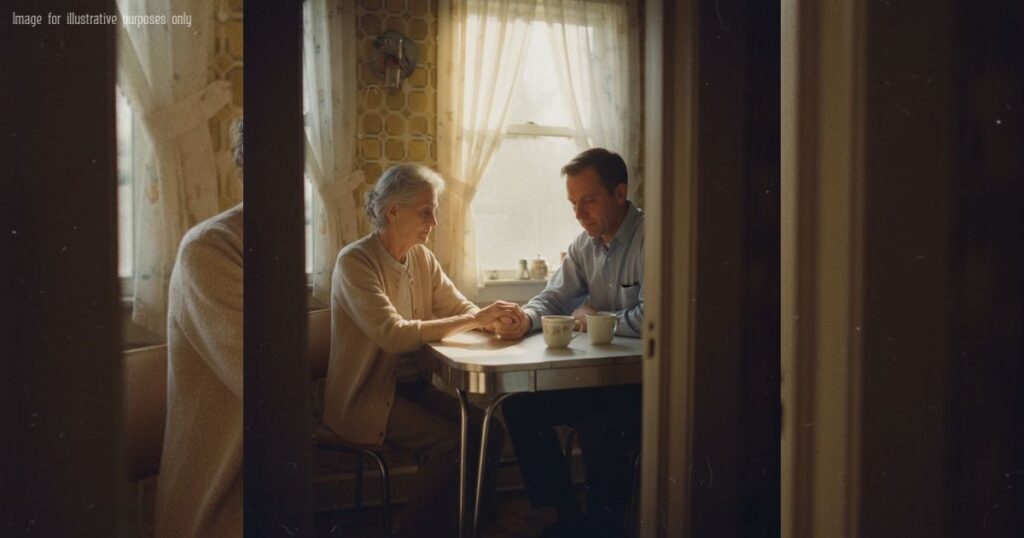
I found him sitting at the table with a letter in his hand.
His shoulders were hunched the way they get when a man is trying to make himself smaller so the world hurts less.
He didn’t look up.
He just slid the letter toward me.
It was from a local office. Official enough to feel heavy. The kind of paper that makes people in small towns swallow hard.
A notice about a reassessment. A change in rates. A new fee tied to “updates” in the neighborhood.
It wasn’t the number that punched me.
It was the sentence beneath it, printed in cold ink:
Failure to comply may result in enforcement action.
My father’s jaw worked like he was chewing something bitter.
“They’re not even hiding it anymore,” he said.
“Who’s ‘they’?” I asked, careful.
He finally looked up, and his eyes were tired in a way I’d never seen as a kid.
“Everybody,” he said. “Anybody who thinks a man’s home is just a line on a spreadsheet.”
I sat across from him. The chair creaked—honest, old wood.
“Talk to me,” I said.
He rubbed his hands together, not for warmth—for courage.
Click the button below to read the next part of the story.⏬⏬