They say freezing to death is supposed to be peaceful. Like drifting off into a heavy sleep.
I’ve been driving these roads for forty years, and let me tell you—there is nothing peaceful about a house that has gone silent because the furnace died. There is nothing peaceful about seeing your own breath in a living room.
My name is Hank. I’m 68 years old. My knees click when I climb out of the cab, and my back aches when it rains. I drive a propane bobtail truck for a mid-sized energy company here in the Midwest.
I’m the guy you ignore. I’m the guy in the high-vis vest pulling a hose through the snow in your backyard while you watch TV. You sign the digital pad, I hand you the receipt, and I disappear.
But last winter changed everything.
It was February. The kind of cold that hurts your teeth. We were in a “Polar Vortex,” or whatever the weatherman called it. Nighttime lows were hitting minus ten.
I pulled up to a small, single-story house at the end of a long gravel driveway. The account belonged to a “Mrs. Sarah Jenkins.” The ticket said Fill.
I waded through knee-deep snow to the tank. I flipped the gauge cover. 0%. Bone dry. The pressure valve didn’t even hiss.
In this weather, a house loses heat in hours. Pipes burst in a day.
I walked to the front door and knocked. It took a long time for someone to answer. When the door cracked open, I didn’t feel heat escape. The air inside was just as sharp as the air outside.
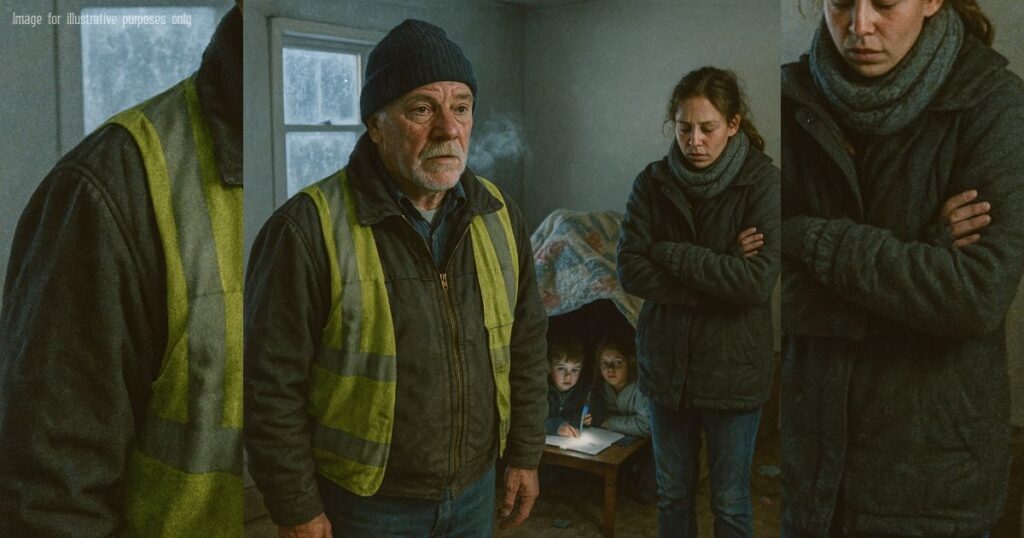
A young woman stood there. She was wearing a winter coat, a scarf, and fingerless gloves. Behind her, in the shadows of the hallway, I saw a makeshift tent built out of blankets over the dining table. Two little faces peered out from under it.
“Ma’am,” I said. “Your tank is empty. The pilot light is out.”
She looked at the ground. She was shivering, not just from cold, but from shame. That’s the thing about poverty in America these days—it looks like regular folks. It looks like your neighbor.
“I know,” she whispered. “I… I can’t fill it today, Hank. I thought I could stretch what we had until the first of the month. My disability check comes on Tuesday. We just need a few more days.”
“Tuesday?” I looked at the sky. It was Thursday. “Ma’am, it’s going to be twelve below zero tonight. Those kids…”
“We have electric space heaters,” she said quickly, too quickly. “We’re all sleeping in one room. We’ll be fine.”
I looked past her at the kids. They were doing homework under that blanket fort with a flashlight. In their own home. In America.
I walked back to my truck. I sat in the heated cab for a minute, gripping the steering wheel until my knuckles turned white.
I thought about the company policy. Strictly COD for customers with low credit scores. No exceptions. Fuel costs were up. Inflation was eating everyone alive. The company had to protect itself.
I looked at the house. I saw the frost patterning on the inside of the windows.
I made a choice.
I grabbed the hose. I hauled it back to the tank. I hooked it up and opened the valve. The meter started spinning.
I didn’t fill it. That would be too obvious. I pumped 60 gallons. Enough to last two weeks. Enough to get the furnace roaring and the pipes thawed.
I printed the ticket. Then I took my pen and wrote: “METER CALIBRATION ERROR – TEST RESIDUAL.”
I knocked on the door again.
“Mrs. Jenkins,” I said. “Looks like I had some residual pressure in the line I had to bleed out. Tank’s got enough to get you to Tuesday. Probably a bit more.”
She looked at me, confused. Then she looked at the receipt where I’d zeroed out the cost. Her eyes welled up. She grabbed my gloved hand with both of hers. She didn’t say anything, she couldn’t. She just squeezed.
I drove away, watching the exhaust vent on her roof start to puff white steam. Heat. Survival.
That night, I slept like a baby.
But once you see it, you can’t stop seeing it.
The economy is hard right now. Folks on fixed incomes are drowning. The price of eggs, the price of gas, the price of just staying alive—it’s breaking people.
Two days later, it was Mr. Henderson. Vietnam Vet. 82 years old. He ordered 50 gallons because that’s all he could afford. 50 gallons in February is like spitting on a forest fire.
I gave him 80. Marked it as “Pump malfunction/Overfill.”
Then there was the single dad three towns over. He was burning furniture in his fireplace because he couldn’t afford the delivery fee. I waived the fee and dropped 40 gallons. “Driver error.”
I did it nine times that month.
I wasn’t stealing for myself. I was stealing warmth for people who were freezing. I figured, if they fire me, they fire me. I’ve got my Social Security. I’ll survive.
But in March, the reckoning came.
My boss, a stern man named Mike who runs the regional office, called me in. He had a stack of papers on his desk. My route sheets.
“Hank,” he said, not looking up. “We have a discrepancy in your inventory. We’re missing about 450 gallons of propane over the last four weeks. And I see a lot of ‘calibration errors’ on your tickets.”
My heart hammered. But I stood tall. I’m too old to lie.
“It wasn’t an error, Mike,” I said.
I told him about Mrs. Jenkins. I told him about the kids under the blanket fort. I told him about Mr. Henderson counting pennies on his kitchen table.
“I gave it to them,” I said. “They were cold, Mike. Not ‘uncomfortable.’ Cold. Dangerous cold. Take it out of my final check if you have to. But I couldn’t drive away.”
Mike stared at me. The silence in that office stretched out forever. He took off his glasses and rubbed his eyes. He looked tired.
“You know strict corporate policy is no free product,” he said.
“I know,” I replied. “But corporate policy doesn’t keep a six-year-old from getting pneumonia.”
Mike looked at the papers again. Then he opened his desk drawer. I thought he was reaching for a termination slip.
Instead, he pulled out a checkbook.
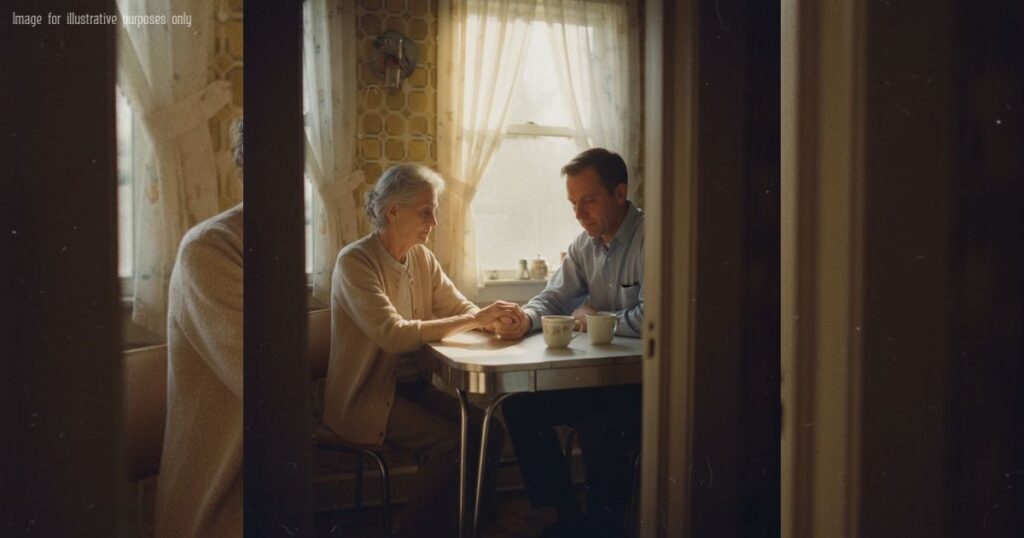
“My mother raised three of us on her own after my dad passed,” Mike said softly. His voice sounded thick. “I remember waking up and seeing our breath in the bedroom. I remember her crying because she had to choose between heating oil and school clothes.”
He wrote a check. He stamped it. He slid it across the desk.
“This covers the missing inventory,” Mike said. “From my personal account. Don’t let me catch you falsifying records again, Hank.”
I started to speak, but he held up a hand.
“Because next time,” he smiled, “We’re going to do it officially.”
Mike didn’t fire me. He started a program called the “Good Neighbor Fund.” He put a small checkbox on our monthly bills asking customers if they wanted to donate $1, $5, or $10 to help neighbors in need. The company matched every donation dollar-for-dollar.
We didn’t advertise it to the world. We just did it.
But here is the part that brings me to my knees.
Last week, I was back at the Jenkins place. It’s autumn now, getting chilly again. Mrs. Jenkins opened the door. She looked different. Healthier. She’d found a better job working remote customer service.
“Hank!” she smiled. “I was hoping it was you.”
She handed me an envelope.
“This is for the fund,” she said. “I heard you guys have a program now.”
I opened it. It was a check for $300. That’s a lot of money for a single mom.
“Mrs. Jenkins, you don’t have to—”
“I do,” she interrupted. “For the next family. For the next mom who is staring at a zero percent gauge and praying for a miracle.”
Then, her little girl ran up. She wasn’t under a blanket fort this time. She was wearing a t-shirt, holding a piece of paper.
“This is for you,” the girl said.
It was a drawing in crayon. It showed a big red truck. And a stick figure man with a blue hat. Underneath, in wobbly letters, it read: MR. HANK BRINGS THE SUMMER.
I’m a grumpy old man. I don’t cry. But I sat in my truck for ten minutes before I could put it in gear.
I realized something out there on the rural routes.
We are all just one bad month away from being Mrs. Jenkins. One medical bill, one layoff, one transmission failure away from the cold.
But we are also the only ones who can fix it.
Government programs are slow. Paperwork is complicated. But a neighbor noticing a neighbor? That’s fast. That’s real.
If you are reading this, check on your people. If you see an elderly neighbor’s curtains drawn for too long, knock. If you know a young family struggling with these rising costs, bring them a casserole. If you deliver pizza, or mail, or packages, and you see a house that doesn’t look right—don’t just walk away.
We have to take care of each other. In this economy, in this world, warmth is not a luxury. It’s a human right.
And sometimes, being a hero doesn’t mean flying. Sometimes, it just means breaking the rules to make sure a kid doesn’t have to sleep in a winter coat.
Be the reason someone sleeps warm tonight.
—–
If you read the first part of my story, you already know I “lost” a few hundred gallons of propane last winter and called it mercy, not theft. What came next is the part nobody puts in the heartwarming posts.
I never meant for any of it to end up online.
To me, it was just something an old man did on a frozen Tuesday because he couldn’t stand the sound of a quiet furnace and a child’s teeth chattering.
Click the button below to read the next part of the story.⏬⏬