I broke an old man’s heart today. And the worst part? It only took me twelve seconds. He wasn’t a stranger. He wasn’t a rude customer or a difficult boss. He was the man who held my hand when I took my first steps. He was my father.
I am sharing this publicly because I need to apologize—not just to him, but to the version of myself I promised I would never become. If you are part of the “sandwich generation,” juggling a career, kids, and aging parents, or if you just feel like the world is spinning too fast, please stop scrolling. Give me three minutes. This story might just save your soul a little bit.
My dad, Jim, is eighty-two. He is a retired union carpenter, a man who smells like sawdust and Old Spice. He belongs to a generation that fixed things when they broke instead of throwing them away. But time is the one thing you can’t fix. Lately, his hands—hands that once framed houses and built the very deck I was sitting on—have started to tremble. His walk has slowed to a careful, heavy shuffle.
Last Sunday was one of those perfect, golden American afternoons. We were in the backyard. The air was thick with the smell of charcoal from a neighbor’s barbecue and the hum of a lawnmower down the street.
But I wasn’t really “there.”
Physically, sure. I was sitting in the wicker chair opposite him. But mentally? I was a thousand miles away. I was buried in my smartphone, drowning in the modern noise. I was checking work emails on a Sunday, stressing about inflation, doom-scrolling through headlines about how the world is falling apart, and checking my retirement portfolio.
Dad was just sitting there, sipping his black coffee, staring at the old maple tree. He doesn’t own a smartphone. He doesn’t care about the NASDAQ or the latest viral trend. He was just… being.
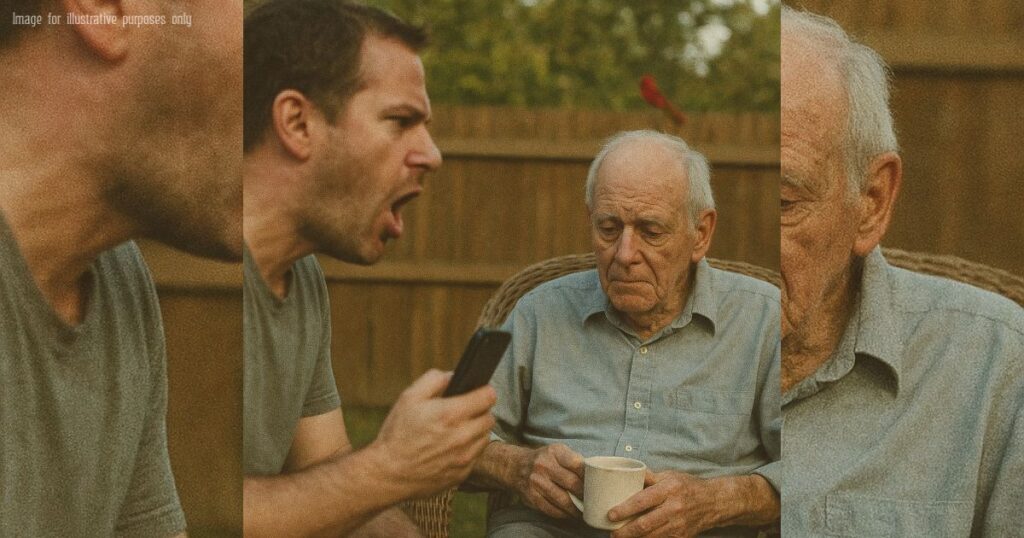
Suddenly, a flash of bright red landed on the wooden fence. A Cardinal. Brilliant and bold against the green leaves.
“What is that, son?” Dad asked. His voice is raspier now, like dry leaves on pavement.
I didn’t even look up from my screen. I was in the middle of typing a frustrated text to a contractor. “It’s a Cardinal, Dad,” I muttered, my thumbs still flying across the glass.
I went back to my digital world.
A few moments passed. The bird hopped down to the birdfeeder.
“What’s that bird, son?” he asked again, his eyes wide with genuine wonder, as if the first conversation had never happened.
I let out a heavy, dramatic sigh. The kind of sigh you give a slow internet connection. I lowered my phone, annoyed that my “productivity” was being interrupted.
“Dad,” I said, my tone sharp. “I just told you. It’s a Cardinal.”
The air between us grew heavy. He went back to staring at the tree, his coffee cup rattling slightly in his saucer. I went back to my doom-scrolling.
Then, the third time.
“What kind of bird is that on the feeder, Michael?”
Something inside me just snapped. The stress of the upcoming work week, the heat, the notifications pinging every two seconds—it all boiled over. I treated his simple question like an attack on my time.
“It’s a Cardinal!” I shouted. I didn’t just say it; I barked it. My voice echoed off the vinyl siding of the house. “A Cardinal! A red bird! God, Dad, I’ve told you three times in two minutes! Why can’t you just listen to me? Are you even trying?”
The silence that followed was louder than my yelling.
Dad didn’t argue. He didn’t yell back “I’m your father!” like he might have thirty years ago. He didn’t even look at me.
He just stopped moving. He looked small. Defeated. He gripped the armrests of the chair, pushed himself up with a groan of effort, and shuffled inside the house without a single word. The screen door clicked shut behind him.
I sat there, my heart pounding in my ears. I was holding my thousand-dollar phone, wearing my smart-watch, sitting on a deck he built with his own two hands, feeling like the poorest man on earth.
He needs to pay attention, my ego whispered. It’s exhausting repeating myself.
But my heart knew better.
Five minutes later, the screen door creaked open again.
Dad came back out. He wasn’t holding a coffee. He was holding a small, battered notebook. It was a “Field Notes” journal, the leather cover cracked and stained with oil and grease from his working days.
He sat down slowly. He didn’t look angry. He looked at me with a softness I didn’t deserve. He flipped through the yellowed pages, wetting his thumb, until he found a specific date. He handed the book to me.
“Read out loud,” he whispered.
I looked down. The handwriting was strong, bold, and precise—the handwriting of the man he used to be, the protector, the provider.
June 14, 1985.
I cleared my throat. My hands started to shake.
“Today, I took Michael to the city park. He turned three last week. We sat on the grass by the duck pond eating chocolate ice cream. A red bird landed on the grass near our picnic blanket.
Michael asked me, ‘Daddy, what’s that?’
I told him, ‘It’s a Cardinal, buddy.’
Then he asked, ‘Daddy, what’s that?’ again. And again.
My son asked me the same question twenty-one times.
And twenty-one times, I hugged him, laughed, and said, ‘That’s a Cardinal, son.’ I didn’t get mad. I didn’t get frustrated. I just looked at his big, curious eyes and thanked God that he wanted to talk to me. I thanked God for his voice. It was the best afternoon of my life.”
My voice cracked before I could finish the paragraph. The words blurred on the page as tears filled my eyes.
That little boy was me.
I was the one asking the questions. I was the one testing his patience, over and over again. And he had answered me every single time with love. He treated my curiosity like a gift, not a burden. He didn’t check his watch. He didn’t wish he was somewhere else. He was just there, for me.
And here I was, forty years later. The roles were reversed. He asked me the same question three times, and I treated him like an inconvenience. I treated his aging memory like a glitch in a computer program, rather than the fading of a man who gave me everything.
I closed the book. I put my phone face down on the table. It didn’t matter anymore. The emails didn’t matter. The stock market didn’t matter. The angry text messages didn’t matter.
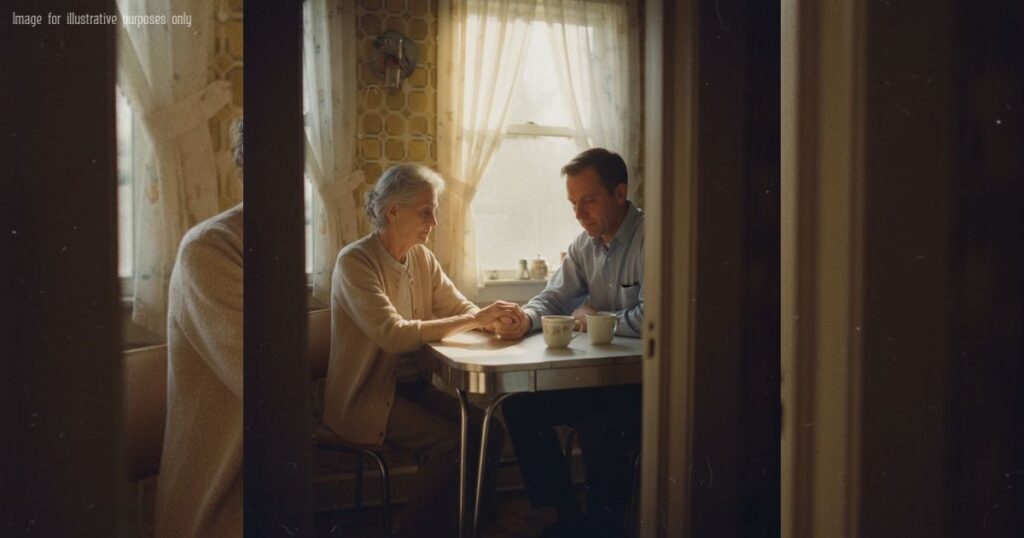
I reached over and took his rough, wrinkled hand in mine. It felt fragile, like dry parchment paper.
“Dad?” I choked out.
He looked at me, his blue eyes watery but kind. No anger. Just love.
“It’s a Cardinal, Dad,” I said, tears streaming down my face, squeezing his hand. “It’s a beautiful red Cardinal.”
He squeezed my hand back, surprisingly strong. “I know, son,” he smiled. “I just like hearing you talk to me. I miss your voice.”
The Takeaway
We live in a culture that worships speed. We want 5G internet, same-day delivery, and instant answers. We optimize our lives for “hustle” and “efficiency.”
But you cannot optimize love. You cannot “hack” patience.
We forget that our parents once carried us when we couldn’t walk. They answered our million “whys,” they cleaned up our messes, and they sat by our beds when we were scared of the dark. They gave us their prime years—their strength, their energy, their dreams.
Now, all they want is a little bit of our time. They don’t want our money. They don’t need our advice on technology. They just want to know we are still there. They just want to be seen.
If you are lucky enough to still have your parents, please remember this:
When they repeat themselves, it’s not to annoy you. When they walk slow, it’s not to delay you. When they struggle with the remote control, it’s not because they aren’t trying.
They are just trying to stay connected in a world that is moving too fast for them. They are grasping for a moment of contact before the sun goes down.
One day, that chair on the porch will be empty. The phone won’t ring. And you would give anything—your house, your job, your savings—just to answer that simple question one more time.
Love is patient. Be patient.
PART 2 — “The Day I Finally Heard Him”
If you read Part 1, you already know the moment I failed my father in twelve seconds.
You know I yelled, “It’s a Cardinal,” like love was a task I wanted to finish fast.
You know he handed me that battered little notebook and didn’t punish me with anger—he punished me with tenderness.
What you don’t know is what happened next.
Because the internet loves a clean ending.
Real life doesn’t.
Click the button below to read the next part of the story.⏬⏬