PART 2 — “The Day I Finally Heard Him”
If you read Part 1, you already know the moment I failed my father in twelve seconds.
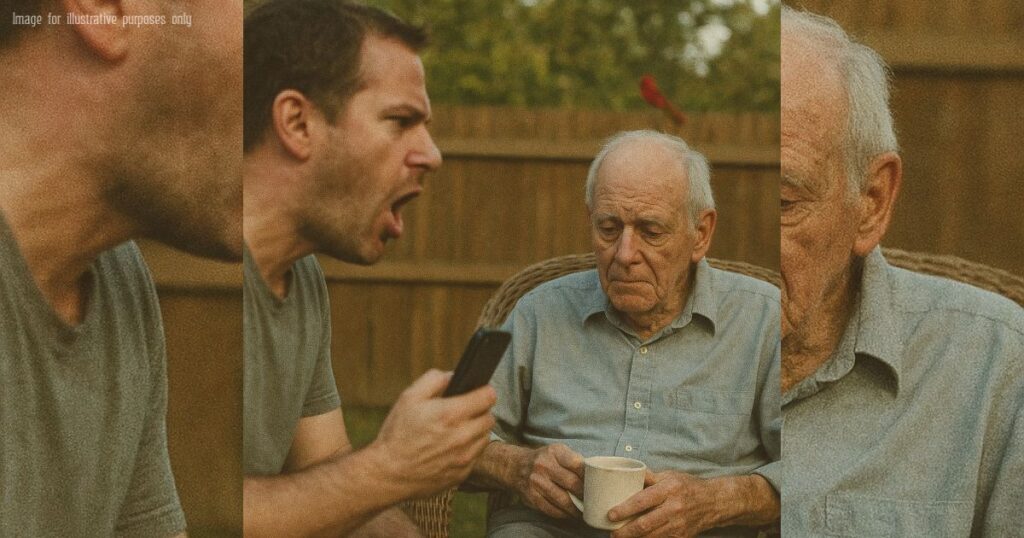
You know I yelled, “It’s a Cardinal,” like love was a task I wanted to finish fast.
You know he handed me that battered little notebook and didn’t punish me with anger—he punished me with tenderness.
What you don’t know is what happened next.
Because the internet loves a clean ending.
Real life doesn’t.
That night, I drove home with his words stuck to my ribs like a seatbelt I couldn’t unclick.
I sat in my car in my own driveway for a long time, engine off, phone glowing in my lap like a guilty secret.
Inside my house, I could see the warm rectangles of light through the windows.
My kids’ silhouettes moved past the curtains.
My wife’s voice floated faintly—asking someone to put their shoes away, asking someone else to wash their hands.
Normal life.
My chest felt tight anyway.
Because I knew something now that I couldn’t unknow:
I wasn’t just busy.
I was becoming the kind of man who makes the people who love him feel lonely in the same room.
I walked inside and my wife took one look at my face and lowered her voice.
“What happened?” she asked.
I tried to answer like an adult.
But my throat did that thing it does when you’re about to cry and you hate yourself for it.
“I snapped at Dad,” I said. “Over nothing.”
She didn’t say, How could you?
She didn’t say, I told you so.
She just exhaled like she’d been holding her breath for months.
“Do you want to talk about it,” she asked, “or do you want to fix it?”
That word—fix—hit me hard.
Because my dad is from the generation that fixed things.
And I’m from the generation that replaces them.
I told her I was going back tomorrow morning.
“I’m going to apologize,” I said.
She nodded.
Then she said the sentence that would become the real Part 2 of this story:
“Okay. But what happens after the apology?”
The next morning, I left my phone on the kitchen counter on purpose.
Not as some dramatic gesture.
As a test.
It felt like walking out of the house without pants.
My mind kept reaching for it anyway, like a phantom limb.
At a stoplight, my hand twitched toward my pocket.
Nothing there.
My heart sped up for no reason.
I realized something uncomfortable:
I wasn’t addicted to information.
I was addicted to escape.
When life got too heavy—aging parents, bills, kids, work—I didn’t sit with the weight.
I scrolled away from it.
I drove to Dad’s house under a pale winter sky.
His street looked the same as it always had: quiet lawns, mailboxes leaning slightly, American flags that had seen better days.
His porch still had the same creak on the third plank from the top—one he always promised he’d fix “next weekend.”
He opened the door before I even knocked, like he’d been watching the window.
He was wearing the same flannel he always wears, like time never asked him to change.
“Hey, kid,” he said.
He still calls me kid.
I stepped inside and the smell hit me—coffee and old wood and that faint, clean scent of laundry detergent he’s used since I was little.
My voice shook.
“Dad… about yesterday.”
He waved his hand like he was shooing a fly.
“Ah, forget it,” he said. “You got a lot on your mind.”
That’s the thing about good parents.
They forgive you before you even learn how to say sorry.
But I didn’t come to collect forgiveness like it was owed to me.
I came to do something harder.
I came to own my ugliness out loud.
“No,” I said. “Don’t forget it. I don’t want you to forget it. I was disrespectful. I was impatient. I made you feel small.”
His eyes flicked down for a second.
Just a second.
But I saw it.
That tiny flinch people do when they don’t want you to see where the bruise is.
I swallowed.
“I’m sorry,” I said. “I’m really sorry.”
He stared at me for a long moment.
Then he nodded once.
“Okay,” he said softly. “Come sit.”
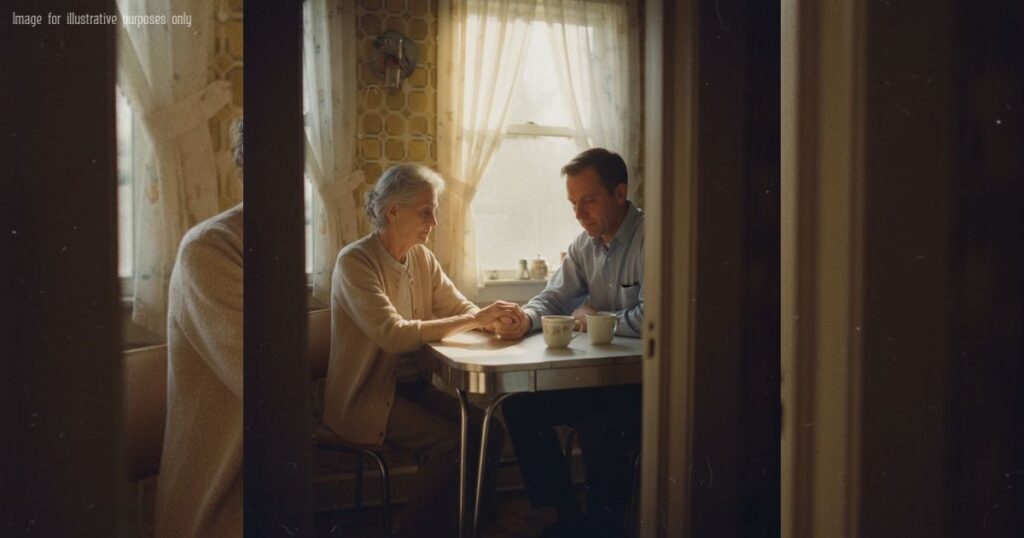
So we sat at the kitchen table like we had a thousand times.
He poured coffee with a hand that trembled just enough to remind me time is undefeated.
He asked me about work.
I answered.
And then he did it.
He looked out the window, squinting at the bare branches.
“What day is it?” he asked.
“Tuesday,” I said.
He nodded like he was filing it away.
Then, two minutes later:
“What day is it again?”
My stomach tightened on instinct.
That old irritation rose up fast, like a match.
Then I saw the notebook in my mind.
The date.
The little boy asking twenty-one times.
So I forced my shoulders down.
I softened my voice like you do for someone you love.
“It’s Tuesday, Dad,” I said.
He smiled.
“Right,” he said.
Two minutes later:
“What day is it?”
And this time I didn’t just answer.
I reached across the table and covered his hand with mine.
“It’s Tuesday,” I said. “And I’m here.”
His eyes looked watery for a second.
Then he blinked it away.
“Good,” he whispered, like it mattered more than any calendar ever made.
Here’s where the story gets messy.
Because patience is beautiful in quotes.
Patience is a whole different thing at 2:13 a.m. when your phone rings and it’s your dad, whispering, “I can’t find the bathroom,” in a house he’s lived in for thirty-seven years.
Yes.
That happened.
Two nights after my apology, I was half-asleep when my wife shook my shoulder.
“Your dad is calling,” she said.
Her voice wasn’t angry.
It was tired.
There’s a difference.
I answered and heard him breathing like he’d run a mile.
“Mike?” he said. “I’m sorry. I’m sorry to call. I just… I can’t—”
“It’s okay,” I said, sitting up fast. “What’s wrong?”
“I can’t find it,” he whispered. “The bathroom. The hallway looks… different.”
My heart did a slow, cold drop.
For a second, my brain tried to deny it.
He’s just groggy.
He just woke up confused.
Old people do that.
But my gut knew what my ego didn’t want to admit:
This wasn’t about a bird.
This was about a brain that was starting to misfile reality.
I got dressed in the dark and drove over with my hands tight on the steering wheel.
When I walked in, he was standing in his living room like a lost kid, barefoot, flannel pants hanging looser than they used to.
The hallway lamp was on.
The hallway looked exactly the same as it always had.
But his eyes were panicked.
And that’s a kind of fear you can’t lecture away.
I took his shoulders gently.
“Hey,” I said. “I’m right here.”
His breathing slowed.
Then he laughed—this short, embarrassed laugh.
“Stupid, huh?” he said.
“No,” I said. “Not stupid.”
He looked down like he didn’t believe me.
And in that moment, I felt something crack open in my chest.
Because I realized something else nobody tells you:
Aging doesn’t just steal memory.
It steals dignity in little bites.
And the people who love you have to decide, over and over, whether they’ll protect what’s left… or get annoyed at what’s missing.
I walked him to the bathroom.
I waited outside the door like he used to wait outside mine when I was a kid and scared of the dark.
On the drive home, my wife was sitting up in bed when I came back.
Click the button below to read the next part of the story.⏬⏬