I thought the story ended with a sandwich and a smile, but part two really started the night someone reported the red lunch box.
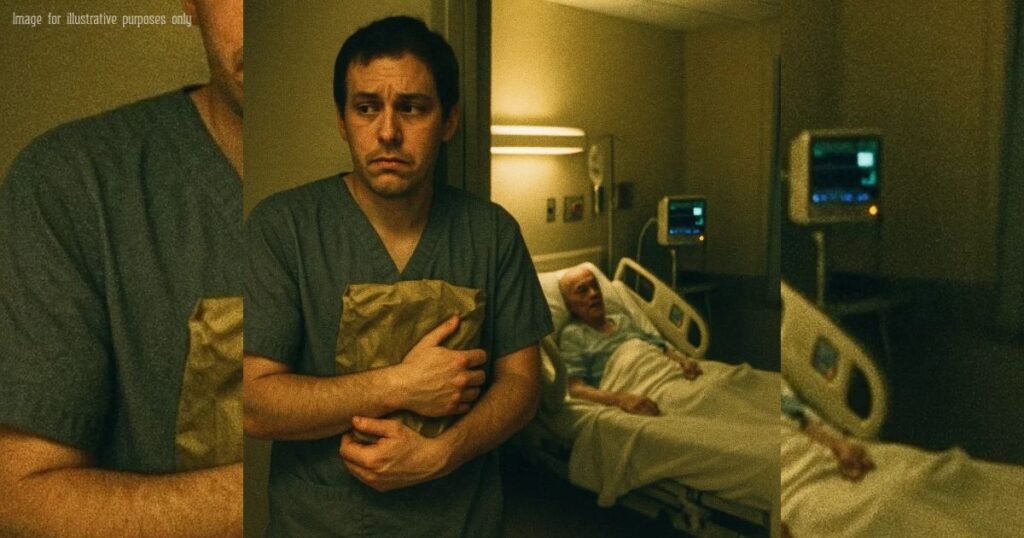
Three weeks later I came in for night shift and saw a note taped to the computer at the nurses’ station: “Please see charge nurse about non compliant food items in room 214.” Room 214 was Mr. Lewis.
Tasha, the evening charge nurse, held up her phone before I could ask. On the screen was a photo of the lunch box on his table, lid open, half a bologna sandwich inside, mustard on his gown.
“You know I love you,” she said, “but his diet says heart healthy, low sodium. If a surveyor or manager sees this and I pretend I didn’t, I’m the one in trouble.”
She was not wrong. In our world, people get written up faster for the wrong sandwich than for being short staffed.
“Give me until the care plan meeting Friday,” I said. “Let me talk to the doctor, the dietitian, his daughter. Just… please don’t throw the lunch box away.”
Care plan meeting sounds gentle, but it is where a whole life gets squeezed into boxes and check marks. On Friday afternoon we sat around the round table: the doctor with his laptop, the dietitian with printed guidelines, the social worker with a pen ready for anything that sounded like guilt.
Mr. Lewis’s daughter, Emma, slipped in last, still in sneakers and a work badge. She saw the stack of papers and tensed.
“Is something wrong?” she asked.
The dietitian cleared her throat. “We have concerns about the food being brought in,” she said. “Processed meat, mustard, high sodium. We’re responsible for his cardiac status. We want him to live as long as possible.”
I pointed to the chart. “Three weeks ago he was refusing all meals,” I said. “Since we started the lunch box, he eats, he’s calmer, he’s gained weight. He is not just lying there waiting.”
The doctor nodded slowly. “The numbers are better,” he agreed. “But the diet is technically not compliant.”
Emma let out a short laugh that sounded more like a crack.
“With respect,” she said, “my dad is seventy nine, has advanced dementia, and lives behind a locked door. When you say ‘long term,’ what do you mean? Five more years of steamed vegetables he won’t touch versus one more year where he actually tastes something he recognizes?”
Her eyes shone, but she kept going.
“I begged him for years to eat better,” she said. “He would just kiss my forehead and say, ‘I work hard. Let me have my sandwich.’ I couldn’t stop him from getting old. I couldn’t stop his brain from breaking. The only thing I can do now is make sure his last months don’t feel like a punishment every time food comes near him.”
The room went quiet. Even the printer in the corner seemed to listen.
“We’re not trying to punish,” the dietitian said softly. “We just… have standards.”
“There’s a difference between standards and a cage,” Emma answered. “If you have to write something down, write that we choose a little joy over one more rule.”
The doctor looked at her, then at me, then at the lab results.
“I can document ‘comfort food from home as tolerated,’” he said. “Family informed of risks and benefits. We’ll note that it’s part of a person centered care plan.”
In plain English, that meant the lunch box was allowed. No more hiding wax paper like contraband.
After the meeting, Emma caught me in the hallway.
“Why did you push so hard?” she asked. “You could have just followed the rules and gone home.”
I thought about his hands tracing Linda’s old lunch notes, the way anger left his face when he bit into that first sandwich.
“Because someone packed his lunch for forty years,” I said. “The least I can do is make sure he doesn’t feel abandoned now.”
That night, after medications and baths and charting, I did something I’d never done. I wrote about the lunch box online.
I didn’t use his name. I didn’t name the facility. I didn’t share a photo. I posted in a caregiver group full of strangers:
“I have an older patient with dementia who wouldn’t eat our food. We started bringing his favorite sandwich in his old lunch box. He eats. He smiles. Management worried about the diet, but his daughter said, ‘We choose joy over one more rule.’ If this was your parent, what would you want us to do?”
I set my phone down and went back to rounds.
By the end of the shift, there were hundreds of comments.
Some said, “Let him eat what he loves. My grandma died craving her favorite dessert. I’d give anything for one more bite.”
Others said, “This is irresponsible. Those rules exist for a reason. If everyone did this, it would be chaos.”
A few wrote, “Why is he in a facility at all? Families should keep elders at home instead of outsourcing everything.”
That last one landed like a stone. It ignored rent, medical bills, tiny apartments, three jobs, and adult children trying to care for parents and kids at the same time. It pretended love and logistics were the same thing.
Scrolling felt like watching the country argue in miniature: safety versus freedom, rules versus compassion, personal responsibility versus a system built on budgets and burnout.
But tucked between the loud opinions were quieter ones.
“My mom stopped eating near the end,” one person wrote. “Everyone was focused on the chart. I wish someone had fought for one more meal she actually wanted.”
“My dad loved fried chicken,” another said. “I followed every rule. Sometimes I wonder if I was kind or just compliant.”
In the weeks that followed, the red lunch box became routine. Some days there was fried bologna. Some days cold pizza from the place he used to pick up on Fridays. On Sundays, Emma brought homemade soup in an old thermos.
Click the button below to read the next part of the story.⏬⏬