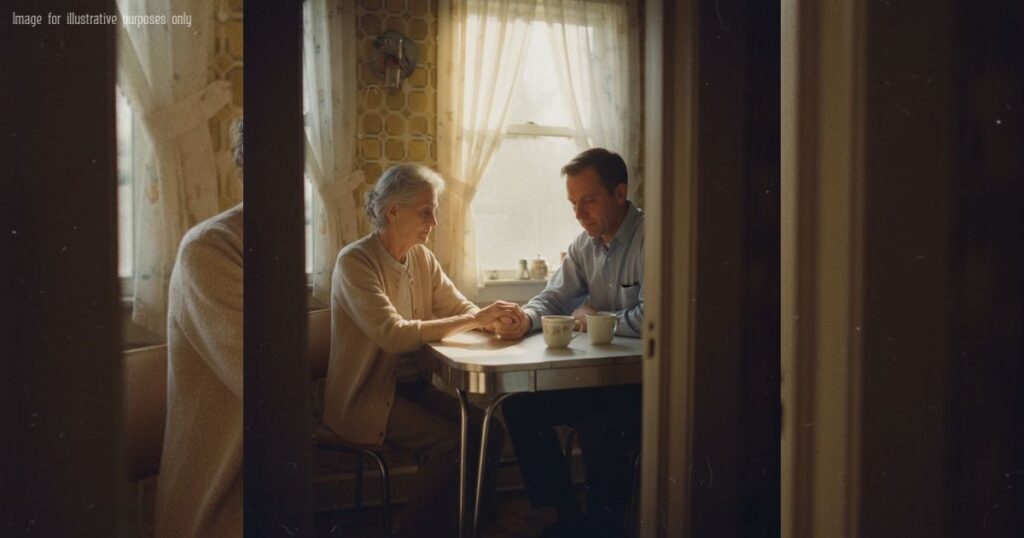
Slowly, other families started asking, “Can we do something like that?” A retired teacher got pancakes on Saturday mornings. A former truck driver lit up when his son brought coffee with real sugar instead of sugar free packets.
We still watched labs. We still followed strict diets for people who needed and wanted them. We didn’t turn the unit into an all you can eat nostalgia buffet. We just made small spaces where taste and memory were allowed to sit at the table with policy.
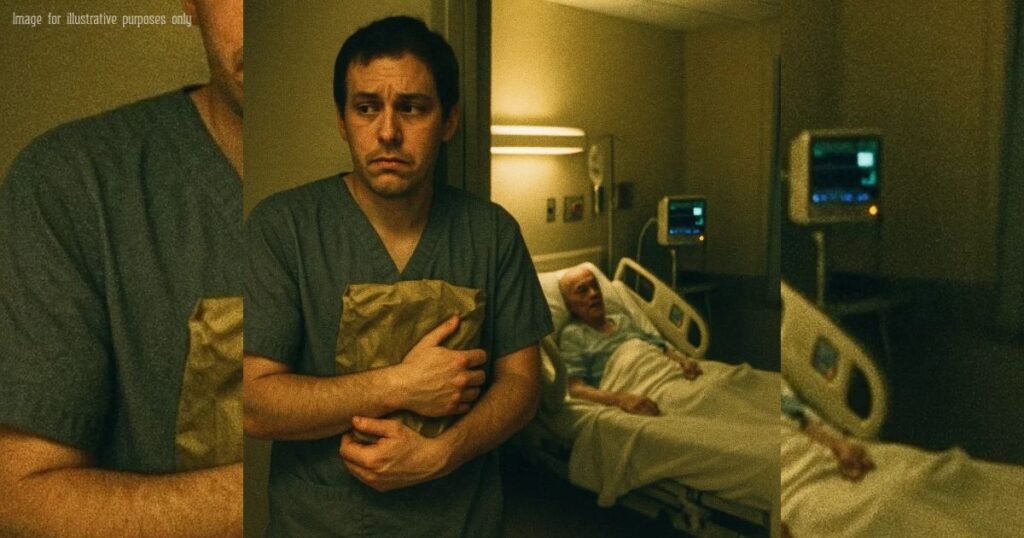
One afternoon I walked into Mr. Lewis’s room with the lunch box and found him more tired than usual. His breathing was shallow, his hands cool. Emma sat by the bed, fingers threaded through his.
“I don’t think he can eat today,” she said. “They told me it might be soon.”
I opened the lunch box anyway. The smell of fried bologna and mustard floated into the air, cutting through the plastic and antiseptic.
His eyelids fluttered. He turned his head just enough to find the smell.
“I thought you forgot my lunch,” he whispered.
Emma covered her mouth. Tears slipped out between her fingers.
“Never,” I said. “We would never forget.”
He didn’t take a bite. He didn’t need to. His shoulders relaxed, his face softened, and for a moment he looked like a man on break again instead of a patient on a monitor.
He died a few hours later, quietly, with his daughter’s hand on his chest and the red lunch box sitting on the bedside table like it had clocked in for one last shift.
The next day we stripped the bed, emptied drawers, wiped the room back into something neutral. When I picked up the lunch box, Emma touched my arm.
“Keep it,” she said. “Use it for the next person who thinks nobody remembers their lunch break anymore.”
So now the red lunch box sits on top of my refrigerator. Some nights after a long shift, I look at it and think of all the arguments that little box started, all the strangers still debating the “right” way to grow old.
Here is what I’ve decided.
One sandwich doesn’t fix a broken system. A lunch box will not settle every fight about health care or responsibility. But they can do something policies and speeches almost never manage.
They can make one human being feel seen.
If you’re reading this because part one of this story found you somewhere in your feed, here is the question I can’t stop asking:
When it is your turn to forget the day or lose the words, will the people around you quote the rules first, or will they remember your version of the red lunch box?
And right now, with the elders in your life still able to taste and talk, are you only feeding their bodies, or are you also feeding their stories?
Thank you so much for reading this story!
I’d really love to hear your comments and thoughts about this story — your feedback is truly valuable and helps us a lot.
Please leave a comment and share this Facebook post to support the author. Every reaction and review makes a big difference!
This story is a work of fiction created for entertainment and inspirational purposes. While it may draw on real-world themes, all characters, names, and events are imagined. Any resemblance to actual people or situations is purely coincidenta