Because that’s what this argument turns into every time if you let it.
Not about kids.
Not about food.
About who deserves dignity.
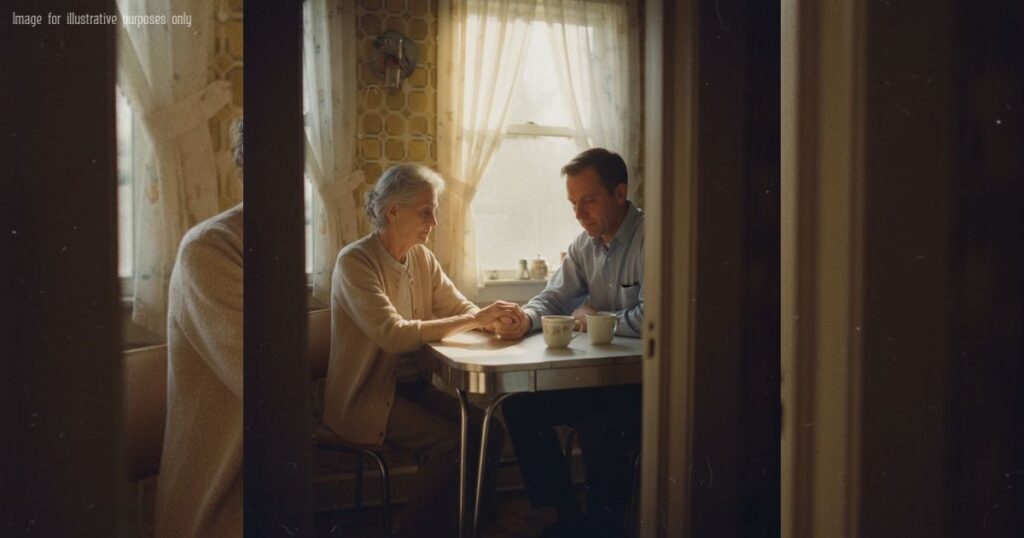
Leo padded into the kitchen in his socks, half-asleep.
“Dad?” he whispered. “Why are you still up?”
I swallowed hard and turned my phone face down.
“Just thinking,” I said.
He rubbed his eyes. “Did Sam eat today?”
I hesitated.
“Yeah,” I lied softly. “Sam ate.”
Leo nodded like he could finally unclench something inside his little body.
“Good,” he said, and went back to bed.
I sat there in the dark and realized I’d just done it too.
I’d lied to protect him from the truth.
Because the truth would make him angry.
And angry kids grow up into adults who ask hard questions.
And hard questions make institutions nervous.
At the school board meeting the next night, the room was packed.
Parents in clean jeans.
Teachers with tired eyes.
A few staff members clutching folders.
A couple of people who looked like they came just to be mad at something, anything, as long as it was public.
I signed up to speak. My name went on a list.
When they called “Mr. Russo,” my heart pounded like I was walking into a fight I didn’t train for.
I stepped up to the microphone.
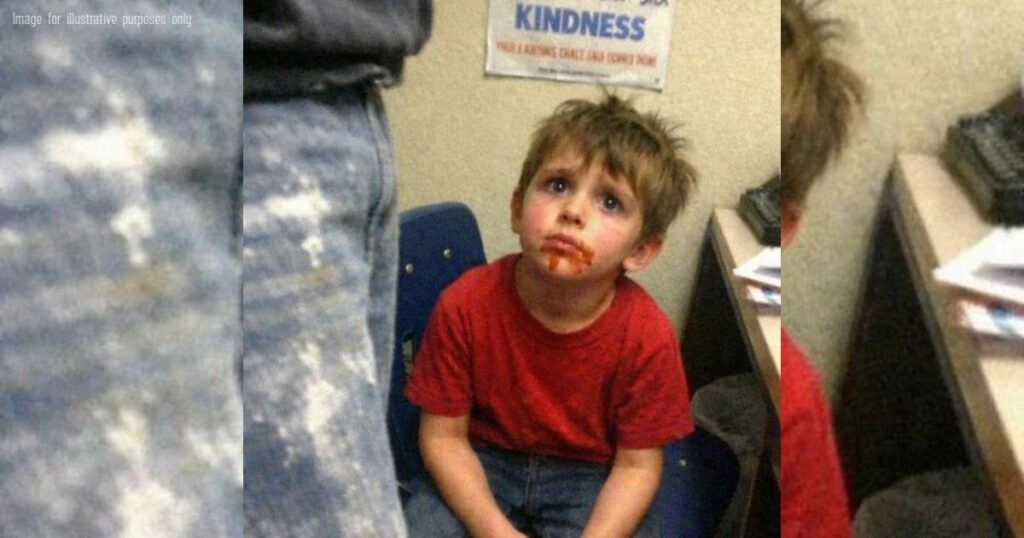
I didn’t bring notes. I brought the image.
“Last Friday,” I said, “my second-grader got in trouble for sharing his pizza with a hungry kid. The pizza got thrown away. The kid still went hungry. And the reason was ‘policy.’”
Murmurs.
I held up a printed photo I’d taken of the motto poster—no kids in the shot, no identifying details, just the words.
“KINDNESS MATTERS,” I read. “And my son asked me something I can’t stop hearing.”
I paused, and the room went quiet the way it does when people sense they might be about to feel something.
“He said, ‘The poster is really big. The rulebook is really small. I thought the big poster was the boss.’”
Some people smiled.
Some people looked away.
Because if you look away fast enough, you don’t have to admit you’ve been wrong.
“I’m not here to attack staff,” I continued. “I’m not here to blame one monitor or one administrator. I get it. People are scared. People don’t want lawsuits. People don’t want angry calls.”
I looked around the room.
“But we need to stop pretending that throwing food away is ‘safety.’ We need to stop teaching children that compassion is the same thing as misbehavior.”
A man in the second row shook his head like he was already loading his counterargument.
I met his eyes anyway.
“And for the people who say, ‘Why should my kid’s lunch pay for someone else?’” I said, keeping my voice steady, “I want you to hear this: nobody is asking your kid to go hungry. We’re asking whether you can live in a community where a hungry child is treated like an inconvenience.”
The room stirred. Someone muttered, “Personal responsibility.”
Of course.
It always shows up.
I nodded once, like I’d expected it.
“Personal responsibility matters,” I said. “So does institutional responsibility. If the system is built so that the ‘responsible’ thing is to watch a kid cry while you throw away food… then the system needs more than a new poster.”
I took a breath.
“I’m not demanding a free-for-all,” I said. “I’m asking you to build a process that protects kids without humiliating them. A way for help to happen without a child being labeled ‘in the red’ like a bank account.”
I stepped back from the microphone and returned to my seat.
My hands were shaking.
Not because I’d yelled.
Because I hadn’t.
Because I’d stayed calm while saying something that should make people uncomfortable.
That’s the kind of controversial that lasts.
Not screaming.
Truth.
Two weeks later, something changed—quietly, like all real change does when it has to survive.
The school sent a letter home.
No apologies. Institutions don’t do apologies well.
But it said they were “reviewing meal procedures.” It said they were “creating a confidential assistance option.” It said families could “contribute voluntarily to a general student support fund” without specifying a child, and staff would handle it “discreetly.”
It wasn’t perfect.
But it was movement.
And the best part?
I picked Leo up one Friday and found him sitting at a table with Sam.
Two trays.
Two hot slices.
No crying.
No trash can in the story.
Leo saw me and raised his eyebrows like, See? It wasn’t that hard.
On the wall behind them, the big poster still hung there.
KINDNESS MATTERS.
This time, it didn’t feel like a lie.
It felt like a dare.
Because here’s the thing nobody wants to admit out loud:
The debate isn’t really about pizza.
It’s about what kind of people we’re training our kids to become.
If a second-grader can understand that hunger is more urgent than pride, then maybe the rest of us don’t need more rules.
Maybe we just need to stop using rules as a hiding place.
And if that idea makes people mad in the comments?
Good.
Let them argue.
Let them reveal themselves.
Because somewhere in that noise is the simple truth my son already knows:
A society that throws food away to prove a point isn’t teaching responsibility.
It’s teaching cruelty with clean hands.
Thank you so much for reading this story!
I’d really love to hear your comments and thoughts about this story — your feedback is truly valuable and helps us a lot.
Please leave a comment and share this Facebook post to support the author. Every reaction and review makes a big difference!
This story is a work of fiction created for entertainment and inspirational purposes. While it may draw on real-world themes, all characters, names, and events are imagined. Any resemblance to actual people or situations is purely coincidenta