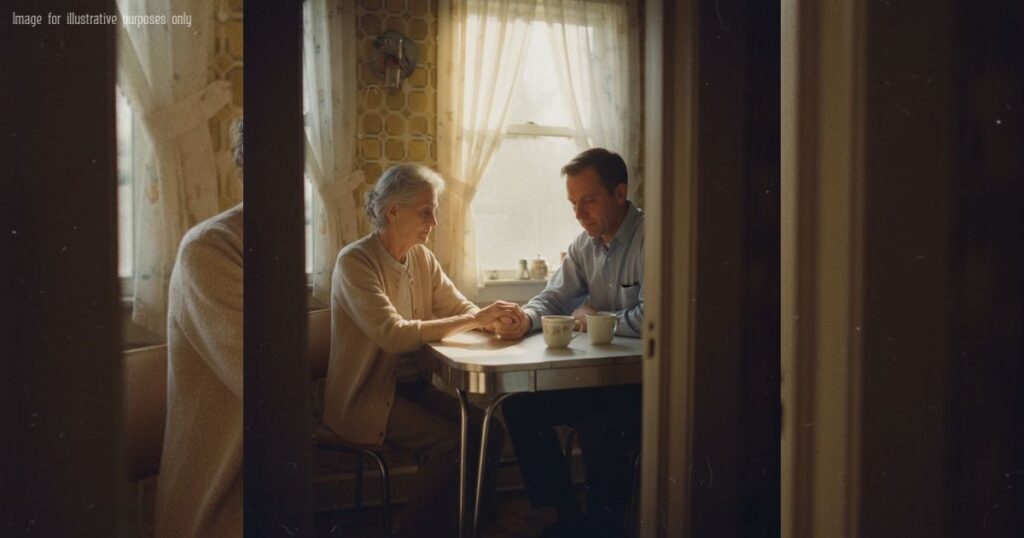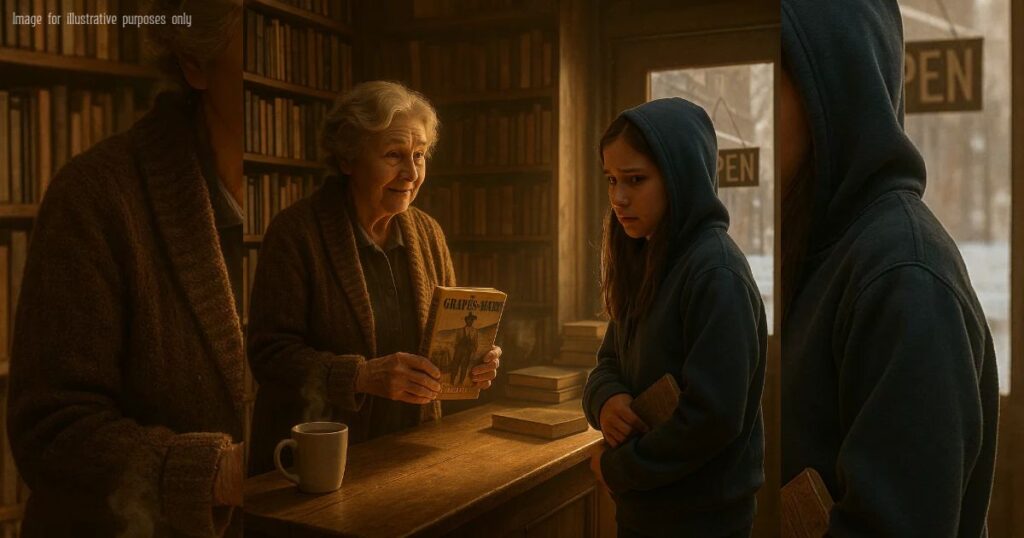
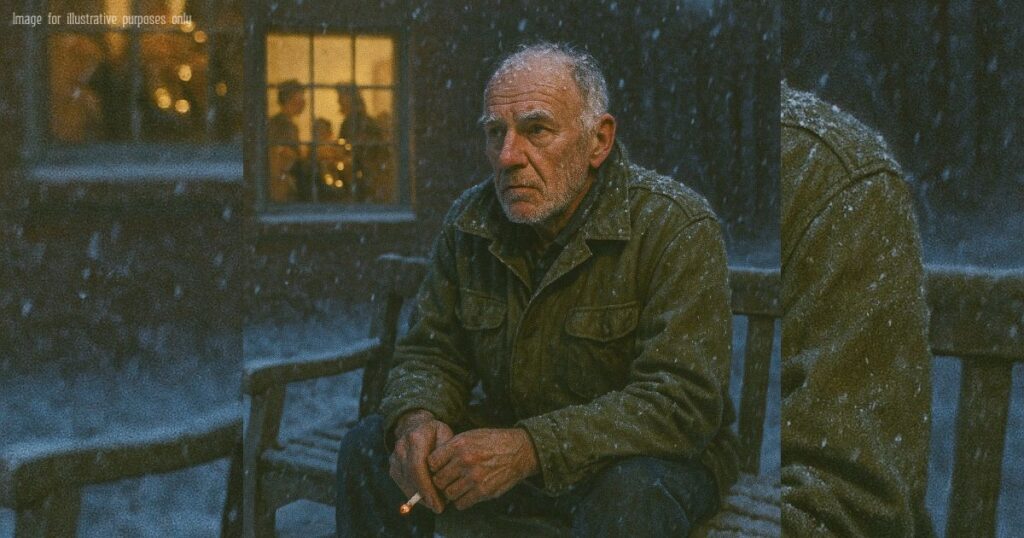
Twenty-five years after I took the watch for ten minutes, I broke the promise I made on that bench.
If you read about my grandfather Frank sitting alone in the snow that Christmas Eve in 1998, this is what happened next—long after the snow melted, long after his boots stopped leaving prints in our backyard.
Grandpa died in the spring of 2015.
Not in some dramatic way. No battlefield, no hospital sirens. He slipped away in his sleep at the nursing home, TV on, volume way too loud, an old war movie flickering on the screen.
He was eighty-five.
At the funeral, they draped a flag over his casket. A man in a pressed uniform handed it to my dad with white gloves and a rehearsed line about “a grateful nation.” People said all the right things. My aunt posted a picture of the folded flag on social media with a caption about “our hero.”
It all felt… polished. Neat. Contained.
But when we cleaned out his room, buried under stacks of magazines and crossword puzzles, I found something that wasn’t neat at all.
It was a folded scrap of paper, yellowed and worn soft from being opened and refolded a thousand times.
On it, in his shaky handwriting, was a single word:
Mitchell.
No last name. No rank. No dates.
Just the name of the man who froze so my grandfather could sleep.
I stood there in that cramped room, fluorescent lights buzzing overhead, and realized something ugly about myself.
I had spent most of my adult life inside the warm house.
Sure, I’d called Grandpa on Veterans Day. I’d posted pictures of him in his uniform. I’d said the right phrases at the right times: “Thank you for your service,” “We’ll never forget,” “Freedom isn’t free.”
But after college, after I moved to Chicago, after kids and deadlines and mortgage payments, I hadn’t really sat in the cold with him again.
Not like I had when I was twelve.
In 1998, I’d promised him ten minutes.
In real life, I had given him way less.
Christmas Eve, 2023.
I was thirty-seven, married, with two kids of my own—Elliot, nine, and Grace, six. We were back in Ohio at my parents’ place. Same house. Same street. Same old brick fireplace with stockings my mom refused to replace, even though the felt names were starting to peel.
There was one difference.
The leather armchair by the fire—Grandpa’s chair—was gone.
“He never sat in it anyway,” Mom had said when she donated it the year after he passed. “Might as well give it to someone who will.”
In its place was a sleek gray recliner my parents had bought online. It had a USB charger built into the arm and a cup holder that lit up blue. It looked like a spaceship landed where a foxhole used to be.
The house was full again. Cousins, spouses, kids. Laughter layered over the clinking of dishes, Christmas music, and the endless ping of notifications. The Nintendo 64 had been replaced by tablets and gaming consoles. This time it was my kids arguing over controllers.
“Dad, he’s camping the respawn point!” Elliot shouted.
I had no idea what that meant, but from his tone, it was apparently a war crime.
I was in the kitchen refilling the mashed potatoes when my younger cousin, Tyler, dropped a comment that stuck to me like a burr.
He was twenty-two, fresh out of college, wearing a hoodie with a logo and a beanie inside the house for some reason.
“Man,” he said, scrolling on his phone, “I am so over all these ‘Support Our Troops’ posts. Like, okay, we get it. Enough with the performative patriotism. We’ve got our own problems.”
My dad, now in his sixties, stiffened but said nothing. My mom shot him a warning look, the same look she used on me when I was twelve.
I watched Tyler tilt his phone toward his girlfriend.
“Look,” he said. “Another guy posting a picture with a veteran. Watch, the comments are all ‘You’re such an angel’ and ‘Faith in humanity restored.’”
He rolled his eyes.
I didn’t say anything, but the words crawled under my skin and lodged there.
Because, if I was honest, I’d rolled my eyes before too.
At people who filmed themselves handing out food.
At people who turned every good deed into a story.
At people who turned real suffering into content.
Around eight o’clock, my wife, Mia, tapped my shoulder.
“Babe, we’re out of whipped cream,” she whispered. “And your mother just announced there’s pumpkin pie, apple pie, and some kind of chocolate thing that looks illegal. Can you do a quick store run? You’ll be a hero.”
I groaned, but I knew resistance was futile.
“Fine,” I said, grabbing my keys. “Anything else?”
“Milk, if they have it. And maybe more ice. Oh, and text me if they’re out of the good kind of whipped cream. You know which one.”
“I absolutely do not,” I said. “But I will make a choice and live with the consequences.”
She laughed and kissed my cheek.
As I reached for my coat, my eyes drifted to the back door.
Through the glass, I could see the backyard.
The bench was still there.
Old wood. Rusted screws. Half-buried in snow.
Empty.
For a second, I saw him again. Grandpa, in his faded green jacket, cigarette burning between two fingers, eyes pinned to the tree line.
I blinked, and the image disappeared.
“Leo?” Mia called. “We good?”
“Yeah,” I said, forcing a smile. “Back in twenty.”
The streets were quieter than I expected. Most stores were closed or running on skeleton crews. The air was sharp and dry, the kind that makes your breath feel like it belongs to someone else.
I pulled into the parking lot of one of those last-minute-all-night-kind-of places in the strip mall—the kind that sells everything from milk to Christmas lights to car batteries.
The lot was almost empty.
Almost.
Right near the entrance, under a flickering streetlamp, sat a man on the curb.
He wasn’t aggressive about it. No shouting, no approaching cars. Just a small cardboard sign in his hands, held at chest level like a shield.
Click the button below to read the next part of the story.⏬⏬