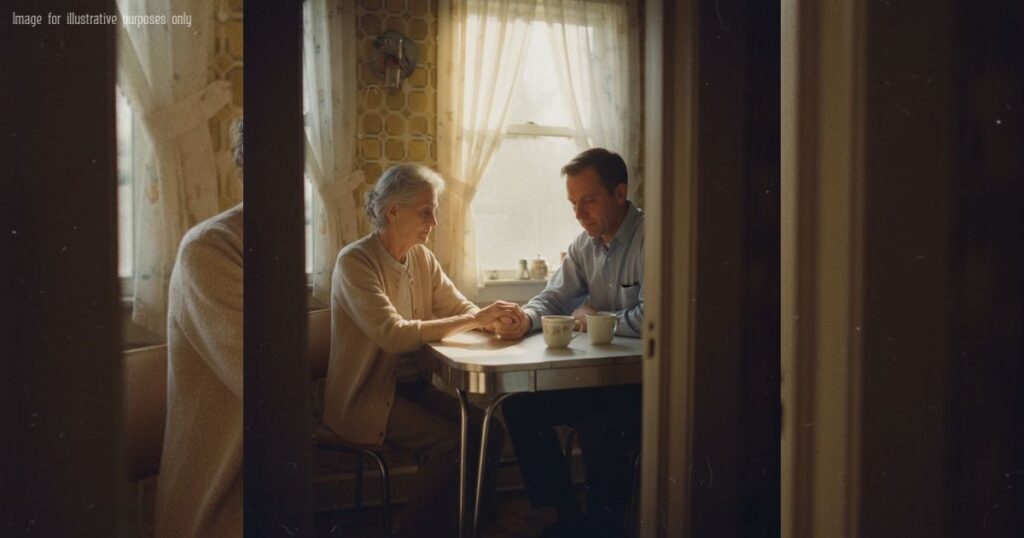
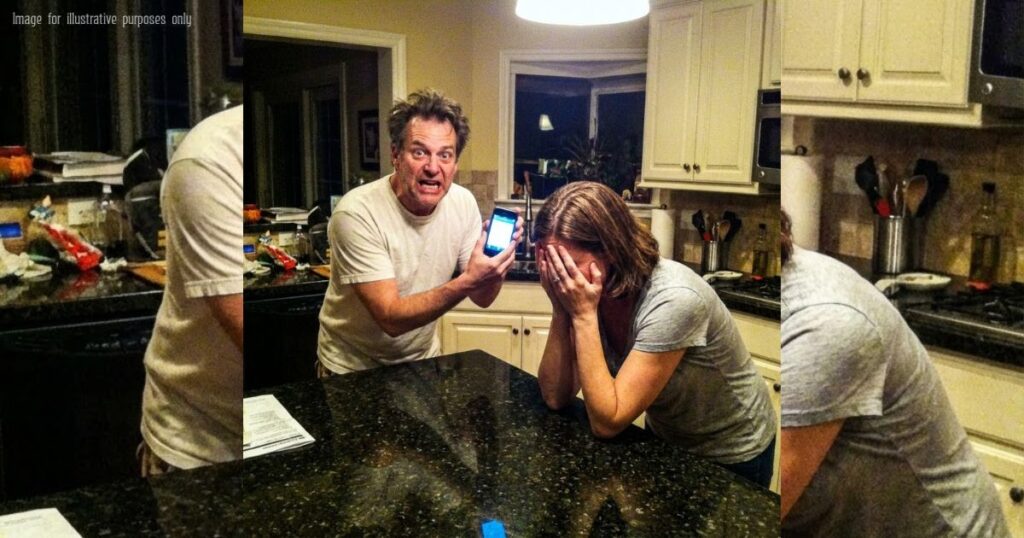
My husband didn’t pack his bags for a mistress. He packed them for a “movement.” He said he was suffocating in our silence, but the truth is, he was drowning in the noise.
We were the picture of the American Dream, circa 2024. Or maybe the caricature of it.
We had the house in the suburbs with the kitchen island that was too big to clean and a mortgage rate that kept us awake at night. We had two cars in the driveway and subscriptions to five different streaming services we never watched. But mostly, we had the glow.
That pale, blue, flickering glow.
For the last three years, Mark hadn’t really been in the room with me. He was in the comment sections. He was in the forums. He was fighting invisible wars against strangers who lived three thousand miles away. Dinner conversations used to be about our day, about the kids who were off at college, about the leak in the gutter.
Then, the conversations stopped. They were replaced by lectures.
He would look up from his phone, eyes bloodshot, and ask if I’d seen what “They” were doing to the dollar. What “They” were putting in the water. What “They” were teaching in schools. He never specified who “They” were, and frankly, depending on which channel he was watching, “They” changed every week.
I was exhausted. Not physically, but deeply, spiritually tired. I was tired of walking on eggshells in my own living room, afraid that mentioning the price of eggs would trigger a twenty-minute rant about supply chains and geopolitical conspiracies.
So when he stood by the door with his duffel bag, looking like a man preparing for a tactical mission rather than a mid-life crisis, I didn’t cry.
“I can’t do this anymore, Sarah,” he said. He sounded breathless, like he was running from something. “I need to find a place that’s real. I need to be around people who are awake. You… you’re just sleepwalking. You’re content to let the world burn as long as you have your garden and your coffee.”
He called it a “sabbatical for clarity.” He was going to drive out West, maybe join an off-grid community he’d found online. A place where “freedom still mattered.”
“And what about us?” I asked, leaning against the granite counter I still hadn’t paid off.
“I need to save myself first,” he said. “You should try waking up, Sarah. The world is ending.”
Then the door clicked shut. The engine revved. And he was gone.
I stood there in the hallway. I waited for the panic. I waited for the crushing weight of abandonment that every magazine article told me I should feel.
Instead, I heard it.
The silence.
The TV wasn’t blaring breaking news about a crisis I couldn’t solve. The phone wasn’t pinging with notifications about impending doom. The air in the house didn’t feel charged with static electricity anymore.
I walked to the living room and picked up the remote. I pressed the power button. The screen went black.
“Okay,” I whispered to the empty room. “The world is ending. So I might as well make dinner.”
The first week was strange. The silence was loud. But by the second week, I realized something terrifying: We had been working ourselves to death to maintain a lifestyle that was making us miserable.
I looked at the big house. It was a museum of things we bought to impress people we didn’t like. It was a storage unit for anxiety.
So, I did the unthinkable. I put the house on the market.
My friends were horrified. “But Sarah, the equity! But Sarah, where will you go? You need to downsize to a condo downtown, stay connected!”
I didn’t want a condo. I didn’t want “connected.” I wanted “grounded.”
I bought a small, drafty cottage two towns over. It needed a new roof and the floors creaked, but it had a front porch and a plot of land that got good morning sun. It reminded me of my grandmother’s house in the 80s—before everyone carried a computer in their pocket, back when neighbors actually knew each other’s names not because of a neighborhood watch app, but because they borrowed sugar.
I stopped watching the news. I figured if the world actually ended, someone would come knock on my door and tell me.
I started living a life that looked, from the outside, incredibly small.
I cancelled the subscriptions. I got a library card. I bought a second-hand radio that only picked up the local jazz station and the Sunday baseball games.
I started baking. Not the sourdough starter trend for Instagram, but real baking. I dug out my grandmother’s handwritten recipe cards, stained with butter and vanilla from forty years ago. There was something spiritual about kneading dough. It was physical. It was real. You couldn’t argue with flour; you just had to work with it.
One afternoon, my internet went down. A year ago, this would have caused a meltdown in our household. Mark would have been screaming at the service provider. I would have been panicked about missing emails.
Now? I just made a cup of tea and sat on the porch.
A young woman walked by, pushing a stroller. She looked frazzled, a Bluetooth earpiece blinking in her ear, talking rapidly about quarterly projections. She stopped when she saw me.
“Everything okay?” she asked, pointing at my house. “Power’s out on the whole block. No Wi-Fi.”
“I know,” I smiled. “Would you like a slice of apple pie? It’s still warm.”
She looked at me like I was an alien. Then, she looked at the pie. She touched her earpiece and tapped it off.
“I… I would love that,” she sighed, her shoulders dropping three inches.
We sat on the porch steps. We didn’t talk about the election. We didn’t talk about the stock market. We talked about how hard it is to keep hydrangeas blue. We talked about how fast her baby was growing. We talked about the smell of rain before a storm.
For an hour, we were just humans. Not voters, not consumers, not demographics. Just humans eating pie.
“It feels like time moves slower here,” she said, wiping a crumb from her lip. “I feel like I remember this feeling, but I don’t know from where.”
“It’s not memory,” I told her. “It’s presence. We used to live like this. We just forgot we could.”
Three months later, Mark called.
The connection was crackly. He was somewhere in the desert. The “community” hadn’t worked out—too many arguments about leadership, too few people willing to clean the latrines. Now he was in a motel, looking for the next big thing.
“It’s chaos out here, Sarah,” he sounded smaller, older. “The country is falling apart. You have no idea. I’m just trying to find a signal so I can upload my vlog.”
“I’m sorry, Mark,” I said, and I meant it.
“What are you doing?” he asked. “Are you still… asleep?”
I looked around my kitchen. There was a bowl of fresh tomatoes on the counter. A stack of paperback books on the table. The radio was playing a soft saxophone melody. The window was open, and I could hear the neighbor’s kids playing tag, their laughter cutting through the summer air.
I wasn’t asleep. I was the most awake I had ever been.
“No, Mark,” I said gently. “I’m just living.”
“But how can you live when everything is at stake?” he demanded, his voice rising with that old, familiar panic. “Don’t you care about the future?”
“I am building the future,” I said. “I’m building it right here. By keeping my peace. By feeding my neighbors. By refusing to let the noise inside my house.”
He didn’t understand. He hung up to go chase another phantom, another outrage, another digital war.
I put the phone down. I didn’t check social media to see if he posted about our call. I didn’t check my bank account to soothe my anxiety.
I went back to the dough on the counter. I pressed my hands into it, feeling the resistance, the elasticity, the promise of something rising.
We spend so much time screaming for a better world that we forget to build a decent life. We think freedom is having a million choices, a million channels, a million voices in our pockets.
But I learned the truth in a creaky house with a broken internet connection.
Freedom isn’t about escaping the system. It’s about unplugging from the fear.
It’s realizing that the “Good Old Days” aren’t a time you can travel back to. They are a state of mind you have to fight for, right here, right now.
And one thing is certain: Happiness doesn’t come from having the loudest voice in the room. It comes when you realize you no longer need to shout to be heard. You just need to be whole.
—
By the time my husband’s “sabbatical for clarity” turned into a livestreamed crusade, my quiet little life had become Part Two of his story—whether I liked it or not.
The thing about someone who believes the world is ending is this: they don’t stay quiet about it. They turn every motel room into a studio, every highway exit into a battlefield, every disagreement into a prophecy.
Click the button below to read the next part of the story.⏬⏬