Let me be blunt:
I am not your servant.
I am a professional who signed up to help people on the worst day of their lives. There is a difference.
Respect isn’t a tip you hand out when the service meets your expectations. It’s the baseline you give another human being as long as they are doing their best not to harm you.
You can file complaints. You can advocate for better training, more oversight, stronger safety protocols. You absolutely should.
But you don’t get to belittle the person kneeling in broken glass next to your loved one because traffic delayed them by three minutes.
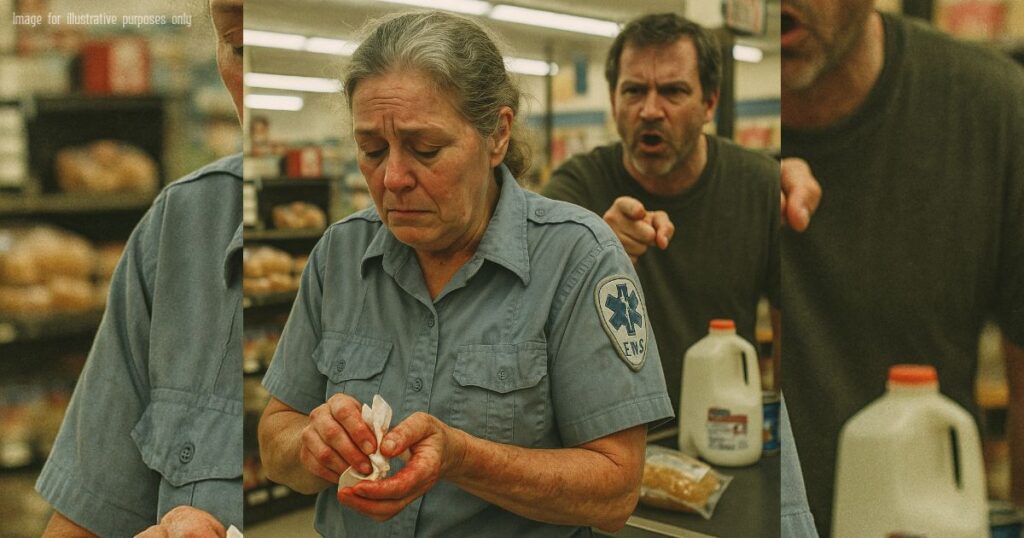
You don’t get to spit the word “taxpayer” like it’s a weapon when you are talking to someone who has paid in blood and vertebrae and sleep.
Here’s another truth you may not like:
This system you complain about? You built it.
Every time we vote for “lower taxes” without asking, “Lower on whose backs?”
Every time we cheer “support first responders” and then look the other way when budgets get cut and stations close.
Every time we treat burnout like a personal failure instead of an occupational injury.
Little by little, call by call, we sanded down the people inside the uniform.
No, I’m not blaming one political party. I’ve seen folks with every yard sign imaginable tell me the same thing: “There’s just no money.”
There’s never any money for mental health support. For modern equipment. For enough staff so one person isn’t working seventy hours a week.
But there’s always money for one more big screen in the stadium. One more marketing campaign. One more shiny thing that photographs well.
You want to know what would photograph well?
A medic getting home in time for their kid’s birthday.
A sixty-year-old firefighter not having to pick up overnight shifts at a warehouse to afford his prescriptions.
A dispatcher being able to talk to a therapist without worrying it’ll cost them their promotion.
Those pictures don’t trend.
They should.
I know some of you are reading this thinking, “Okay, old man, we get it. The system is broken. What do you want us to do about it?”
Fair question.
Start small and start close.
If you have kids or grandkids, talk to them about what emergency workers actually do. Not the movie version. The real version. Talk about compassion, not just sirens and lights.
If you see a crew grabbing a meal, don’t complain that the ambulance is “just sitting there” while you wait in traffic. Remember they might be ten minutes into the only break they’ll see in a sixteen-hour shift.
If your town has a meeting about budgets and services, show up. Ask specific questions. “How many people are on a shift? What’s the average response time? What support do we offer retirees?” You don’t have to shout. You just have to be present.
Write to whoever represents you and say, “I care about this. I want our responders funded and protected.” You don’t have to put a party label on that sentence.
And when you call 911, take a breath.
Is this truly an emergency?
Is someone’s life, limb, or safety at risk?
If it is, call. We’re coming. We always have.
If it’s not, maybe call a clinic, a hotline, a neighbor, a relative. Save the sirens for when they’re really needed.
I can hear another objection already:
“Easy for you to say, you’re retiring.”
You’re right. I’m stepping off the truck. My gear will hang on a hook with a lot of other ghosts.
But I’m not done.
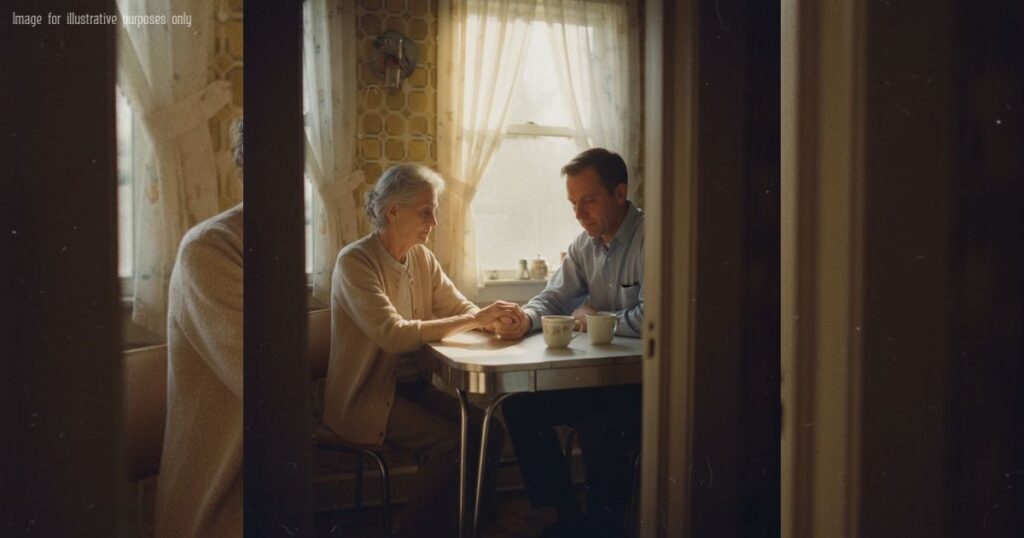
Last week, I went back to the station—not in uniform, just in my old jacket with the faded patch. It felt strange to walk in and not head straight for the rig.
A rookie I’d trained was sitting at the table, staring into a cup of coffee that had gone cold. Eye sockets dark, shoulders tight. I recognized that look. I’ve worn it.
“Bad one?” I asked.
He nodded. “Pediatric call,” he said softly. That’s all he had to say.
I sat down. I didn’t launch into a speech. I didn’t tell him it “gets easier,” because that would be a lie.
I just said, “You went. You showed up. Sometimes that’s all we get.”
We talked for an hour. About nothing and about everything. About music, and sports, and the way the siren noise seems louder at three in the morning when your body just wants to sleep.
When I left, he said, “I didn’t know retired guys came back.”
I shrugged. “Maybe we should have been doing it all along.”
So that’s my plan now. I can’t run a gurney like I used to. My knees complain when I walk up too many stairs. But I can sit at a table with a kid barely older than my granddaughter and tell him he’s not crazy for feeling what he’s feeling.
I can visit high schools and talk honestly about what this work is and what it isn’t. I can tell the truth without the spin.
And I can keep writing, even if the comments section gets ugly.
Because, at the end of the day, this isn’t about me needing validation. I’ve already lived my career. The ink on my retirement papers is drying.
This is about what happens to the next person who answers when you dial those three numbers.
So here’s the last thing I’ll say, and you can argue about it all you want:
A society gets what it pays for—and what it cares for.
If we keep treating compassion like a disposable resource, we will wake up one day and realize the people who used to run toward our emergencies have quietly walked away.
Not out of spite.
Just out of exhaustion.
Maybe you think I’m being dramatic. Maybe you think I’m exaggerating. That’s your right.
But the next time your world falls apart at two in the morning—when the room is spinning and the floor feels like it’s dropping away and you are sitting in the worst moment of your life—
You won’t care about politics. You won’t care about comment sections. You won’t care about who said what on a screen.
You will listen for sirens.
You will look for a stranger in a uniform who is willing to walk through your front door and say, “I’m here. You’re not alone. We’re going to do everything we can.”
If we want that stranger to keep existing, we have to start treating them like a human being now, not a background character in our arguments.
I was scrubbing a stranger’s blood out of my fingernails when I was called a “leech on the American taxpayer.”
After nearly four decades, here’s the truth I’ve earned the right to say:
We’re not leeches.
We’re the ones who show up when the world is bleeding.
What you decide to do with that truth—that’s on you.
Thank you so much for reading this story!
I’d really love to hear your comments and thoughts about this story — your feedback is truly valuable and helps us a lot.
Please leave a comment and share this Facebook post to support the author. Every reaction and review makes a big difference!
This story is a work of fiction created for entertainment and inspirational purposes. While it may draw on real-world themes, all characters, names, and events are imagined. Any resemblance to actual people or situations is purely coincidenta