My $5,000 “Smart Home” system was trying to kill my family.
It was 2:30 AM. Outside, the Polar Vortex was screaming against the siding of my newly renovated farmhouse in upstate New York. Inside, the house was a tomb.
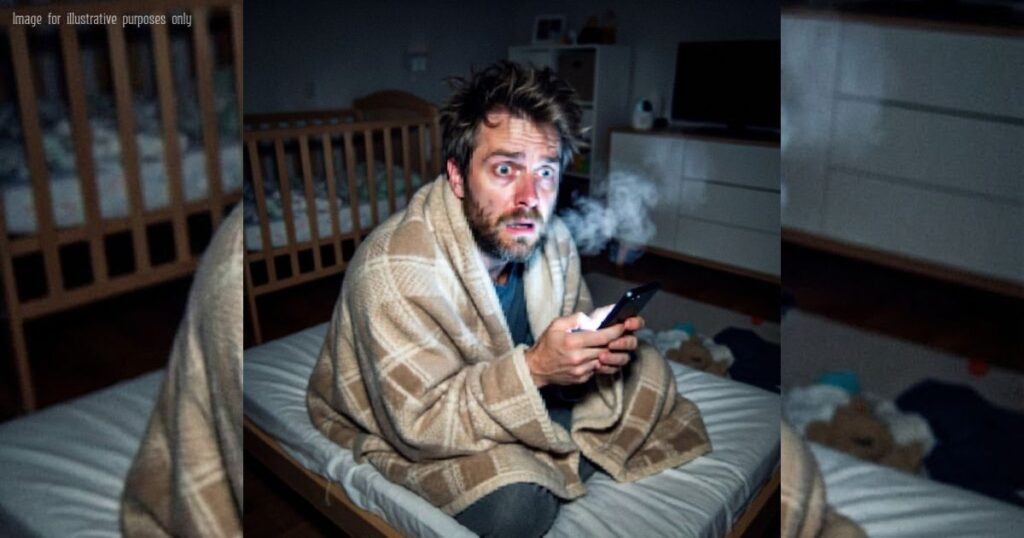
I stood in the nursery, my breath billowing out in white clouds like cigarette smoke. My six-month-old daughter, Sophie, was curled into a tight ball in her crib. The baby monitor displayed the terrifying reality: 52 degrees. And dropping.
The culprit? A firmware update.
My state-of-the-art, Wi-Fi-enabled thermostat had lost its connection during the blizzard. And because of some “safety protocol” written by a developer in a warm office in Silicon Valley, the system’s default reaction to losing signal was to shut down the furnace entirely.
I was a Senior Cloud Architect for a major tech firm. I made a six-figure salary helping global companies stay “connected.” Yet, here I was, wrapped in a designer cashmere blanket, shivering violently, completely powerless because my house couldn’t talk to the internet.
I tapped my phone screen with frozen fingers. The customer service chatbot simply said: Average wait time: 4 hours.
Panic is a cold thing. It starts in your stomach and grips your throat. Sophie let out a soft, shivering whimper. That sound broke me.
I couldn’t wait for the internet. I grabbed my heavy boots and looked out the window.
Through the swirling whiteout, I saw a single, steady yellow light about a hundred yards away.
The garage.
It belonged to my neighbor, Mr. Henderson.
I had lived here for eight months and had never learned his first name. Actually, I had actively avoided him. Mr. Henderson was a relic. He drove a rusted-out pickup truck from the 90s that roared when it started. He had a flag on his porch and a political yard sign near his mailbox that represented everything I stood against.
In my head, he was the enemy. He was “Them.” I was the progressive future; he was the angry, outdated past. We lived on the same road, but we might as well have been on different planets.
But Sophie whimpered again.
I swallowed my pride, pulled up my hood, and stepped out into the blizzard.
The wind hit me like a physical blow. The snow was knee-deep. By the time I reached his garage door, my face was numb. I pounded on the metal.
The side door creaked open. The smell hit me instantly—old oil, sawdust, and coffee. It didn’t smell like “Cottage Core” or an Instagram aesthetic. It smelled like work.
Mr. Henderson sat on a stool, working on a small engine part. He didn’t look up. He wore a flannel shirt that was worn thin at the elbows and a cap stained with grease.
“Car dead?” he grunted.
“Heat,” I stuttered, my teeth chatting uncontrollably. “It’s… it’s the Smart Hub. The internet is down, and it locked out the furnace. My baby… my baby is freezing.”
Mr. Henderson set down his wrench. He turned slowly on the stool. His face was a map of deep wrinkles, weather-beaten and stern. He looked at my expensive parka, then at the terror in my eyes.
“Smart Hub,” he muttered. It wasn’t a question; it was a verdict. “Dumbest thing they ever did was put a computer between a man and his fire.”
He stood up. I braced myself for a lecture. I expected him to tell me to call tech support, or make a snide comment about “city folk” moving to the country.
Instead, he reached for a red metal toolbox that looked heavy enough to crush a foot.
“Let’s go.”
Walking back into my house felt like walking into a refrigerator. The silence was deafening. The sleek, minimalist furniture I was so proud of now just looked cold and hard.
Mr. Henderson didn’t ask for the Wi-Fi password. He didn’t look at the glowing touchscreen on the wall that displayed the error code #E-404.
He walked straight to the basement stairs, his heavy work boots thudding against the hardwood.
I followed him with a flashlight. “I think it’s a software handshake issue,” I babbled nervously. “If we can just override the IP address…”
He ignored me. He knelt in front of the furnace unit and popped the front panel off with a screwdriver. He didn’t treat the machine like a delicate piece of electronics; he treated it like a machine.
“You know,” I said, trying to fill the awkward, freezing air. “I can pay you whatever. Double rate. I just… I feel so helpless. Everything is so fragile these days. The grid, the supply chain, the country.”
Mr. Henderson paused. He looked at me over his shoulder, his eyes sharp under the brim of his cap.
“Things aren’t fragile, son. People are.”
He turned back to the furnace. He used a jumper wire to bridge two terminals. Sparks flew.
“See, the problem with your generation—and I ain’t saying this to be mean, just true—is that you treat everything like it’s disposable,” he said, his voice rough. “If a toaster breaks, you buy a new one on Amazon. If a friendship gets hard, you ‘block’ them. If a neighbor votes differently than you, you build a fence.”
I stiffened. The flashlight shook in my hand. He knew. He knew I had judged him every time I drove past his house.
“We didn’t do that,” he continued, twisting a valve with a grunt of exertion. “Back in the day, if something broke, you sat down with it. You got your hands dirty. You figured out where the wire was loose, and you fixed it. It took patience. It wasn’t efficient. But it lasted.”
He took a wrench and gave a hard turn to a bolt I didn’t even know existed.
WHOOSH.
A low rumble shook the floor. Then, the glorious, beautiful sound of the pilot light catching and the burners roaring to life.
“The manual bypass,” Mr. Henderson said, wiping grease onto his work pants. “They put it there for emergencies. They just don’t put it in the app because they want you to pay for a service call.”
I stood there, stunned. Warmth began to bleed from the vents. The red light on the “Smart Hub” was still blinking ERROR, but the heat was real.
“It’s working,” I whispered. Tears pricked my eyes—not from the cold, but from relief.
“It’s just physics,” he said, snapping the toolbox shut. “Don’t need an algorithm for fire.”
I followed him back upstairs. The house was already feeling different—less like a tomb, more like a home. I reached for my wallet. I had three hundred dollars in cash. I wanted to give him all of it. I wanted to pay for the relief of my anxiety.
“How much?” I asked. “Seriously, Mr. Henderson. You saved us.”
He looked at the cash in my hand. Then he looked up the stairs, where the silence had been replaced by the soft, rhythmic breathing of a sleeping baby.
“Put that away,” he said.
“No, I insist. It’s 3 AM. You walked through a blizzard for a stranger.”
Mr. Henderson put his hand on the doorknob.
“You think I came over here because I like your politics?” He cracked a half-smile, revealing a gold tooth. “I came because a baby was cold. And because that’s what neighbors do. We keep the lights on for each other.”
He opened the door, letting the swirling snow in for a brief second.
“But if you really want to pay me,” he added, pausing on the threshold. “Stop looking at your phone so much. And maybe next time you see me outside, don’t look the other way just because my truck is old.”
“I won’t,” I said. And I meant it. “Thank you… Frank?”
“It’s Arthur,” he said. “Keep the heat on, kid.”
That was four days ago.
The storm has passed. The internet is back. My smart thermostat is online, happily gathering data and optimizing my “thermal profile.”
But this morning, I did something different.
I walked over to the garage next door. I didn’t bring money. I brought a thermos of hot coffee and two mugs.
I sat on a wobbly stool in Arthur’s shop for an hour. We didn’t talk about the upcoming election. We didn’t talk about the economy. We didn’t talk about the things the news tells us we should hate each other for.
He taught me how to sharpen a lawnmower blade. I listened to him talk about his wife, who passed away five years ago, and how the silence in his house is louder than any winter storm.
I realized that for the last ten years, I have been measuring success by efficiency—how fast I can download, how quickly I can upgrade. I thought I was connected because I had 5,000 followers.
But I was wrong.
Connection isn’t about signal strength. It’s about who shows up when the power goes out.
We have built a world that is incredibly smart, yet undeniably lonely. We are so busy trying to save the world with our opinions online that we forget to save our neighbors with our hands.
The truth is, we are all just fragile people living in the cold. And sooner or later, the Wi-Fi will go down for all of us. When it does, your job title won’t keep you warm. Your political party won’t fix your furnace.
Only a person will.
So here is my challenge to you: Find the “Arthur” in your life. The person you’ve written off. The person who doesn’t look like you or vote like you. Go knock on their door. Not to change their mind. Not to prove them wrong.
Just to ask how they’re doing.
Because we can’t throw this world away and order a new one. We have to fix it. And the only way to fix it is together.
–
PART 2 — The Night I Learned Heat Can Be a Subscription
If you read Part 1, you already know the headline: a firmware update turned my “smart” farmhouse into a walk-in freezer at 2:30 AM, and my neighbor Arthur—who I’d quietly written off for eight months—saved my six-month-old daughter with a manual bypass and a toolbox.
What you don’t know is what happened the next morning, when the house was warm again… and my phone tried to make me pay for the right to keep it that way.
By sunrise, the Polar Vortex had loosened its grip. The sky went that sharp winter blue that makes everything look clean and honest, even when it isn’t.
Click the button below to read the next part of the story.⏬⏬