PART 2 — The Night I Learned Heat Can Be a Subscription
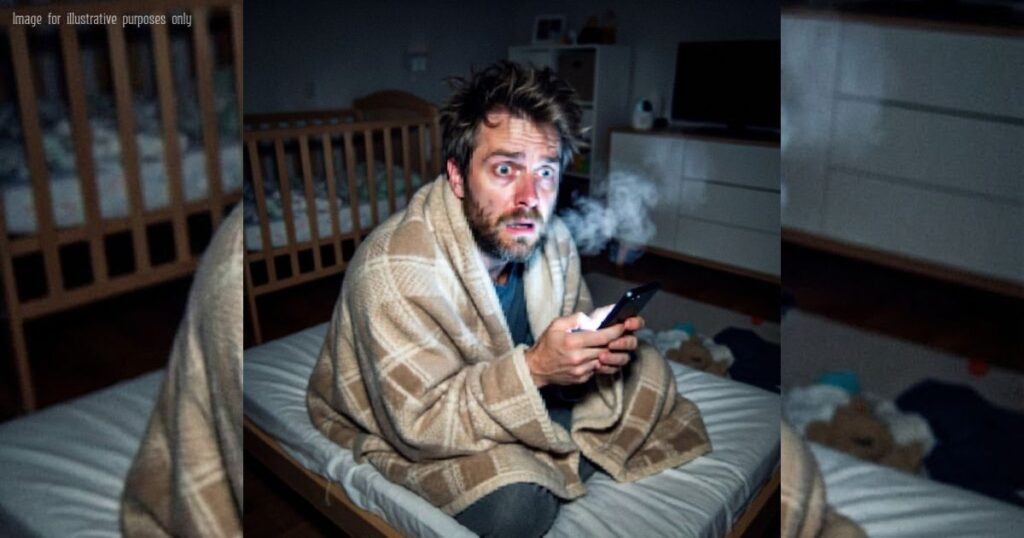
If you read Part 1, you already know the headline: a firmware update turned my “smart” farmhouse into a walk-in freezer at 2:30 AM, and my neighbor Arthur—who I’d quietly written off for eight months—saved my six-month-old daughter with a manual bypass and a toolbox.
What you don’t know is what happened the next morning, when the house was warm again… and my phone tried to make me pay for the right to keep it that way.
By sunrise, the Polar Vortex had loosened its grip. The sky went that sharp winter blue that makes everything look clean and honest, even when it isn’t.
Sophie slept like nothing had happened. Her cheeks were pink again, her little fists uncurling in her crib like flowers opening.
I should’ve felt grateful. I should’ve felt relieved. I should’ve felt like a man who learned a lesson and moved on.
Instead, I felt watched.
Not by Arthur. Not by the storm.
By the glowing rectangle on my kitchen counter.
My “Smart Hub” chirped the way it always did—cheery, confident, almost smug. A notification popped up while I was making a bottle.
SYSTEM STATUS: RESTORED.
NEW FEATURE AVAILABLE: WINTERGUARD™ SAFETY PLAN.
I blinked, half asleep, then tapped.
The screen loaded a bright, friendly page with a cartoon snowflake and a big button that said START FREE TRIAL.
Under it, in smaller text, it promised something that made my stomach go hollow.
“Automatic Emergency Heating Support (Offline Bypass Assistance)”
My thumb hovered over the words like they were hot.
Offline bypass assistance.
That was the thing Arthur had done. The “manual bypass” he said they hid because they wanted you to pay.
And now the system was advertising it back to me like a streaming service.
My wife, Maya, walked in wearing Sophie’s spit-up on her shoulder like a badge. She saw my face and immediately tightened.
“What?” she asked, already bracing.
I turned the phone so she could read it. Her mouth opened slightly, then closed. The silence between us had a shape.
“So,” she said carefully, “we almost froze our baby… and now they’re offering a free trial for the fix.”
I scrolled down to the fine print. My eyes locked on a line so small it felt like a whisper meant to escape blame.
“Emergency Heating Support is unavailable without active subscription. Manual overrides may void warranty and service eligibility.”
Maya stared at me like I was the one who wrote it.
“That can’t be real,” she said, but her voice didn’t sound convinced.
I’m a Senior Cloud Architect. I build systems that are designed to fail gracefully. Redundancy. Offline fallbacks. Human override. Those are not optional concepts in my world.
In my world, if a hospital loses internet, the ventilators don’t politely shut down and suggest a four-hour wait time.
I felt a heat in my chest that wasn’t coming from the vents.
I did what people like me always do when we don’t know what to do.
I opened my laptop.
At first, I told myself I was just going to read. Just gather information. Just calm down with data, because data is safer than anger.
But the search results weren’t calm.
They were a graveyard.
Posts from new parents. Posts from retirees. Posts from people in rural areas where the internet isn’t a given—it’s a coin flip.
One message hit me so hard I had to re-read it three times.
A woman wrote that her mother’s apartment dropped into the 50s during a storm, and the building’s “smart” system “protected” itself by shutting down. Her mom didn’t call anyone because she didn’t want to “be a burden.” She wore two coats to bed and waited for morning like waiting for permission.
Nobody died in the post. Nobody dramatic. No headlines.
Just quiet suffering, packaged neatly into a customer experience.
I sat there in my warm kitchen, watching my daughter’s chest rise and fall on the monitor, and I realized something that made me nauseous.
My story wasn’t special.
It was just the one that happened to a guy with enough privilege to have a neighbor like Arthur—and a platform big enough to be heard.
I wrote a post.
Not an angry rant. Not a tech thread full of jargon. Not politics.
Just the truth, in plain language, like a confession.
I said: “Last week my smart thermostat lost internet and shut off my furnace in a blizzard. A neighbor manually bypassed it. This morning my system offered that bypass as a paid subscription feature.”
I ended with a question that I knew would light people up.
“Is heat a basic function… or a premium service?”
I hit post.
And then I watched the world do what it does best: split into teams.
Within an hour, strangers were calling me brave. Within two, strangers were calling me an idiot.
Some people said, “This is why we don’t trust technology.” Others said, “This is why you should read the terms before you buy things.”
A few comments cut deeper because they weren’t hateful. They were smug.
“Bro, you bought a luxury system and now you’re shocked it’s a luxury business model?”
“Sounds like user error.”
“Manual overrides void warranties for a reason.”
“Maybe you should’ve stayed in the city.”
Then came the ones that made my palms sweat.
“You’re just using a baby for clout.”
“This is performative.”
“Nice story, but I don’t buy it.”
“What company?”
“Name names.”
I didn’t name names. I wasn’t trying to start a witch hunt. I wasn’t trying to destroy anyone.
I was trying to talk about a world where the basics are increasingly controlled by software—written far away—updated without asking—then monetized after the fact.
But the internet doesn’t reward nuance. It rewards blood.
By noon, my post had been shared thousands of times. By 1 PM, I had an email from an unfamiliar address with a very familiar tone: professional, friendly, and just sharp enough to remind you who has power.
“Hello,” it began. “We appreciate your feedback and would love to help resolve your concerns.”
They offered me a free year of the WinterGuard plan. They offered me a “priority customer care line.” They offered me a “home resilience kit.”
Then they offered me something that made my throat tighten.
A “confidential resolution agreement.”
In other words: a polite hush.
Maya read the email twice, then looked at me over the top of the phone like she was seeing the outline of a fight that could take years.
“Don’t,” she said quietly. “We have a baby. We don’t have time to become a cause.”
I understood her. God, I did.
But all I could think about was Sophie’s cold whimper in the dark, and Arthur’s boots on my basement stairs, and how close I came to learning a lesson the hardest way.
I didn’t sign.
I didn’t reply.
I did something else.
I walked next door.
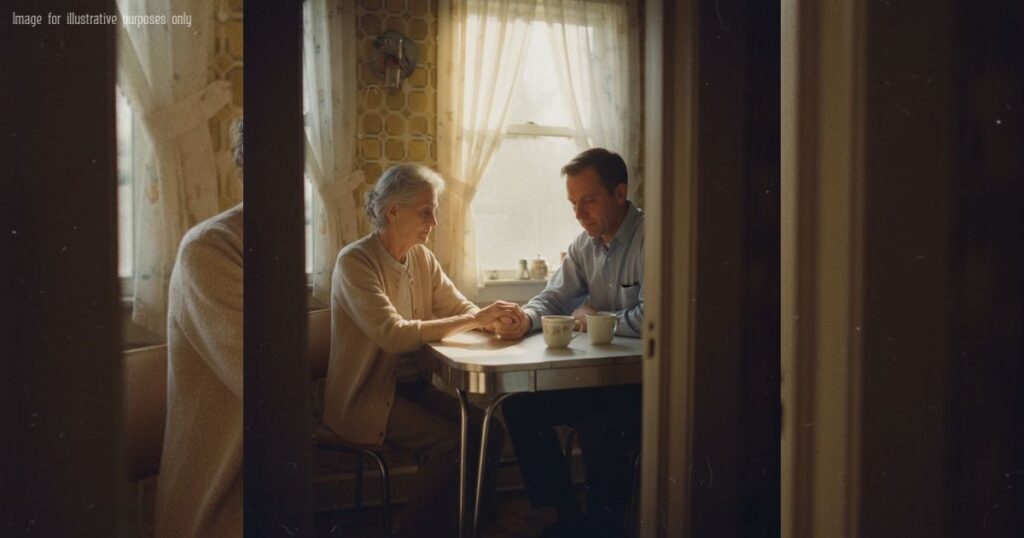
Arthur’s garage door was half open. Warm light spilled out onto the snow like a promise. The smell hit me immediately—oil, metal, coffee—and something else too: safety. Not the corporate kind. The human kind.
Arthur was sharpening a blade on a bench grinder, sparks fanning out like tiny fireworks. He didn’t look up until I cleared my throat.
“You stir up trouble yet?” he asked, like he’d been expecting it.
I held up my phone. “They want me to sign something.”
Arthur finally looked at the screen. His eyes moved slowly, like he was reading the weather.
“Mm,” he grunted. “That’s how they do it. Freebie up front, leash later.”
“I didn’t name them,” I said, defensive without meaning to be. “I’m not trying to—”
“Kid,” he interrupted, turning the grinder off. The sudden silence rang. “You ain’t the first man to think he can tell the truth without somebody trying to bill him for it.”
Click the button below to read the next part of the story.⏬⏬