I swallowed. “Did this happen to you?”
Arthur wiped his hands on his work pants. He nodded toward the corner of the garage where an old wood stove sat, black and heavy, like a stubborn animal.
“After my wife passed,” he said, voice flatter than I expected, “I built that. Not because I’m nostalgic. Because I don’t trust promises that need a signal.”
He didn’t say more right away. He didn’t have to.
Grief doesn’t need a speech. It just needs space.
He picked up a thermos and poured coffee into two chipped mugs, like it was the most normal thing in the world to share warmth while the internet argued about whether you deserved it.
“You know what’s funny?” Arthur said, handing me one. “People don’t fight about heat until they’ve been cold. Then suddenly everybody’s an expert.”
I laughed, but it came out tight.
“I didn’t think I was like this,” I admitted. “I didn’t think I’d… post about it. I didn’t think I’d want to make it a thing.”
Arthur sipped his coffee. “You didn’t make it a thing. They did, when they put a paywall between your baby and a warm room.”
That sentence landed hard because it was simple.
And because it was true.
That evening, Arthur and I did something that would sound ridiculous to my old self.
We went on a neighbor walk.
Not a political canvass. Not a community event with matching shirts. Just two guys in winter coats knocking on doors while the sun fell.
Arthur carried a little list on a folded piece of paper. Names. Addresses. Notes like “lives alone” and “oxygen at night” and “hard of hearing.”
“Fire department does welfare checks when it’s bad,” he said when he saw me looking. “But sometimes we do it before it’s bad.”
We checked on Mrs. Koenig down the road, who answered the door with a chain still on and suspicion in her eyes until she saw Arthur.
“You got your heat steady?” he asked.
“Steady enough,” she snapped, then softened because that’s what happens when someone shows up. “Come in before you freeze like a couple of fools.”
Her house was warm, but the kind of warm that felt expensive. Space heaters. Curtains. Every door shut like she was rationing comfort.
She looked at me—at my clean boots, my younger face—and said something that made my cheeks burn.
“You’re that internet man,” she said. “The one stirring everybody up.”
I opened my mouth to explain, but she raised a hand.
“My sister lives in a building with one of those systems,” she continued. “When it goes out, nobody can fix it. They put in a request like they’re ordering a pizza.”
She leaned closer, lowering her voice like she was sharing a secret.
“Tell me something,” she said. “If a company can shut off your heat with a software update… what else can they shut off?”
There it was.
The question that would keep people arguing in the comments for days.
Security versus control. Convenience versus dependency. Safety versus profit.
I didn’t have a perfect answer. I only had honesty.
“I don’t know,” I told her. “But I don’t think we should find out the hard way.”
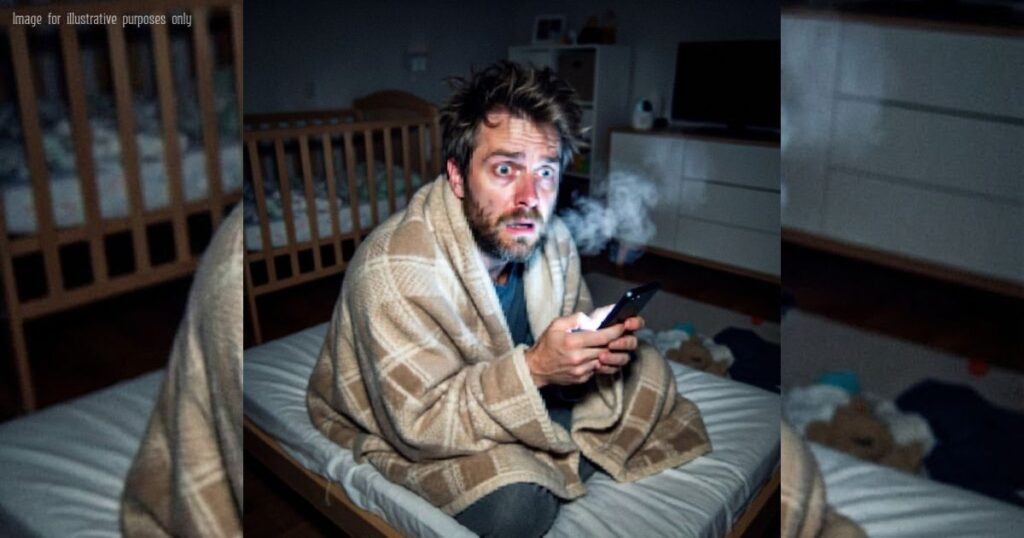
When we got back home, Sophie was awake, babbling to herself in the crib like she’d just invented language. Maya watched me from the doorway, tired but softer.
“So?” she asked. “Did you save the world?”
“No,” I said, and I meant it. “But I checked on three neighbors. And I learned two of them don’t know how to manually run their heat if the system fails.”
Maya’s expression changed. The fear in her eyes wasn’t dramatic. It was practical.
“That could be us,” she whispered.
“It was us,” I said.
Later that night, when the house was quiet again and the storm felt like a memory, I sat at my kitchen table and wrote one more post.
Not a takedown. Not a callout. Not a war.
A challenge.
I wrote: “Here’s what I did after our smart system failed: I learned where the manual shutoffs are. I printed the emergency steps and taped them inside a cabinet. I exchanged numbers with neighbors. I bought a battery radio. I stopped assuming the internet is a utility like air.”
Then I wrote the line I knew would make people argue—because it forces you to pick a side without picking a party.
“If your heat needs a subscription, you don’t own your home. You rent it from an app.”
And I ended with two questions.
“Would you pay monthly for the right to override your own furnace?”
“Should ‘smart’ devices be required to work safely without internet?”
I didn’t tell people what to think. I didn’t tell them who to blame.
I just handed them a mirror.
Because that’s the real problem with our “connected” world.
We don’t just outsource convenience.
We outsource responsibility.
And when the signal drops—when the storm comes—when your baby whimpers in the dark—no amount of opinions will warm the room.
Only a person will.
Arthur was right.
Things aren’t fragile.
People are.
So if you’re reading this and you’re already typing an angry comment—good. Type it.
But before you hit send, do one thing that your phone can’t do for you.
Look out your window.
Find the nearest light.
And ask yourself who would show up if it went out.
Thank you so much for reading this story!
I’d really love to hear your comments and thoughts about this story — your feedback is truly valuable and helps us a lot.
Please leave a comment and share this Facebook post to support the author. Every reaction and review makes a big difference!
This story is a work of fiction created for entertainment and inspirational purposes. While it may draw on real-world themes, all characters, names, and events are imagined. Any resemblance to actual people or situations is purely coincidenta