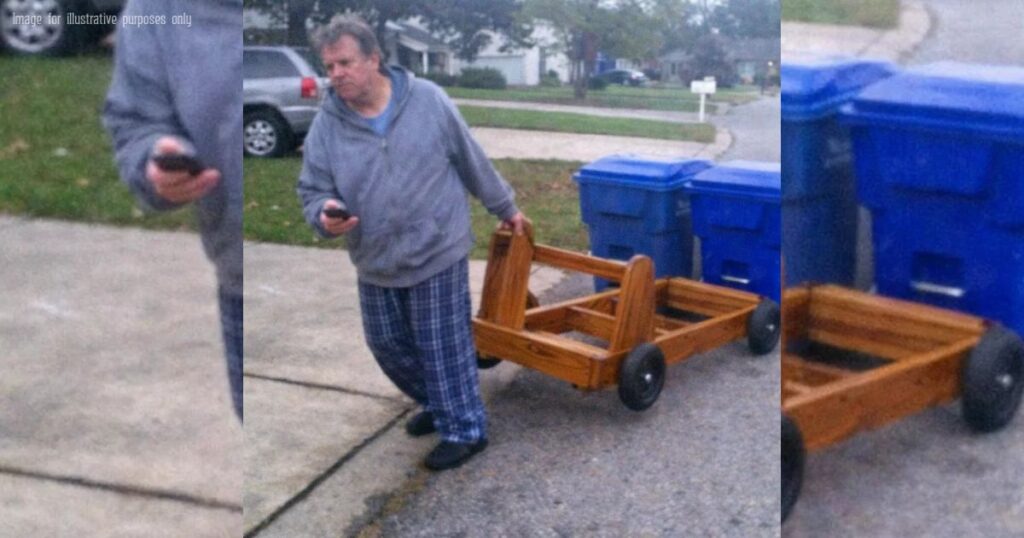
I watched my son drag the wooden chassis I’d spent two months building out to the curb. He didn’t look angry. He looked relieved. That hurt worse than the anger ever could.
My name is Frank. I’m 72 years old, and for forty years, I kept the machinery of a local bottling plant running with nothing but a wrench, a roll of duct tape, and stubbornness. I’m from a time when if something broke, you fixed it. You didn’t submit a ticket. You didn’t call a support line. You got your hands dirty.
Yesterday, I drove my twenty-year-old pickup truck three hours to the suburbs to visit my son, David, and my grandson, Leo. I didn’t come empty-handed. In the bed of my truck, under a heavy tarp, was a soapbox derby car.
It wasn’t a plastic kit from a big-box store. It was pine and oak, cut from the timber on my property. I’d lathed the axles myself. I wanted to build the rest of it with Leo. I wanted to teach him how to hold a hammer so it doesn’t bounce, how to sand wood until it feels like glass, and the specific satisfaction of driving a screw flush into a solid beam.
I pulled into David’s driveway, parking next to his silent, egg-shaped electric sedan. His house is what they call a “Smart Home.” It talks to him. The fridge orders milk when it’s low. The thermostat knows when he’s sleeping. Everything is seamless, frictionless, and terrifyingly fragile.
“Dad!” David greeted me, looking tired. He always looks tired. He’s a project manager for a software company, making three times what I ever made, yet he looks like he hasn’t slept since 2015.
“Where’s the boy?” I asked.
“In the den. Gaming.”
I hauled the wooden frame into the garage. It smelled of fresh pine and possibility. I called Leo out. He’s ten years old, soft around the middle, with pale skin that rarely sees the sun. He blinked at the sunlight, holding a tablet like a shield.
“What is it?” Leo asked, looking at the frame.
“It’s a race car,” I said, grinning. “But it’s not finished. We’re going to build the body together. I brought the tools. Real ones.”
I laid out my grandfather’s chisel, a coping saw, and a box of galvanized nails.
Leo poked the wood. “Does it have a motor?”
“No motor. Gravity. You have to steer it.”
“Where do I put the battery?”
“You don’t,” I said. “Leo, grab that sandpaper. Let me show you how to bevel an edge.”
I reached for his hand to guide him.
“Whoa, hold on,” David stepped in, his voice tight. He looked at the saw on the workbench with genuine alarm. “Dad, maybe we skip the saw. It’s a liability. And the dust… Leo has mild asthma. We don’t want to trigger anything.”
“David, it’s a hand saw. It builds character. A little sawdust never killed anyone.”
“It’s not about character, Dad. It’s about safety standards,” David said, handing Leo his tablet back. “Why don’t you guys play a game on the iPad? There’s a racing simulator he loves. It’s hyper-realistic.”
Leo was already gone, his eyes glazed over by the blue light. “Yeah, Grandpa. Watch this level.”
I stood in the garage, surrounded by five thousand dollars worth of bicycles that hung from the ceiling—bicycles I’d never seen them ride—and felt a profound sense of uselessness. I was a craftsman in a world that only wanted consumers.
Then, the storm hit.
It was a freak ice storm, the kind the weatherman apologizes for. The temperature plummeted. Trees heavy with ice started snapping like matchsticks. At 5:00 PM, a transformer down the street exploded with a blue-green flash.
The Smart Home died instantly.
The silence was deafening. No hum of the fridge. No ambient light from the router. The electronic locks on the front door seized up.
Within an hour, the house was freezing. The “smart” thermostat was just a dark piece of glass on the wall.
David was pacing the living room, tapping his phone. “I have 12% battery. The grid is down. The provider sent a text saying repair crews are delayed due to road conditions. ETA is twenty-four hours.”
“Twenty-four hours?” Leo wailed. “My iPad is dead!”
“I can’t order food,” David said, his voice rising in panic. “The delivery apps are down. The stove is electric. The heat is electric. We’re going to freeze.”
He looked at me, eyes wide. “Dad, should we go to a hotel?”
“Roads are ice, David. You’ll slide that egg-car right into a ditch,” I said. I stood up. My knees popped, but my hands were steady. “Sit down. Both of you.”
I walked out to my truck. It was covered in a sheet of ice, but the door handle was mechanical. I wrenched it open. I grabbed my emergency duffel bag.
I came back inside and set a propane camping stove on the granite kitchen island—a slab of stone worth more than my first house. I lit a match. The hiss of the gas and the blue flame were the only living things in the room.
“David, go to the garage. Get the wood scraps from the race car project,” I ordered.
“But… the fireplace is decorative. We’ve never used it. I think the flue is welded shut.”
“It’s not welded. It’s just stuck. Get the wood.”
I went to the fireplace. I used a poker to muscle the damper open. I built a fire structure: tinder, kindling, fuel. When David brought the pine scraps—the pieces of the car that never was—I felt a pang of sadness, but I laid them in.
The fire caught. The smell of burning pine filled the sterile living room. It smelled like life.
I heated up two cans of beef stew on the camping stove. I lit a kerosene lantern I’d kept in the truck since the blizzard of ‘96.
For the next four hours, there was no blue light. There were no notifications. There was just the crackle of the fire and the golden glow of the lantern.
Leo sat on the floor, wrapped in a blanket, staring at the lantern flame. He looked mesmerized.
“Grandpa?” he asked softly. “How do you know how to do this?”
“Do what?”
“Make heat. Make light. Dad didn’t know how.”
David looked down at his feet, ashamed.
“I know how because I had to know,” I said. “The world wasn’t always a machine that served you, Leo. Sometimes the machine breaks. And when it does, you have to be the one who works.”
I pulled out my pocket knife and a small block of cedar. “Watch this.”
I started whittling. I showed Leo how to shave the wood away from his body. I told them stories about the time I rebuilt a transmission on the side of the highway in Arizona, about the time we went three weeks without power during the floods.
For the first time in his life, Leo wasn’t looking at a screen. He was looking at my hands. He was asking questions. Real questions.
“Can you teach me to make a fire?” he asked.
“Sure,” I said.
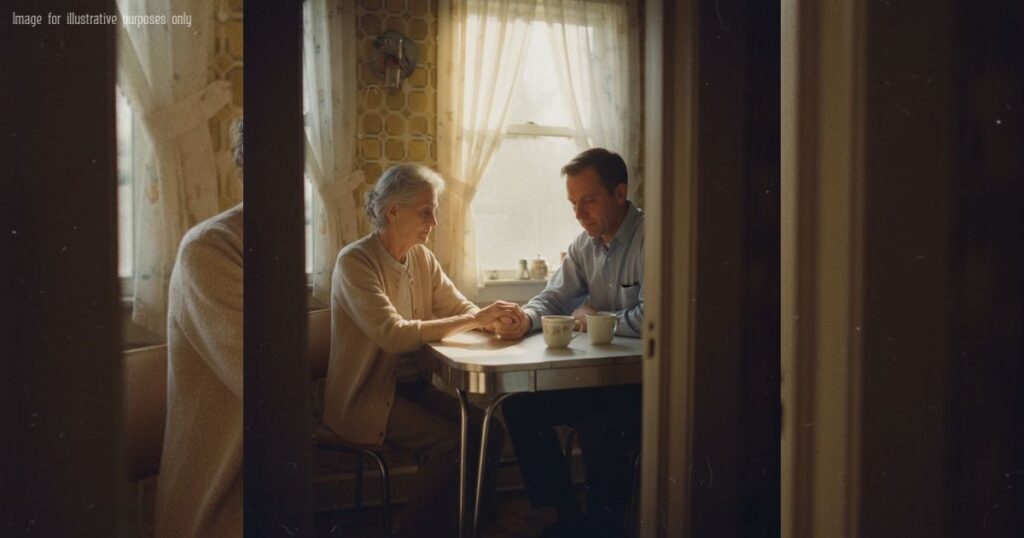
David sat next to me. “Thanks, Dad,” he whispered. “I felt… helpless. I hate feeling helpless.”
“Then learn to do something that doesn’t require an internet connection,” I said gently. “Competence is the only true security, son.”
We slept in the living room, huddled together. It was the best night of sleep I’d had in years.
At 4:00 AM, the power came back.
The lights blasted on, blinding us. The microwave beeped. The router began its blinking initialization sequence. The Smart Home rebooted, humming back to life like a spaceship.
The spell broke instantly.
“Oh thank God,” David said, scrambling for his charger. “I need to check my work email. The servers might have crashed.”
Leo ran to the wall outlet. “Yes! 1% battery!”
By breakfast, the fire was cold ash. The camping stove was pushed aside to make room for the espresso machine. The warmth was gone, replaced by the sterile hum of central air.
I packed my bag. I went to the garage to load up my tools.
That’s when I saw it.
The race car chassis—the one we had burned parts of for heat—was sitting by the recycling bins at the curb.
David walked out, holding a steaming mug of artisanal coffee.
“I’m heading out,” I said.
“Already?” David asked, glancing at his phone. “Hey, about the wood… I figured since we burned some of it, the project is ruined anyway. Plus, I looked it up, and homemade go-karts have a high injury rate. I ordered him a VR headset. It has a racing game. Safer.”
I looked at my son. He was back in the matrix. The fear of the night before, the lesson of the cold, had evaporated the moment the Wi-Fi connected. He didn’t see the wood as a lost opportunity for connection; he saw it as clutter to be purged.
“You know, David,” I said, tossing my tool bag into the truck bed. “You have insurance for your house. You have insurance for your car. You have insurance for your health.”
“Yeah? That’s called being responsible, Dad.”
“No,” I said, climbing into the driver’s seat. “That’s called being financial. But you have no insurance for reality. When the grid goes down next time—and it will—you can’t swipe a credit card to get warm.”
“You’re being dramatic. It was a one-time thing.”
“Maybe,” I started the engine. The old truck roared to life, shaking the quiet pavement. “But I realized something last night. I raised you to be successful. I forgot to raise you to be capable.”
I put the truck in gear.
“Dad, wait. What about the rest of the wood? The tools?”
“Keep them,” I said. “Or throw them away. But someday, that boy is going to grow up. And he’s going to find out that you can’t download a fire.”
I drove away. I didn’t look back at the rearview mirror.
I’m driving home to my shop. I have a neighbor, a young single mother whose porch is rotting through. She can’t afford a contractor. I’m going to go fix it for free. She has a son, about eight years old. Maybe he’ll hold the flashlight. Maybe he’ll want to learn how to drive a nail.
We have confused “convenience” with “progress.” We have built a world so comfortable that we have become completely useless the moment the comfort is stripped away.
I’m done trying to convince my family that their bubble is fragile. I’m going to go find people who still know the value of a callous on the hand and a fire in the hearth.
The world needs fewer apps and more workbenches. And until the lights go out again, I’ll be in my garage, keeping the old ways alive for whoever is brave enough to learn them.
—
PART 2 — You Can’t Download a Fire (Continued)
The morning after I told my son you can’t download a fire, I found myself on a collapsing porch with a hammer in my hand—while a little boy watched me like I was performing magic.
Not my grandson.
A different kid. A kid whose mom didn’t have the luxury of calling a contractor or waiting for “the system” to respond.
I drove home under a sky the color of dirty wool. The ice storm had moved east, but the roads still wore it like a bruise. My old pickup rattled the way it always does—honest noise, mechanical truth. No silent humming. No chirps. No touchscreens.
Just steel doing what steel was built to do.
When I pulled into my driveway, my shop sat behind the house like a faithful dog. The lights were off. The air smelled like cold pine and motor oil and time.
I stepped inside anyway.
Click the button below to read the next part of the story.⏬⏬